










When London speaks in Moscow’s voice Three questions for the British Ambassador to Azerbaijan
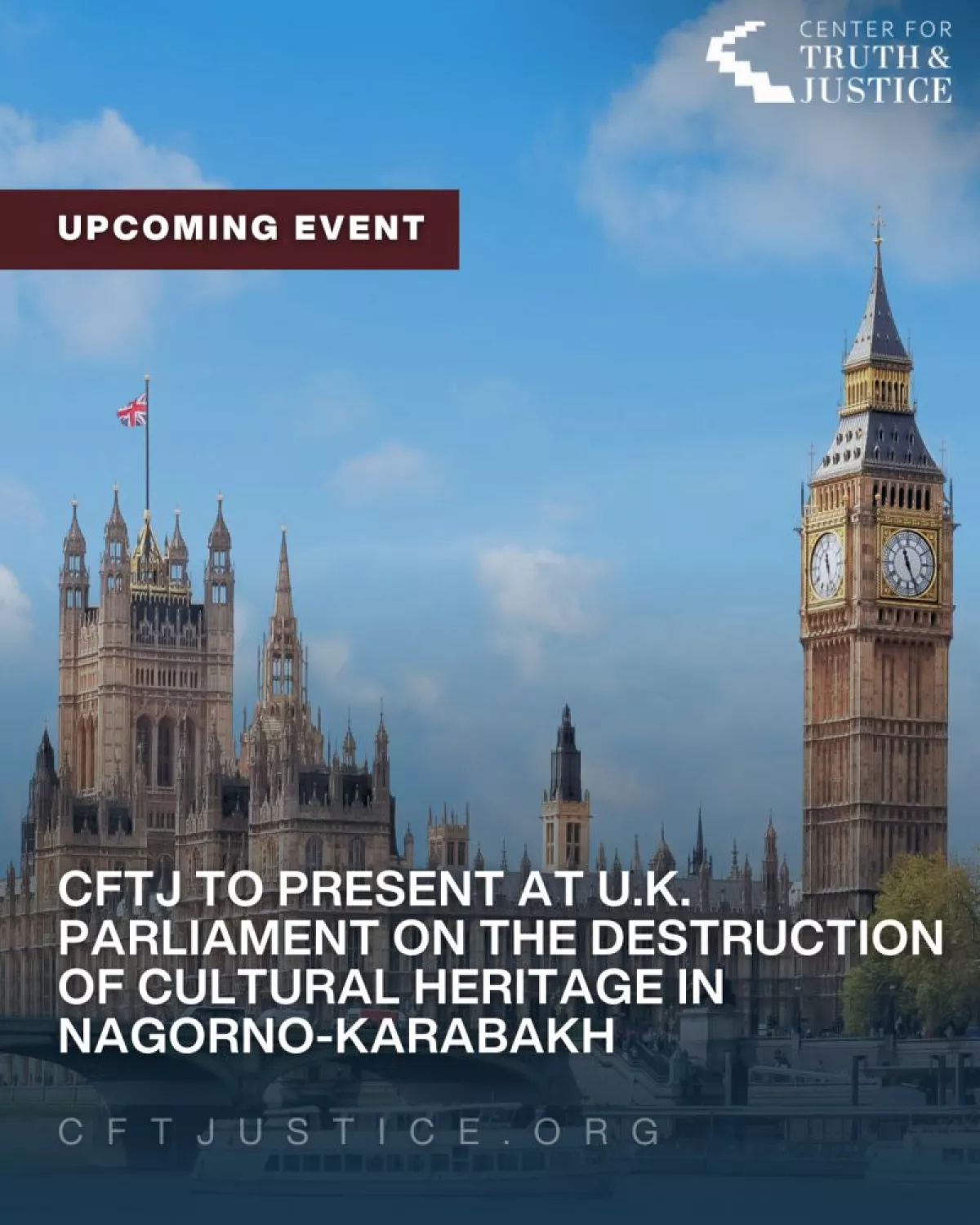
On February 25, hearings titled “Erasing the Past: The Destruction of Cultural Heritage” will begin in the House of Commons, focusing on allegations of the “destruction of Armenian heritage” in Karabakh. One of the key witnesses invited to testify is Artak Beglaryan — head of the “Artsakh Union” organisation and former “ombudsman” and “state minister” of the separatist entity that sovereign Azerbaijan dissolved in September 2023 in full accordance with international law and its own Constitution.
Beglaryan has previously testified before the United States Congress, given interviews to Le Figaro, and engaged in lobbying efforts with the support of the Armenian National Committee of America. In March 2025, he also held a series of meetings in London. He is now being granted a parliamentary platform in Westminster — and this is hardly a coincidence.
If this episode were viewed in isolation, it could be dismissed as routine activity by the Armenian lobby, which operates in dozens of capitals worldwide and regularly organises similar events.
However, when these hearings are placed in a broader context, the picture takes on a different dimension. The narratives now being advanced in the British Parliament and across sections of the British media against Azerbaijan closely mirror those that Moscow has promoted — and continues to promote — for years.
The coincidence is not merely formal, but structural. For decades, Russian propaganda has constructed a narrative portraying Azerbaijan as a state that allegedly threatens the “cultural heritage of the Armenians of Karabakh” and supposedly suppresses the “right of peoples to self-determination.” This narrative served a very specific purpose — to justify the presence of Russian peacekeepers in the region, maintain leverage over Baku, and keep the South Caucasus within Moscow’s sphere of influence. Today, the exact same talking points — word for word — are being reproduced in London. Terms like “destruction of Armenian heritage,” “ethnic cleansing,” and “genocide” are used with identical vocabulary.
Here, one fundamentally important comparison must be made. If someone in the UK today — in any public space, whether in Parliament, on the BBC, or at a university — began promoting Russian talking points on Ukraine, the reaction would be immediate and highly negative. The person or media outlet would be instantly identified as an agent of influence. The British government, which allocates billions of pounds to support Kyiv, would not allow even the slightest ambiguity.
In fact, today the UK government expanded its sanctions list against Russia, adding 297 new entries. As part of these anti-Russian measures, London even blacklisted two Georgian television companies — Imedi and POSTV — accusing them of participating in “Russian disinformation.”
Yet, when it comes to Azerbaijan, this synchronous reproduction of Russian propaganda is somehow tolerated, ignored, and sometimes even encouraged.
The BBC plays a particularly prominent role in this system. The corporation has a long history of biased coverage of events in our region. Even during the 44-day war in 2020, the Azerbaijani side documented that the BBC systematically ignored Baku’s position, misreported Armenian missile strikes on Ganja and Barda, and broadcast Armenian claims almost without verification.
Notably, in 2025, the BBC itself became the centre of a major scandal: the leak of an internal report by Michael Prescott, former independent external adviser to the corporation’s Editorial Guidelines and Standards Board, exposed systemic bias across multiple areas. In November 2025, two top executives — BBC Director-General Tim Davie and BBC News Director Deborah Turness — were forced to resign. If the BBC had for years functioned as a tool of skewed reporting on the Middle East, racial issues, and Donald Trump, as Prescott’s report indicated, what reason is there to believe its coverage of South Caucasus events was objective?
For decades, the BBC has provided a platform to experts and commentators whose positions on Karabakh aligned with the Armenian narrative — the same narrative that Moscow has promoted in synchrony. One such persistent voice has been Thomas de Waal — former BBC World Service journalist and now senior fellow at Carnegie Europe. De Waal, whose book Black Garden has become a sort of bible for Western experts on the Karabakh conflict, has been repeatedly criticised by both Armenian and Azerbaijani analysts for manipulations and factual distortions.
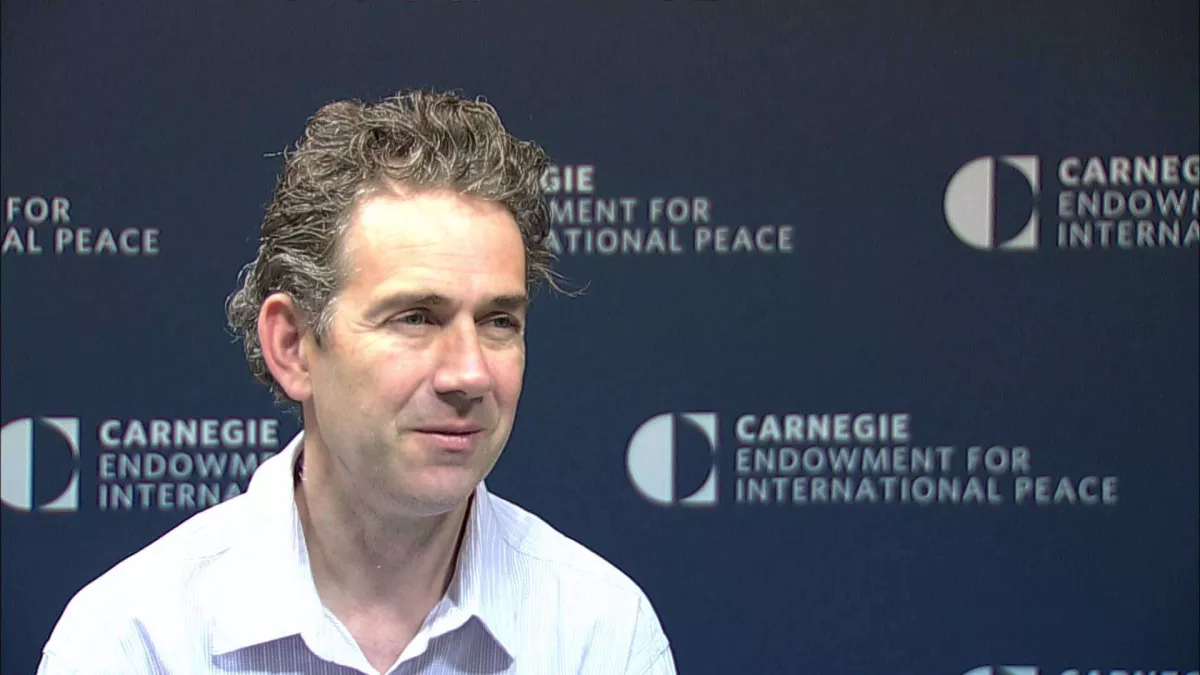
However, the key issue with de Waal is not his past writings, but his current role. In his article in Foreign Affairs in September 2025 — already after the Washington agreements between Aliyev and Pashinyan brokered by Trump — de Waal continues to keep the conflict on the agenda, constructing a narrative of the “unfinished” peace process and the “concessions” of Pashinyan. Each of his publications sends a signal: the peace is fragile, do not trust Baku, the conflict is not over. Who benefits from such a signal? Those who wish to retain leverage over the region.
Now, regarding the figures behind the British dimension of this process, two names stand out: Ruben Vardanyan and Armen Sarkissian. Vardanyan is a Russian-Armenian oligarch, founder and former head of the Moscow investment firm Troika Dialog — the very bank that, according to a 2019 OCCRP investigation, was at the centre of a massive money-laundering scheme known as the “Troika Laundromat.” Through a network of more than 70 offshore companies controlled by Vardanyan’s structures, billions of dollars were transferred out of Russia. Vardanyan insisted vehemently that he was unaware of the operations of the division, yet he served as president, CEO, and major partner of the bank during the period when these operations took place.
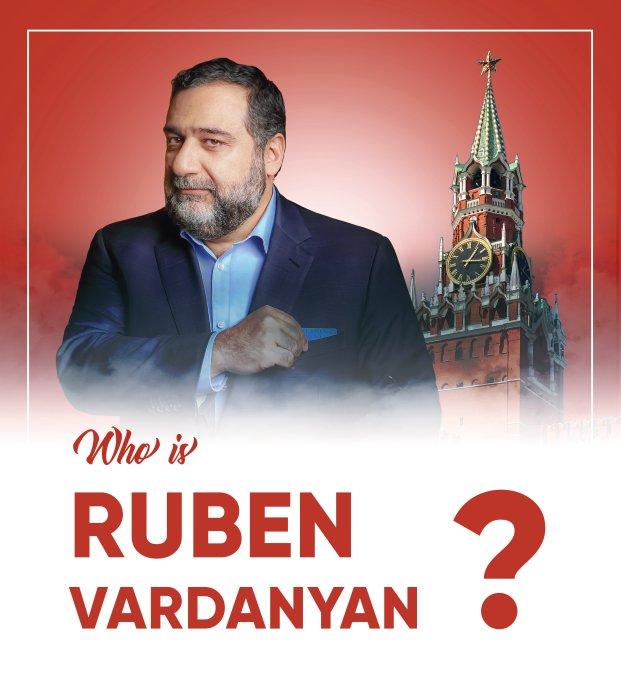
Ruben Vardanyan’s connection to the British Crown is a documented fact. In 2009, he donated $100,000 to the Prince’s Charities Foundation. The funds were routed through the offshore company Quantus Division Ltd, registered in the British Virgin Islands — the very company that was part of the Troika Dialog money-laundering network. In total, transfers through Quantus to the foundation amounted to $202,000. The money was directed towards the restoration of Dumfries House — a royal residence in Ayrshire, Scotland.
Moreover, Vardanyan personally financed the renovation of an estate outbuilding, brought in his wealthy associates to the project, and the total volume of private contributions reached approximately £1.5 million. In 2010, he was invited to an event celebrating Armenia at Windsor Castle, where then-Prince Charles spoke about plans to restore Dumfries House.
This closeness to the royal family created a protective shield of legitimacy under which Vardanyan could advance Armenian interests at the highest levels of the British establishment. When, in 2022, he renounced his Russian citizenship and moved to Karabakh to assume the post of “state minister” of the separatist entity, it was a deliberate political move — from London and Moscow straight into the conflict zone.
On February 17, 2026, the Baku Military Court sentenced him to 20 years in prison on charges of terrorism, financing terrorism, creating illegal armed formations, and crimes against humanity. Predictably, Amnesty International called the trial unfair, and his family described it as “expected but monstrous.”
Yet the fact remains: a person whose money — even if it passed through the Troika Laundromat — ended up in the accounts of the royal foundation remained, until the very last moment, an instrument for promoting separatism in the territory of a sovereign state.
The second figure is Armen Sarkissian, former President of Armenia, who currently resides in London. He previously served as Armenia’s ambassador to the United Kingdom, then as Prime Minister, and from 2018 to 2022 as President of the Republic of Armenia. Throughout his career, he has combined diplomatic service with business ventures. His investment companies, Knightsbridge Group and Highbury Group — named after the London districts where he lives — operated dozens of subsidiaries across telecommunications, energy, real estate, and agriculture. Through offshore entities, the Sarkissian family owns five luxury properties in London valued at tens of millions of pounds, including a mansion on Cheyne Walk in Chelsea.
Sarkissian’s connection to Vardanyan is direct and well-documented. The board of trustees of the Yerevan My Love foundation, which Sarkissian established, included both the Prince of Wales and Ruben Vardanyan. In 2013, Sarkissian accompanied Prince Charles on his visit to Armenia as a guest of the foundation. Sarkissian was also a member of the board of directors of the British company Lydian International, which was developing the Amulsar gold mine in Armenia — and, according to observers, the Prince’s visit was linked to lobbying efforts on behalf of the company.
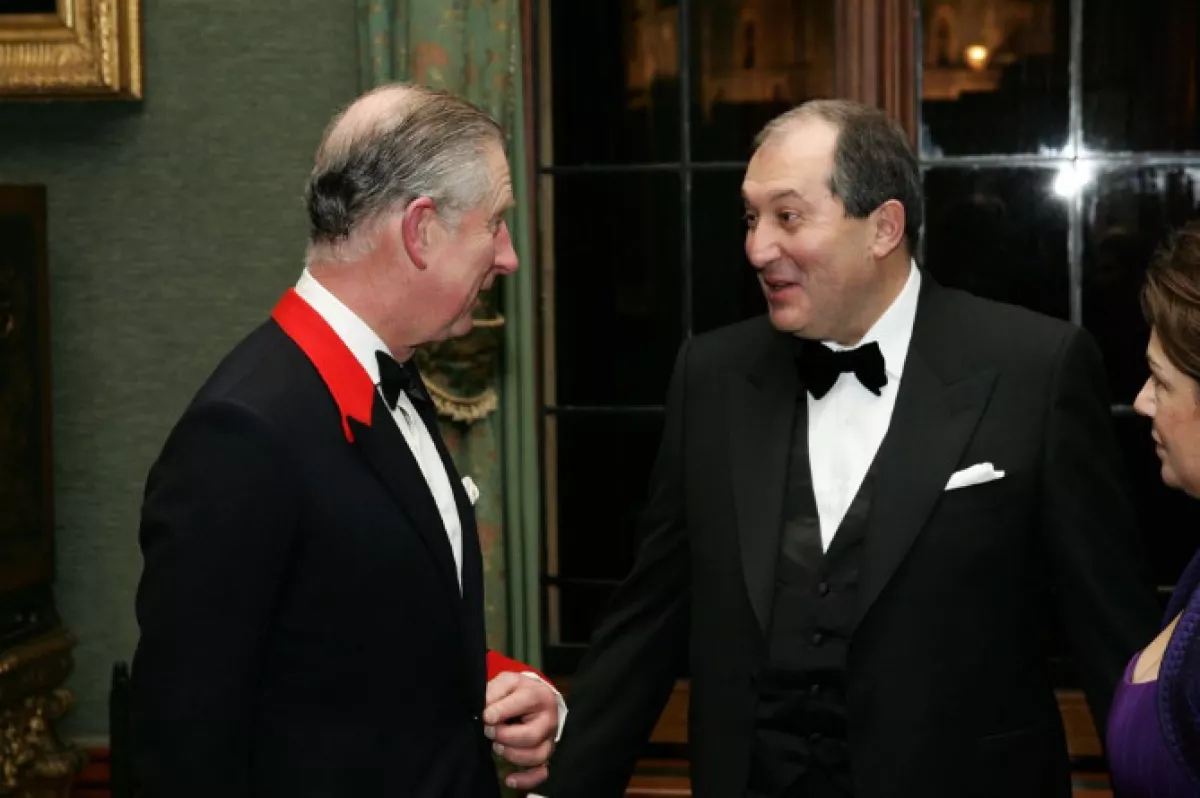
Thus, through Sarkissian and Vardanyan, an influence network was established that linked Armenian business interests, Russian capital of questionable origin, and the highest levels of the British establishment. Money from the Troika Laundromat ended up in the royal foundation. The former President of Armenia managed assets from a London mansion registered through the British Virgin Islands. The future King Charles III accepted donations and made visits. Meanwhile, the British Parliament holds hearings on the alleged “destruction of cultural heritage” — effectively amplifying the same narratives Moscow has been promoting.
All of this raises three questions.
The first: what does the synchronisation of anti-Azerbaijani propaganda in the United Kingdom and Russia mean? If the talking points align — and they do, down to the exact wording — if the mechanisms of pressure operate according to the same logic, and if the same figures (Vardanyan, positioned between Moscow and London) are involved in both networks, then this is not a random coincidence, but a systemic process. The only question is whether it is being consciously coordinated, or if it emerges as a by-product of a broader influence network that is not limited to a single capital.
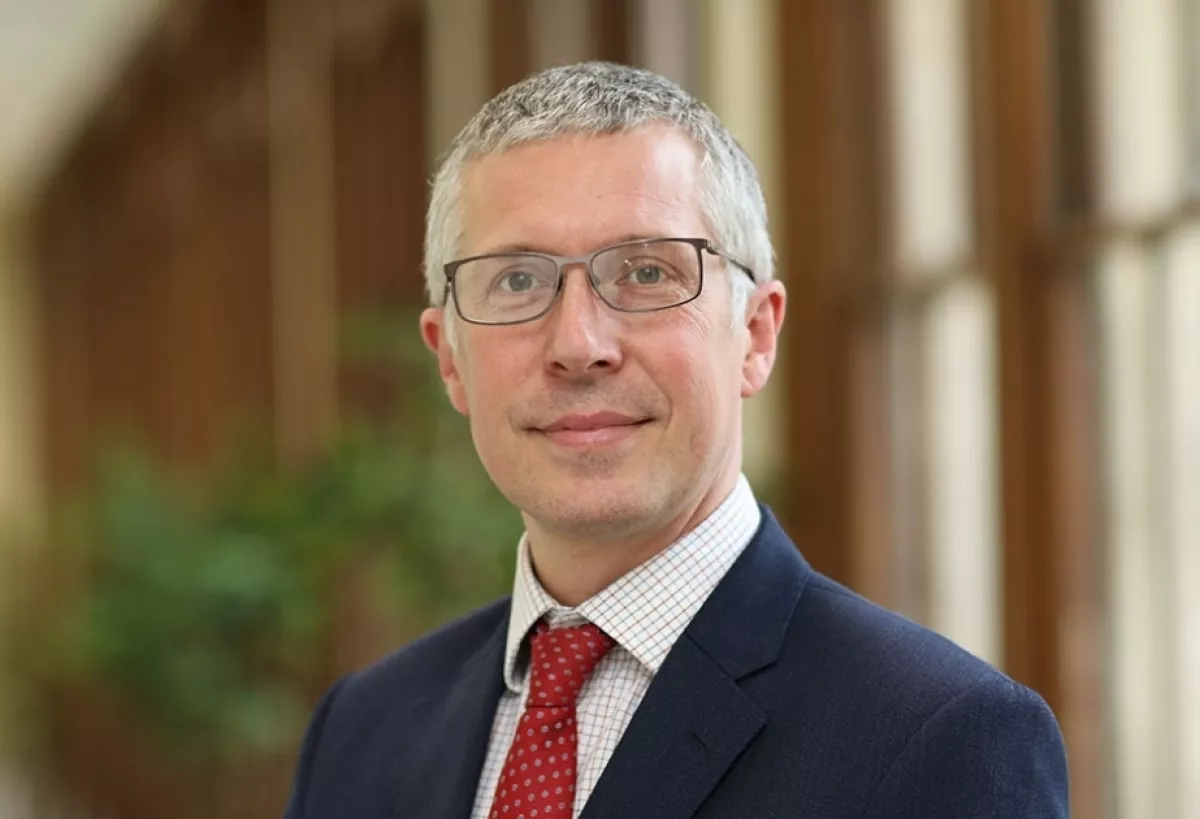
The second question: if this is the work of Russian influence agents in the United Kingdom, why is the British government turning a blind eye? London spent years building an architecture to counter Russian influence following the Skripal poisoning. British intelligence services publicly warn of the threat posed by Russian “active measures.” Yet, talking points that mirror Russian propaganda are freely promoted in Parliament and on the BBC — simply because they target Azerbaijan, not Ukraine.
The third question: if this is not Russian influence, then what are the British government’s own objectives? Is the United Kingdom opposed to establishing peace in the South Caucasus? Does London seek to keep the region in a state of instability? Who benefits, and why, from granting a parliamentary platform to representatives of a dissolved separatist entity at precisely the moment when Baku and Yerevan, under Washington’s mediation, are moving toward a historic peace agreement?
It would be extremely interesting to hear answers to these questions from the British Ambassador to Azerbaijan.







 editor@caliber.az
 +994 55 444-88-98
 Азербайджан, Баку, ул. Низами, 203, Af Business House, 5-й этаж