










Landslides, floods kill 11 as Cyclone Maila batters Papua New Guinea
Tropical Cyclone Maila has killed at least 11 people in Papua New Guinea after triggering widespread flooding and landslides, while post-cyclone relief operations continue amid significant logistical challenges in reaching remote communities.
The Australian government has pledged A$2.5 million in assistance to support recovery efforts across the affected regions, ABC reports.
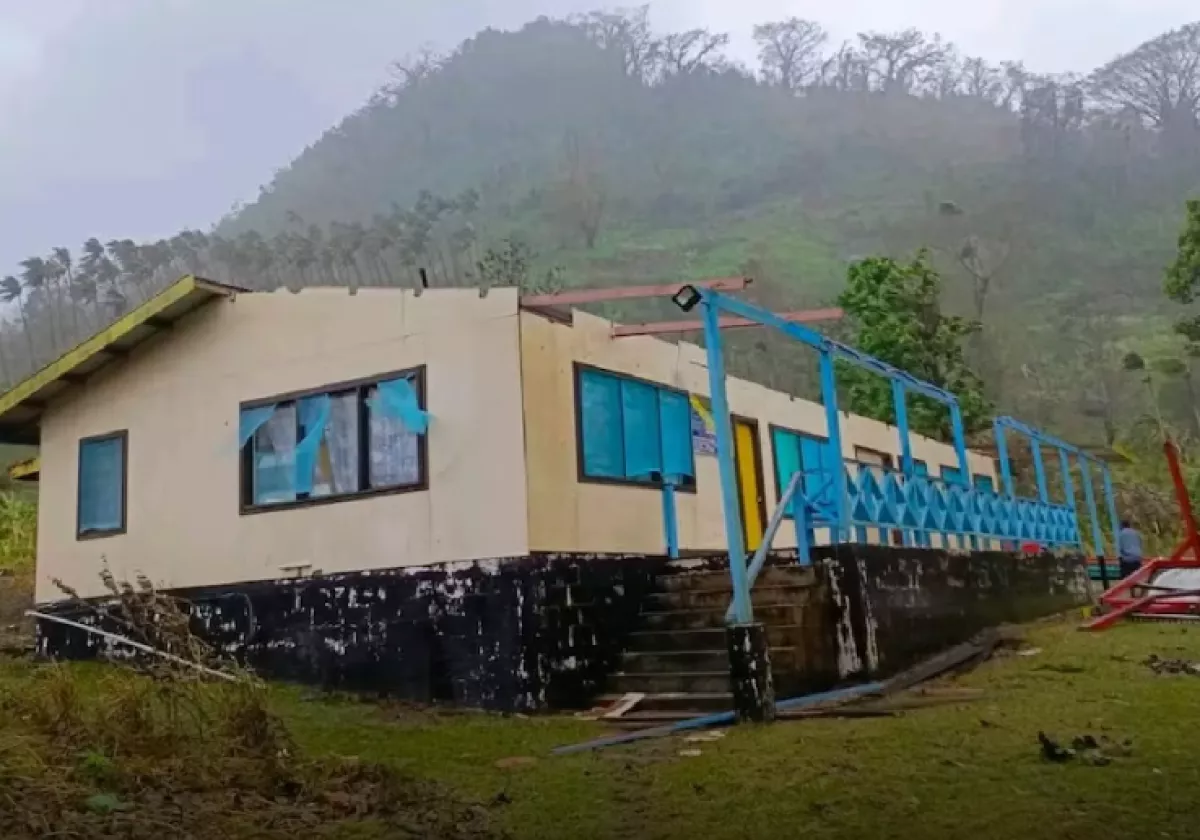
Prime Minister James Marape said communication with isolated areas remains difficult as authorities work to assess the full scale of the disaster and deliver essential supplies.
“Reports are still coming in and are scattered, but we will make sure we reach every place, every island, and every community that has been affected,” Marape said in a statement on Sunday, adding that food, water and temporary shelter were being organized for displaced residents. He also announced plans to visit Milne Bay province, where widespread damage has been reported.
In the autonomous region of Bougainville, which is seeking independence, schools were closed this week after the cyclone destroyed critical infrastructure, including roads and bridges, and severely disrupted food supply chains. Authorities confirmed 11 deaths in the region, including eight caused by a landslide.
Local resident Lohial Nuau, who delivered emergency supplies to Kongara Village, said a family of eight—including four adults and four children—was killed when their home collapsed during a night-time landslide.
He told the ABC their house collapsed in a night-time landslide while everyone was asleep inside, adding that two of the women killed were pregnant.
Mr Nuau described the humanitarian situation as increasingly difficult.
“They had run out of food — basic food items like tinned fish and sugar,” he said.
At Arawa District Hospital, officials have appealed for urgent supplies for injured survivors and their families. “These families arrived with nothing but the clothes on their backs. Many are recovering from injuries,” the hospital said on Facebook.
Residents continue to report widespread devastation across the region. “I know that many properties, hopes, food gardens, and other necessary supplies have been lost [and] even businesses have been affected,” said Rendova Island resident Pana Paza on social media. “I would like to call upon the responsible authorities to help us: government bodies, NGO's, churches and our people.”
Australian Foreign Minister Penny Wong announced A$1 million for Papua New Guinea’s response in Bougainville and Milne Bay, along with A$1.5 million for the Solomon Islands, where remote communities have also been severely affected. She said Australia stood “shoulder to shoulder” with both countries.
The cyclone has since weakened into a tropical low, though warnings remain in place for northern PNG, including Manus Island, East Sepik and West Sepik. Regional authorities are also monitoring Tropical Cyclone Sinlaku, now a Category 5 storm affecting nearby areas.
In New Zealand, cleanup efforts are underway after Cyclone Vaianu brought heavy rain and winds exceeding 120 km/h, with some areas recording 220 mm of rainfall in 24 hours. Around 10,000 homes lost power, though most outages have now been restored.
By Vafa Guliyeva







 editor@caliber.az
 +994 55 444-88-98
 Азербайджан, Баку, ул. Низами, 203, Af Business House, 5-й этаж