










Leo XIV asserts papal authority against defiant traditionalists with expulsion
A traditionalist Catholic group has openly defied Pope Leo XIV by ordaining four bishops without papal approval, prompting the Vatican to issue excommunications in what marks the first major challenge to the new pontiff's authority.
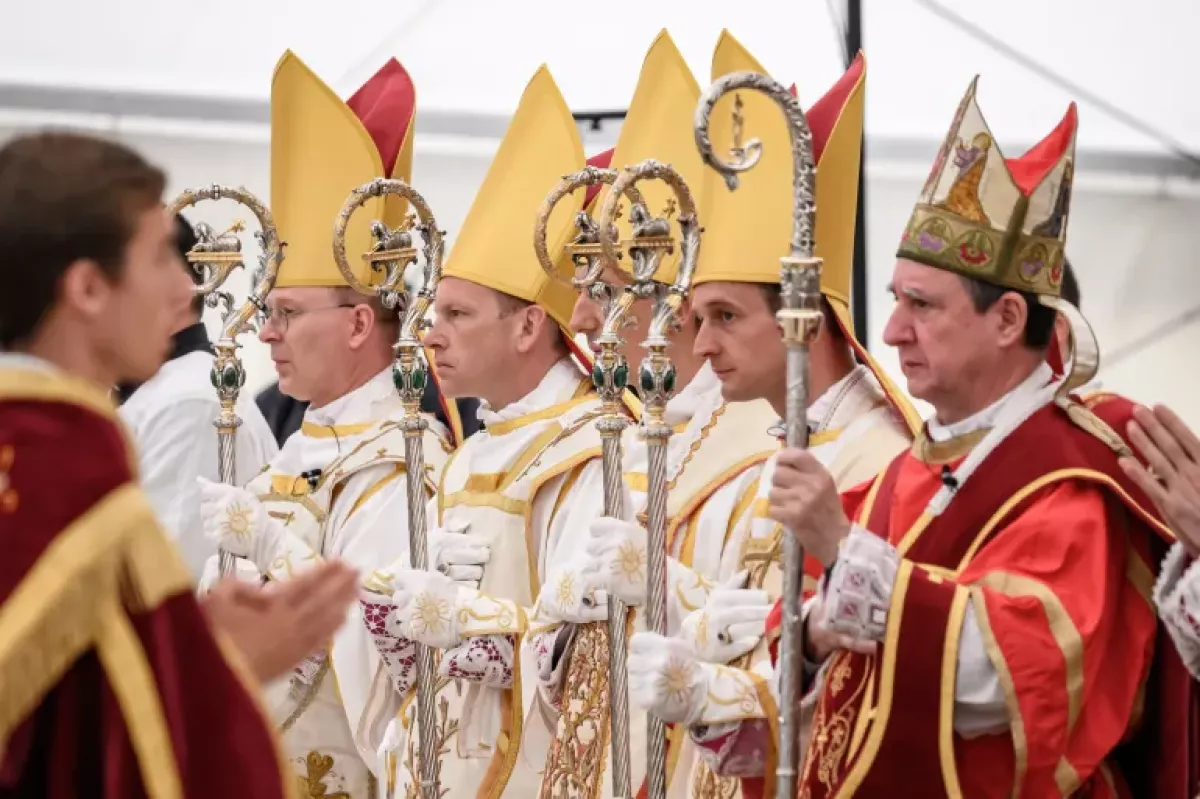
The Society of Saint Pius X (SSPX), which rejects several reforms introduced by the Catholic Church in recent decades, carried out the ordinations on July 1 during a ceremony attended by thousands of supporters in Écône, as reported by Euronews.
Days before the ceremony, Pope Leo XIV made a final appeal to the group, warning that the ordinations would constitute a "schismatic" act and a "sin of extreme gravity."
After the group proceeded with the ceremony, the Vatican's Dicastery for the Doctrine of the Faith issued a decree on July 2 declaring the four newly ordained bishops, along with the two bishops who conducted the ordinations, excommunicated from the Catholic Church.
Although the SSPX has around 700 priests and an estimated 600,000 followers worldwide—a relatively small presence compared with the Roman Catholic Church's 1.4 billion members and roughly 400,000 priests—the pope has treated the challenge to Church unity as a serious concern.
The act of excommunication bars individuals from participating in the Church's sacraments.
The Vatican also warned priests and lay Catholics against formally joining or following the society, stating that doing so would result in automatic excommunication.
Traditionalists on war path with Holy Sea
Founded in Switzerland in 1970 by French Archbishop Marcel Lefebvre, the Society of Saint Pius X (SSPX) was officially suppressed by the Bishop of Fribourg five years later. The group's decision to ordain four bishops without papal approval in 1988 led to their excommunication by the Vatican.
The latest measures go beyond the sanctions imposed in 1988, when excommunications were limited to the bishops involved in unauthorized ordinations. Although Pope Francis had previously authorized SSPX priests to validly celebrate the sacraments of confession and marriage under certain conditions, the new decree states that marriages and confessions performed by the group will now be considered invalid.
The dispute traces its origins to opposition by the society's founder, Marcel Lefebvre, and his followers to reforms adopted during the Second Vatican Council.
Supporters of Lefebvre reject the council's teachings on religious freedom, ecumenism, and reforms to Catholic liturgy, including its condemnation of all forms of antisemitism.
The society argues that the Catholic Church is in a "state of emergency" because of what it considers the spread of liberal and modernist ideas within the Church. It maintains that ordaining bishops without papal approval is necessary to preserve what it views as authentic Catholic teaching and has recently published a 28-page "profession of Catholic faith" intended to, in its words, "enlighten souls in the face of modern errors."
Despite thie strict response by the Holy Sea, the Vatican emphasized that reconciliation remains possible.
“The Church, as a caring mother, will welcome with sincere affection and active care all those who wish to return to full communion.”
By Nazrin Sadigova







 editor@caliber.az
 +994 55 444-88-98
 Азербайджан, Баку, ул. Низами, 203, Af Business House, 5-й этаж