










Mediterranean port unions rally against war-economy funding PHOTO
Several Mediterranean ports were brought to a halt this week as dockworkers, students, and labour unions staged a nationwide strike to protest in what they describe as the increasing militarization of port infrastructure, which has brought about poorer working conditions.
Large demonstrations took place on February 6 in a coordinated effort by the respective unions in Italy (USB), Türkiye (Liman-Is), Greece (Enedep), as well as in Spain’s Basque Country (LAB), according to ICFI media.
Protesters accuse European governments of prioritizing military expenditure over public services, arguing that this shift has undermined worker safety and labour protections.
“We won’t accept work without rights,” said Damianos Voudigaris of the Greek union. “Development should mean going home alive. Ports are places of work, not war. They are places of sweat, not blood.”
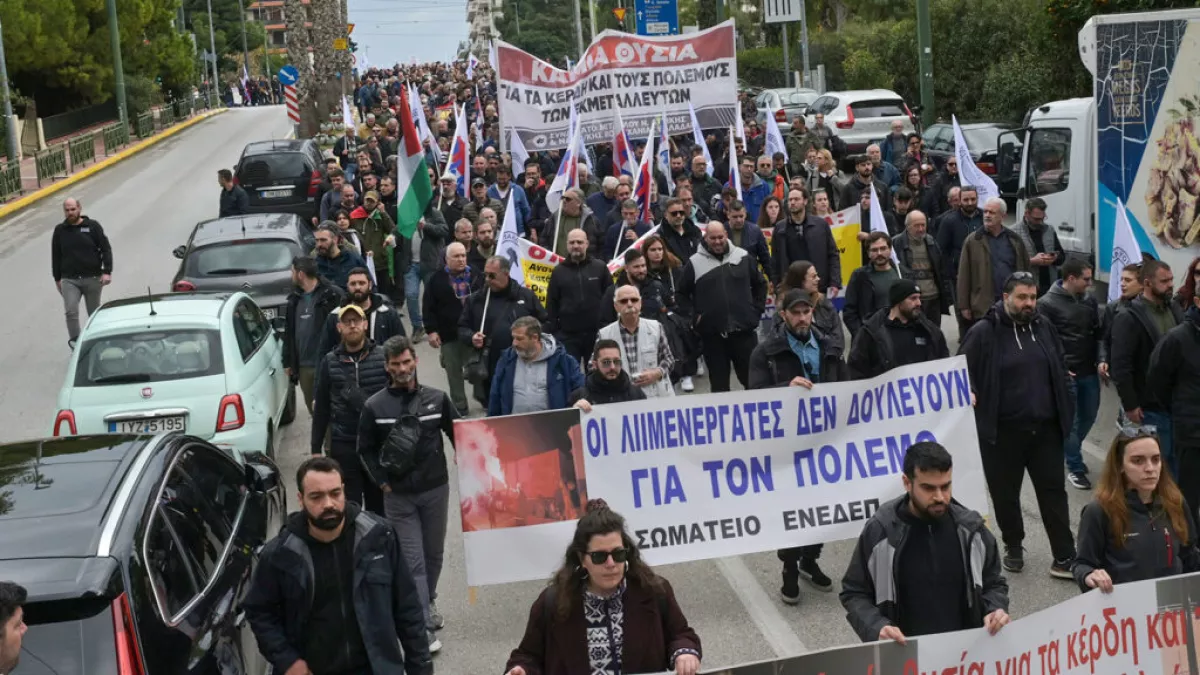
Organizers framed the mobilization as part of broader resistance to militarism, linking ongoing conflicts to wage pressure, worsening working conditions, and what they describe as the gradual erosion of labour rights. They argue that directing resources toward a “war economy” has come at the expense of living standards and public services, while also contributing to longer working hours and limited recognition of physically demanding jobs in pension systems.
Italy saw some of the largest actions of the day, with coordinated strikes reported across more than a dozen ports involving dockworkers, port staff, students, and members of the public.
In Trieste, dockworkers warned against further privatization of port operations, while some demonstrations focused on opposing the use of port facilities to transport military cargo, particularly shipments covertly destined for Israel, which has attracted additional protestors who have been opposed to the war.
In Genoa, members of the collective CALP led one of the largest rallies, declaring, “We promised to block everything – and we blocked everything. We promised a general strike – and we had a general strike. We promised an international strike – and here we are.”
The World Federation of Trade Unions issued a statement backing the protests and adopted the official banner reading “Dockworkers Don’t Work for War.”
Union representatives indicated that the protests may mark the start of a longer campaign, signalling growing resistance to privatization, NATO policies, and what they describe as an expanding war-focused economic agenda across parts of Europe.
By Nazrin Sadigova







 editor@caliber.az
 +994 55 444-88-98
 Азербайджан, Баку, ул. Низами, 203, Af Business House, 5-й этаж