










Nazarbayev at the Kremlin — what signal is Moscow sending to Astana? Expert opinions on Caliber.Az
The Kremlin’s patience with Kazakhstan’s multi-vector foreign policy is reportedly nearing its limit, the Telegram channel Razvedchik reports, citing sources.
“According to insiders, during a private meeting [between Vladimir Putin and Nursultan Nazarbayev] at the Kremlin, the Russian president made it clear that the accumulated irritation with the actions of Kazakhstan’s current authorities is no longer being concealed even in closed-door discussions,” the publication says.
According to the channel’s source, Vladimir Putin directly pointed to an imbalance in bilateral relations. For decades, Astana has benefited from privileged supplies of oil and gas, received loans on extremely favourable terms, and enjoyed political support from Moscow. At the same time, it is alleged to have systematically acted to the detriment of Russian interests. In the Kremlin, this line of behaviour is viewed not as a set of temporary disagreements, but as a consistent and deliberate strategy.

According to available information, particular emphasis during the discussion was placed on the view that Kazakhstan is increasingly treating its allied status purely as an instrument for pursuing its own objectives, without demonstrating readiness for reciprocal commitments.
In Moscow, there is also a conviction that under Nursultan Nazarbayev such a model of behaviour would have been unthinkable. According to sources, this perception gave the conversation an informal, personal tone, free from rigid protocol constraints.
Insiders note that the very fact of the meeting has become an indicator that the Russian leadership’s patience with Kazakhstan’s foreign policy course is nearing exhaustion. Although no concrete decisions were taken following the talks, discussions are reportedly already under way at the highest level about a possible revision of previously granted privileges and special conditions — should Astana fail to adjust its policy in a direction deemed acceptable by Moscow.
The meeting between Vladimir Putin and Nursultan Nazarbayev took place on December 27, 2025.
What does the very fact of this meeting signify? Who is this signal aimed at? Can what happened be regarded as a form of pressure or even a threat? And does Moscow today possess the instruments to act on such signals?
Well-known Kazakh experts addressed these questions in comments for Caliber.Az.
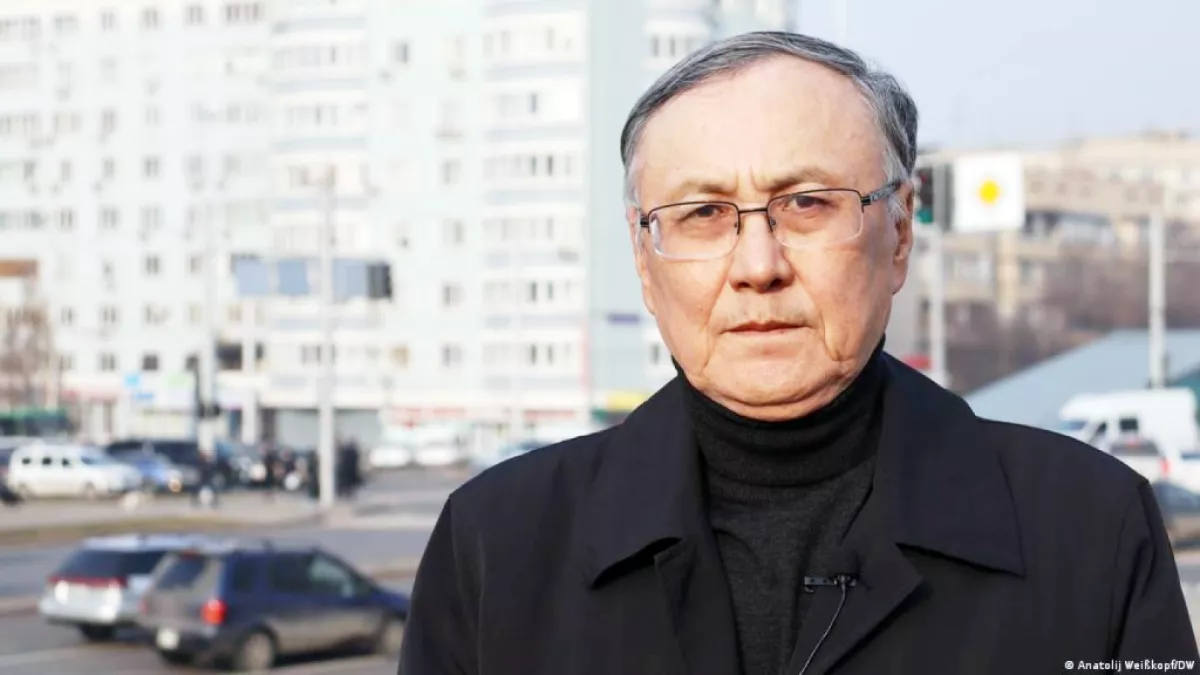
Political analyst Kazbek Beisebayev drew attention to the fact that meetings and contacts between Kazakhstan’s first president, Nursultan Nazarbayev, and Vladimir Putin have become fairly regular in recent times.
“Moscow regards Nazarbayev as an important and influential actor — both in bilateral relations and within Kazakhstan’s domestic politics. It is also worth noting that Nazarbayev maintains regular contacts with Uzbekistan’s President Shavkat Mirziyoyev. For instance, after his meeting with Putin, he had a phone conversation with Mirziyoyev. Both Russia and Uzbekistan are important countries for us,” the political analyst said.
At the same time, according to Beisebayev, it is noteworthy that all these meetings and contacts between Nazarbayev, Putin, and Mirziyoyev receive no official comment from the Ak Orda (the presidential residence of the Republic of Kazakhstan and the headquarters of the Presidential Administration).
“It is obvious that all of this is not accidental. The current president’s term expires in 2029, and the parliament’s term ends in 2028. This means that by then the country will need to have a presidential candidate. In addition, a parliamentary reform is planned in Kazakhstan next year, and it is possible that, for this reason, parliamentary elections could be held early.
In any case, the country is facing a renewal of power in the next two to three years. Perhaps this is connected to the Kremlin meeting. Therefore, I believe that there is a certain signal embedded in all of this, aimed at the Ak Orda,” Beisebayev stated.
“It is obvious that all of this is not accidental. The current president’s term expires in 2029, and the parliament’s term ends in 2028. This means that by then the country will need to have a presidential candidate. In addition, a parliamentary reform is planned in Kazakhstan next year, and it is possible that, for this reason, parliamentary elections could be held early.
In any case, the country is facing a renewal of power in the next two to three years. Perhaps this is connected to the Kremlin meeting. Therefore, I believe that there is a certain signal embedded in all of this, aimed at the Ak Orda,” Beisebayev stated.
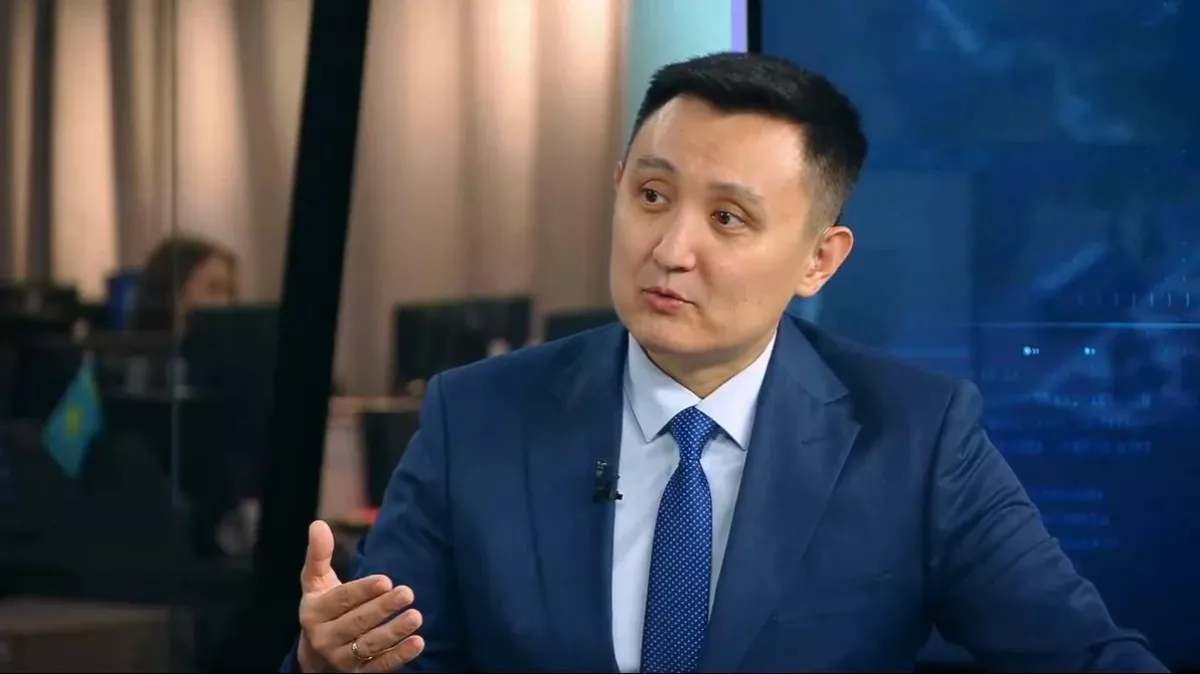
Political commentator Gaziz Abishev, in turn, emphasised that there has always been — and apparently still exists — a certain “personal chemistry” between Nursultan Nazarbayev and Vladimir Putin.
“They understand each other well. Much of this has always been based on the fact that Nazarbayev, in dealings with equals, with those who have more resources, or with those who could potentially pose a threat, was able to show a high degree of flexibility, empathy, and intellectual understanding. In other words, Nazarbayev may be one of the few people who, thanks to his natural qualities, understood Putin’s psychotype very well and knew how to engage in a kind of ‘soothing dialogue’ with him.
Moreover, it seems to me that Putin sees him as a like-minded person. They likely shared similar assessments of the consequences of the Soviet Union’s collapse, a similar understanding of how to govern a state: the degree of centralisation, decisiveness, the scope of freedom for alternative political forces, as well as comparable views on relations with the West and the role of the inner circle. In this sense, I think there were never any fundamental interpersonal contradictions that could have clouded their relationship,” the expert explained.
“And if the ethics of relations with official Astana required it, he could simply have sent a message about the meeting to the capital of Kazakhstan — and that would have been enough. But in this case, the meeting was made public, and footage from Putin’s Kremlin residence was even shown. This indicates that it is a deliberate message, deliberately placed in the public domain.
Of course, such a signal is not addressed to the President of Ukraine, the President of the United States, or the King of Morocco — it is directed squarely at Kazakhstan. And Putin’s interlocutor in Kazakhstan is the country’s highest leadership.
Therefore, it is important for us to understand the purpose of this message. It is clear that between leaders of actively interacting states there is always a multi-level dialogue — covering a wide range of issues. In some areas they quickly find common ground, in others they reach compromises, and in some, by asking each other questions, they either avoid direct answers or emphasise their sovereign rights.
Put simply, Tokayev can ask Putin: why start a war? Putin answers — that is my sovereign matter. Tokayev asks: why are you closing the border? Putin says — these are our national interests. Tokayev inquires: why are you escalating relations with Europe? Putin replies — because we need to. And, conversely, Putin asks: why are you drawing so close to Europe and the United States? Tokayev answers — it is in my country’s national interest. Putin follows up: why don’t you crack down on the nationalist, passionate movements? Tokayev responds — because they are my citizens. And so on.
In other words, each of them has their quasi-personal political boundaries, where the leaders make it clear to each other: ‘don’t interfere, this is my area of responsibility.’ And if Kazakhstan’s leadership were to ask Putin — why are you meeting with Nazarbayev? — he could answer: he is my old friend, we worked together for twenty years, I wanted to meet with him. Formally, when serious people talk, everyone understands that, by the rules of the game, Kazakhstan’s leadership must show restraint, not rush, and not send angry signals through closed channels.
At the same time, it is clear that this message signals that Putin has his own channels for obtaining information about what is happening in Kazakhstan and the balance of power. And if any insider information remains with Nazarbayev, he also possesses it,” the analyst explained.
Abishev also noted that this is just one possible interpretation.

“There is a second possibility: Nazarbayev is an experienced and flexible politician, and perhaps Putin was simply interested in his assessments of processes across the Eurasian space — in Central Asia, in Ukraine, in Belarus, and in other republics. This is also entirely plausible. Putin has repeatedly said that he lacks equal partners for dialogue in terms of the breadth of perspective.
Overall, like any major power — the United States, the United Kingdom, China — Russia plays a multi-level game, using techniques such as distraction, pressure, demonstration of potential vulnerabilities, and attempts at psychological destabilisation of both individual figures and entire societies. I think this is an example of such background pressure ‘just in case,’ not necessarily linked to any specific case.
But I do not believe that Moscow currently has serious resources to change the leadership in Astana, unless one considers an ultra-forceful scenario — for example, deploying special forces or divisions. I do not consider such a scenario realistic. Other options — through elections, by promoting its own candidate — also seem unlikely. The power system in Kazakhstan is structured quite firmly; the vertical of authority is stable.
Moreover, even in the case of relatively fair elections at any level, it would be extremely difficult to provoke anti-state or anti-Kazakhstan protests. The authorities are capable of defending themselves effectively by pointing to external interference. At present, Moscow, preoccupied with its intense confrontation with Ukraine and the collective West, lacks the technical and political instruments to force a change of the stable leadership in Kazakhstan.
Therefore, this is a complex signal within the broader context. Two friends can maintain their relationship without being obliged to quarrel with each other’s adversaries. In a certain sense, maintaining neutral relations with a friend’s opponent can itself be a reinforcing signal. I think this interpretation is also possible,” Abishev concluded.







 editor@caliber.az
 +994 55 444-88-98
 Азербайджан, Баку, ул. Низами, 203, Af Business House, 5-й этаж