










Brussels' blackmail of Tbilisi: visa-free regime used as a political weapon Expert opinions on Caliber.Az.
The Speaker of the Georgian Parliament, Shalva Papuashvili, stated that the European Union is blackmailing the citizens of the country by threatening to suspend the visa-free regime, effectively putting their freedom at stake. He made this statement in a comment to journalists.
The trigger for this was a letter from European Commission President Ursula von der Leyen, addressed to Georgian opposition politicians.
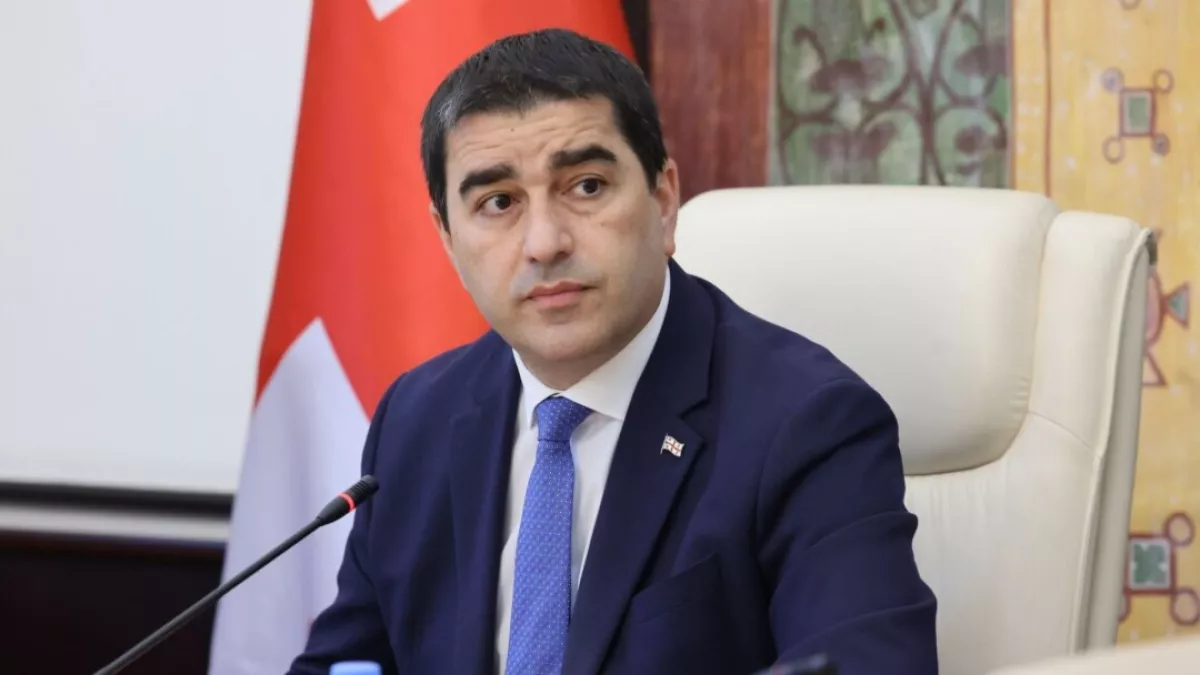
“The main message of this blackmail is: ‘Georgian people, either you obey our will and do as we say – we will appoint your judges and prosecutors, force you to legalise same-sex marriage as we demand of everyone, pass the laws we want, repeal those we don’t – or you will have to come to our embassies for visas.’ This is the level at which they think of the Georgian people – that between freedom and a visa, Georgians will choose the visa,” said Papuashvili.
According to him, European officials have been “studying” Georgia for 35 years but still haven’t understood public sentiment: “Since the fall of the Iron Curtain, they have come here, eaten khinkali and khachapuri, looked at the ‘Mother of Georgia’ monument, read a few stanzas from The Knight in the Panther’s Skin — and still do not understand who they are dealing with if they think it is possible to put the Georgian people to a choice: visa or freedom.”
Papuashvili emphasised that such rhetoric is nothing new: “The EU is not the first to speak to us this way. At various points in our independence, they have closed our visas and imposed economic sanctions. That’s exactly it: freedom or a visa. This is the path the European Union is on today under its current leadership — they think it is possible to put the people to such a choice and expect them to choose the visa.”
The Speaker of Parliament also spoke of Brussels’ “colonial mindset”: “What kind of cultural understanding do they have of other peoples, from which century do they come, if they think of others as if they could land from a ship, meet a foreign tribe, and say: ‘We’ll give you a drink — but take all the gold.’ That’s how people were deceived once, but that time is long past.”
In her letter, Ursula von der Leyen confirmed that the recently introduced partial suspension of the visa-free regime with Georgia could, in the future, be extended to all citizens of the country. According to the European Commission President, to avoid such a scenario, Brussels expects the Georgian authorities to take steps to improve governance, strengthen the rule of law, and combat corruption.
Since February, the European Union has suspended the visa-free regime for holders of Georgian diplomatic and service passports, as well as their family members. This measure is largely symbolic, as officials can still enter EU countries using regular passports. Nevertheless, von der Leyen described it as a “decisive measure” in response to “negative developments” in Georgia and the disregard of calls to release unfairly detained journalists, activists, and other individuals.
How can the current level of relations between Tbilisi and Brussels be assessed? Under what conditions could the parties return to full cooperation and mutual understanding? What could the suspension of visa-free travel to the EU mean for ordinary Georgian citizens?
These questions were addressed by prominent Georgian experts in an interview with Caliber.Az.
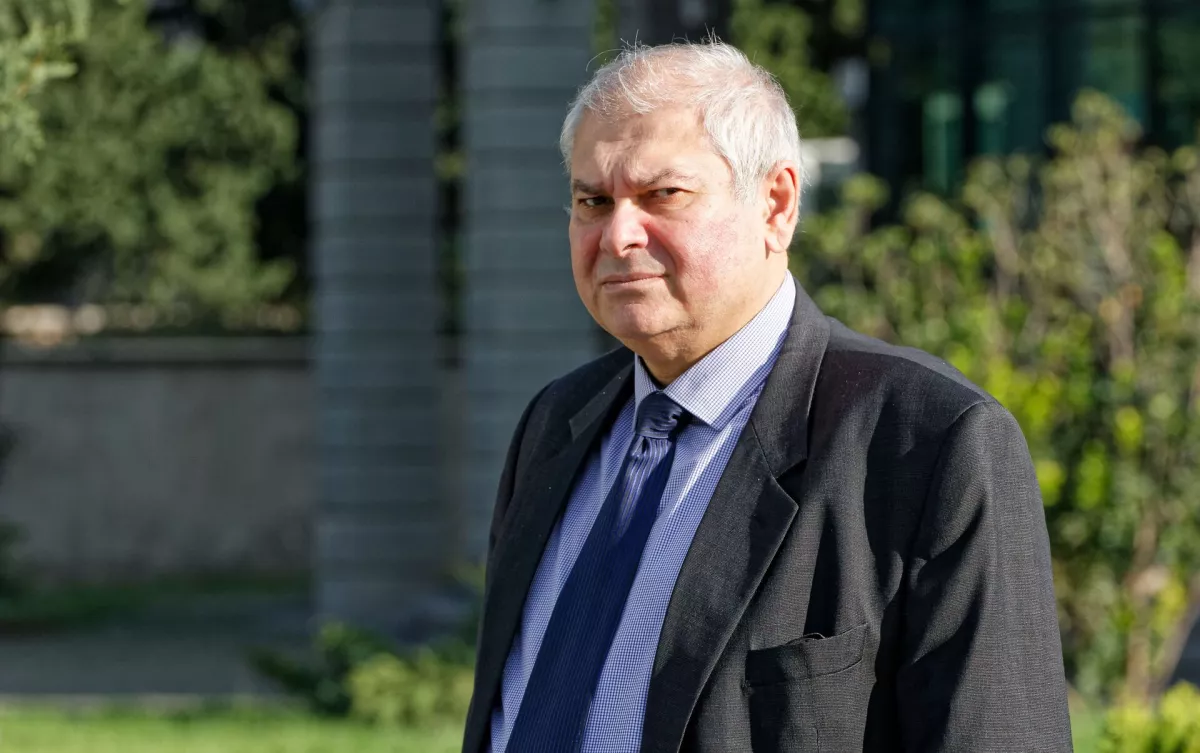
Professor of Political Science and honoured journalist of Georgia, Badri Nachkebia, noted that Ursula von der Leyen quite often makes statements about Georgia that raise many questions, including critical ones.
“Most of the Georgian population perceives this as blackmail. As Papuashvili pointed out, Georgia has already been subjected to visa-related pressure multiple times — for example, during the period of the visa regime with Russia, which brought nothing but alienation. In this case, one can agree that European bureaucrats have not yet fully understood the mentality, psychology, and other elements of Georgian identity. Speaking to Georgia in the language of force is counterproductive, and the sooner European politicians realise this, the better. In the near future, we will likely observe a sharper negative attitude from parts of society and the establishment toward European bureaucracy, and it will be extremely difficult to rectify the situation later.
The very prospect of deteriorating relations with the European Union is regrettable, as for small Georgia, it could have serious consequences. The country already has a difficult relationship with Russia — in fact, a situation of ‘neither war nor peace.’
Damaged relations with the EU could inflict significant harm on Georgia, particularly because of the large number of migrant workers employed in Europe on a rotational basis. This system benefits the country, as seasonal workers maintain ties with their homeland and the population does not emigrate permanently,” the professor explained.
According to him, the example of mass emigration to the United States has already dealt a serious blow to Georgia’s demographic situation.
“The authorities need to explain national interests and values more thoroughly. The best way out of the situation would be to establish a dialogue with the opposition and partially reduce the level of political polarisation, which has created a deep divide between the sides. The current problems are a result of the fact that, at the time, the parties did not sit down at the negotiating table and make mutual concessions.
One of the serious mistakes of the opposition was that, after the parliamentary elections, it chose the ‘street’ over working within parliament. If a visa regime with the EU is indeed imposed, it could trigger political upheavals. The suspension of the visa-free regime would hit the population hard, as tens of thousands of people rely on this opportunity to support their families. If the Georgian Dream party does not find a way to compensate for this resource, which provides income for a significant portion of citizens, it will become a serious challenge for the country,” Nachkebia believes.
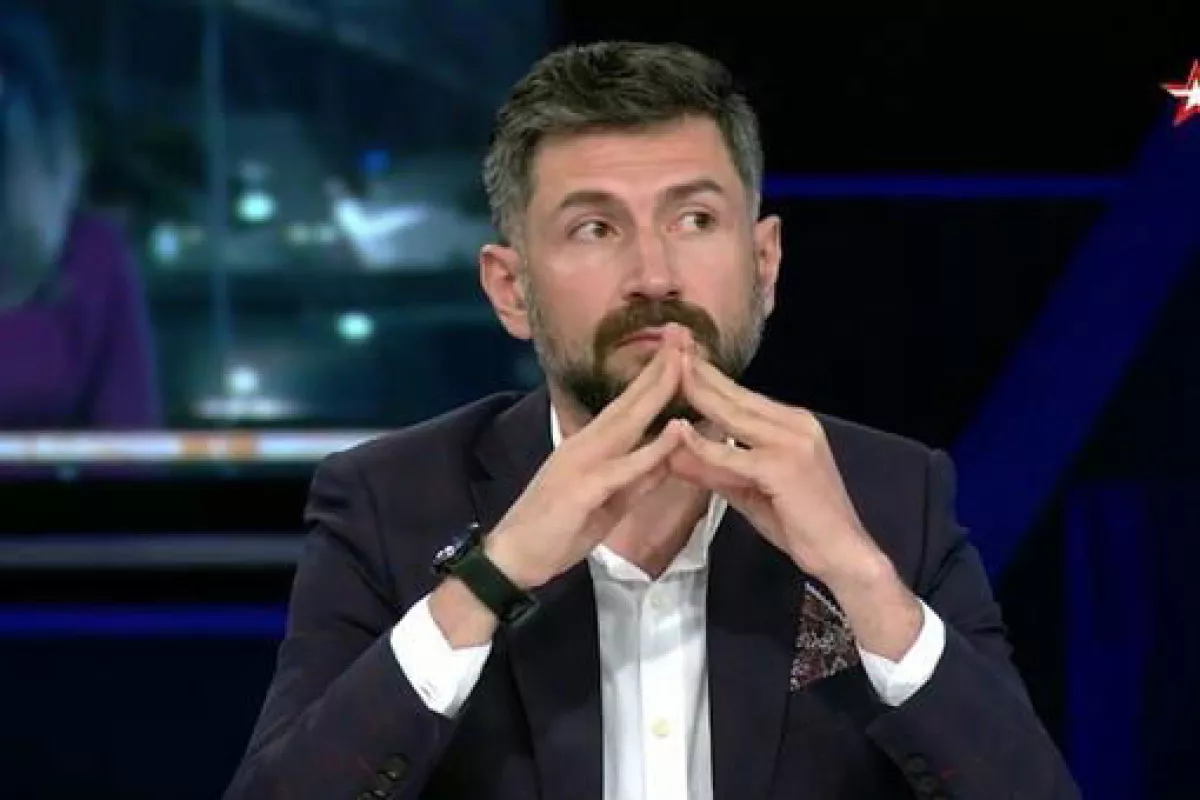
Director of the Georgian Caucasus Centre for Islamic Studies and an expert at the Financial University under the Government of the Russian Federation, Shota Apkhaidze, noted that Georgia’s constitution formally enshrines its path toward European integration.
“No one has revoked Georgia’s Western trajectory. Although there is currently some tension between the Georgian Dream party and the European Union, the fundamental principle of the Constitution — the country’s aspiration to join NATO and the EU — remains intact.
We cannot speak of a shift in Georgia’s foreign policy direction. If a radical change were intended, the authorities would have had to remove the relevant provision from the Constitution. Since that has not happened, what we are witnessing is a political confrontation and a kind of bargaining between the sides.
The European Union, believing that the situation is slipping out of its control, has been unable to reach an agreement with the Georgian Dream party, as the party is not willing to make concessions regarding the opposition.
Brussels is interested in seeing Georgian Dream provide the opposition with greater opportunities — both within legislative structures and in local elections. However, the EU has so far been unable to achieve this. While Georgian Dream is not an anti-Western force, the opposition is ideologically closer to EU structures.
The confrontation is also linked to Georgia’s relations with Russia. It cannot be claimed that Georgian Dream is pro-Russian; however, the party sees economic benefits in cooperating with Russia, Iran, and China. This is what provokes the most dissatisfaction in the EU — that the party primarily pursues pragmatic, including financial, interests. Ideologically, Georgian Dream is not fundamentally a pro-Russian, pro-Chinese, or pro-European force.
Against this backdrop, relations between the parties have deteriorated. The EU was accustomed to having its recommendations followed during Saakashvili’s presidency and under several other post-Soviet leaders, with the political and financial elite oriented toward Brussels. While there has been some regression now, the situation could be resolved at any time if agreements are reached,” the researcher believes.
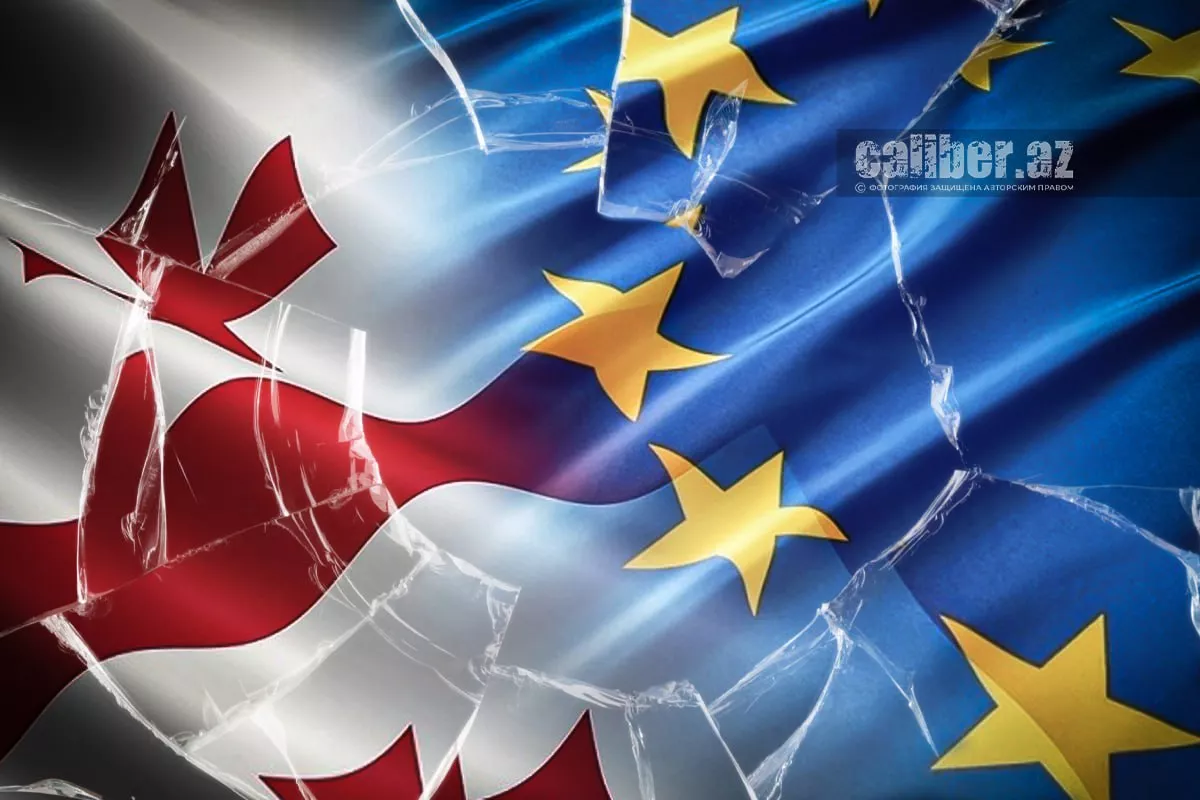
Speaking about the prospects for more constructive engagement, he believes that if the European Union were willing to make concessions, Brussels could reach an agreement with Bidzina Ivanishvili and accept terms that would be financially beneficial both for him personally and for the Georgian Dream party.
“I think an agreement is possible. Georgian Dream seeks greater freedom in domestic matters and, to some extent, in foreign policy, as well as non-interference from outside.
As for a potential suspension of the visa-free regime, this would undoubtedly be a blow to the citizens of Georgia. However, it is important to note that relations between Georgia and the EU are built on principles of parity, and it was the EU itself that was one of the initiators of Georgia’s European integration.
If the visa-free regime is suspended, it will affect the situation. There is already a certain scepticism in Georgian society toward the EU and Western structures, as the process of NATO integration has been significantly delayed. The West has largely limited itself to statements, while, in the view of many, there was no real assistance either during the conflict in South Ossetia or on other issues.
A suspension of the visa-free regime could have negative consequences both for the Georgian Dream and for the European Union itself. In such a case, it would be perceived not as a measure against the ruling party, but as a step against the Georgian people — citizens who rely on this opportunity for work, business, and free movement within the EU.
At the same time, I do not believe it would deal a critical economic blow to the country. Georgia’s main economic partners are regional states: Russia, Türkiye, followed by Azerbaijan and Armenia, as well as China. While there is an active free trade agreement with the EU, and trade continues robustly, the suspension of the visa-free regime would not have a strategically destructive effect,” Apkhaidze asserts.







 editor@caliber.az
 +994 55 444-88-98
 Азербайджан, Баку, ул. Низами, 203, Af Business House, 5-й этаж