










Germany faces Russian hybrid attacks Expert opinions on Caliber.Az
Germany’s Federal Office for the Protection of the Constitution (BfV) has warned of attempts by Russia to influence the current state parliamentary elections. This is stated in the agency’s assessment cited by the Berlin newspaper taz.
The agency takes the threat of unlawful foreign interference and information manipulation very seriously. “Given the increase in Russia’s hybrid attacks against European democracies, corresponding actions should be expected in the context of the state parliamentary elections,” the BfV said.
If such attempts occur, they “will likely be aimed at supporting individuals and parties that back Russia’s official stance or spread narratives aligned with the position of the Russian government.” The assessment does not name specific parties or individuals, according to taz.
The Federal Office for the Protection of the Constitution also warns of the danger of “discrediting individuals or parties that take positions contrary to the Kremlin’s worldview, for example, those supporting Ukraine.” Russian actors may also attempt to “undermine trust in democratic institutions, especially regarding domestic security and migration issues.” Additionally, the integrity of the elections themselves or the officially established results could be called into question.
In December, Germany announced Russia’s involvement in a large-scale disinformation campaign and cyberattacks ahead of the federal parliamentary elections and summoned the Russian ambassador for talks.
Earlier, it became known that, due to the growing threat of hybrid attacks, particularly from Russia, the Federal Office for the Protection of the Constitution of Germany is seeking to expand its powers.
This raises important questions: what exactly is Moscow hoping to achieve with these actions in Germany and across Europe? Is it seeking to gradually bring compliant forces to power? What could be Russia’s subsequent objectives?
Prominent foreign experts shared their insights on these issues with Caliber.Az.

A consultant to the German Foreign Ministry, political scientist, and professor at the University of Bonn, Andreas Heinemann-Grüder, noted that part of the Russian-speaking community in Germany supports either the AfD (the right-wing “Alternative for Germany” party) or the far-left.
“Together with Moscow, they are against migrants, in favor of so-called traditional values, for lifting sanctions, against the European Union, and opposed to further financial and military support for Ukraine. Germany is supposedly uncompetitive—why? Because of sanctions against Russia. And through regional elections, it is possible to influence the Bundesrat (the Federal Council, a constitutional body through which Germany’s 16 federal states participate in legislation and governance),” the professor explained.
According to him, Russia has various overseers and influence agents operating within Germany.
“These include organizers of pro-Kremlin car rallies, pro-Russian bikers, the Orthodox Church, humanitarian aid initiatives for Donbas, Russian-language schools, and programs like ‘The Way Home’ for returnees. There are also former officers from the security services of the former GDR. Many so-called Russian Germans watch Russian media daily and communicate with their Russian-speaking colleagues. This means that for the older generation of migrants from the USSR, integration has only been partial—Russian remains their first language.
There are also left- and right-wing forces that believe they can ‘free themselves’ from the U.S. with Russia’s help. They are invited to Moscow for propaganda and agitation courses, much like in Soviet times. This is further facilitated by the fact that some local businesses suffer from sanctions. Russia wants forces in Germany to rise in influence, similar to what has happened in Hungary. The local population’s fatigue from the war is also an important psychological factor,” says Heinemann-Grüder.
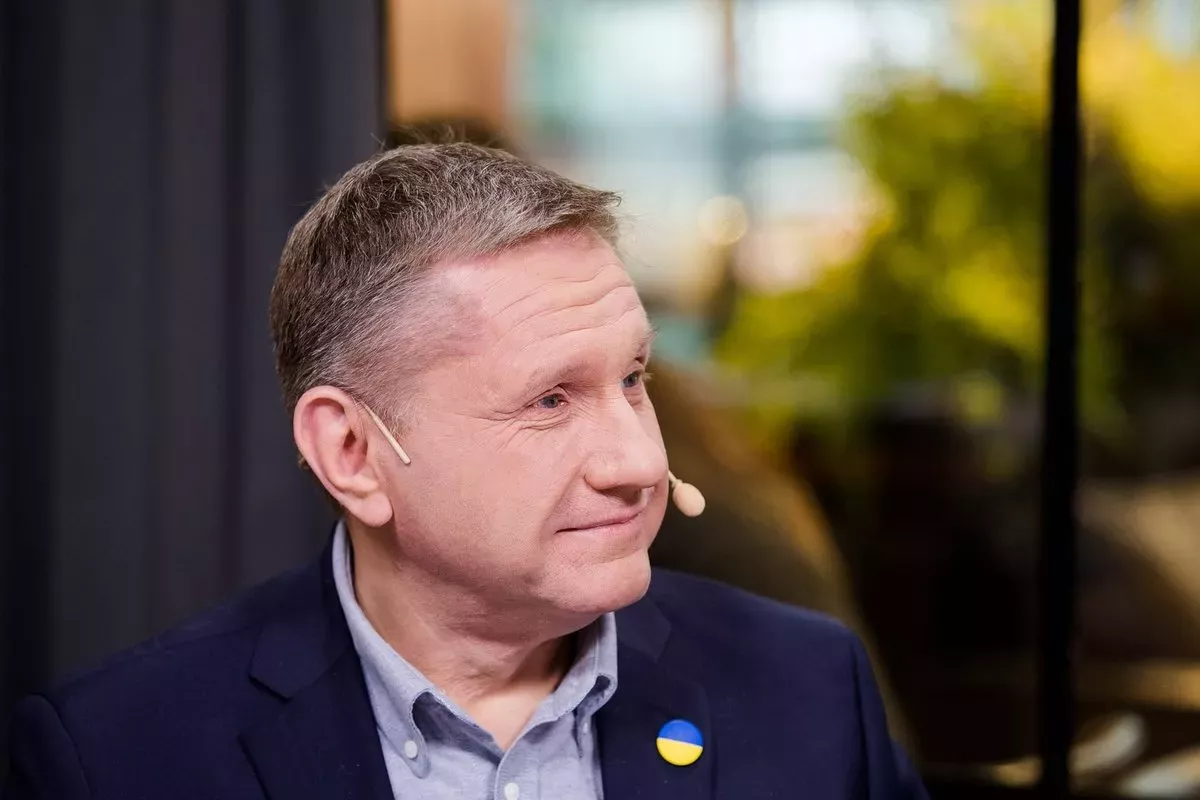
Political analyst and Deutsche Welle (Germany) columnist Konstantin Eggert (Vilnius) stated that Moscow’s efforts to destabilize European democracies are nothing new.
“Russia is not only active in Germany but also in a number of other countries. In Germany, the situation is probably favorable for Moscow because, on one hand, there are real issues, such as migration. On the other hand, there are longstanding sentiments in society supporting the need to engage and coexist with Moscow, regardless of the regime in power there. Interestingly, both right-wing forces, like the Alternative for Germany, and far-left parties, such as Die Linke, converge in this regard.
Considering the significant presence of people from the former USSR in Germany, it would be surprising if Moscow did not take advantage of this situation. The narratives promoted by Kremlin propaganda and its agents exaggerate and dramatize the scale of the migration crisis in Germany, as well as the supposed threats to the country’s economy posed by Ukraine’s ‘stubbornness’ in refusing to yield to Moscow,” the analyst explained
Indeed, he confirmed, attempts to discredit Germany’s post-war democratic system continue.
“Moreover, Moscow has recently focused on fostering nostalgia for the existence of two Germanys, especially in the eastern states (the territory of the former GDR), where economic and social development still lags behind the western states. All these factors are likely to be leveraged to influence the state elections in the Federal Republic.
Direct acts of sabotage are also not out of the question, similar to those observed in Poland, to create a sense of instability and security threats that are portrayed as stemming from ‘the war itself,’ rather than from Russian aggression. Russian propaganda emphasizes this, attempting to blame Ukraine and the West for inflexibility and for creating instability in Europe. This strategy has been used for many years, and there is no reason to believe Moscow will abandon it, as in some ways Germany is uniquely suited as a target for Russian propaganda and special operations,” Eggert believes.
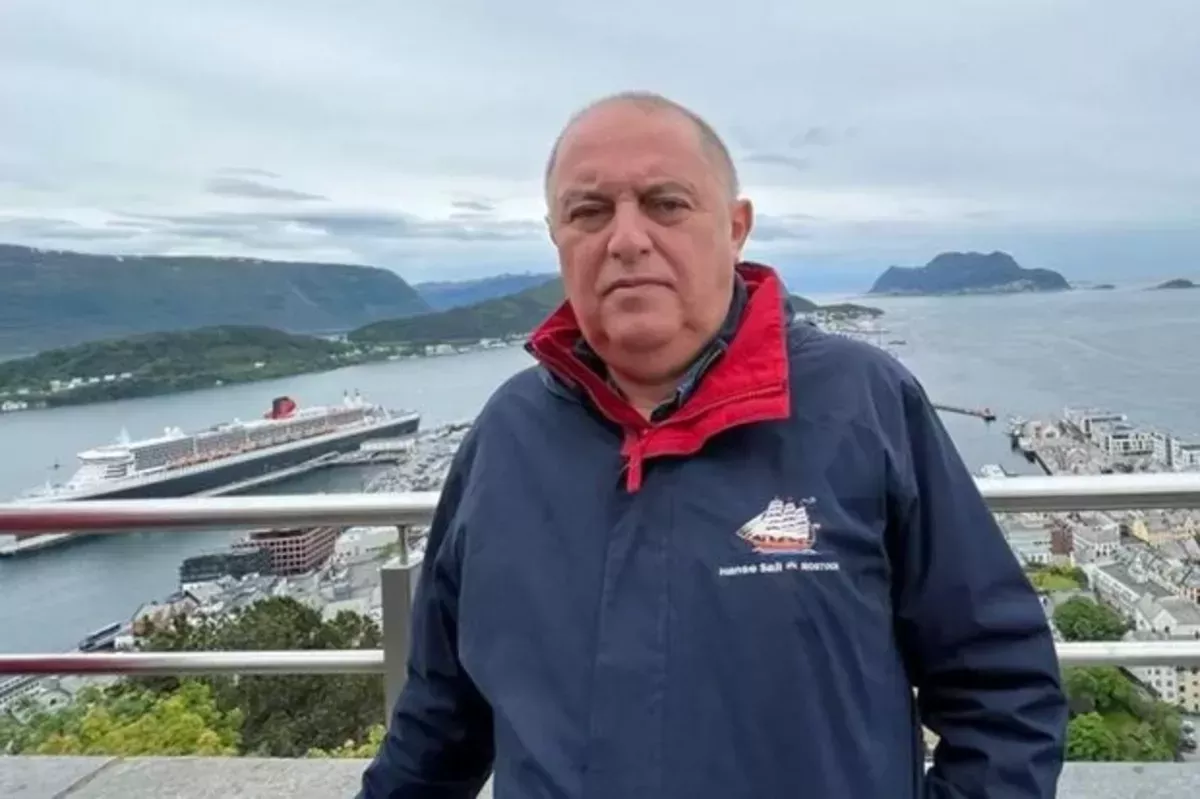
Analyst, publisher, and editor-in-chief of the magazine Neue Zeiten and the YouTube channel Neue Zeiten TV (Germany), Alexander Cherkasky, in turn, does not believe that there are political parties in Germany openly aligned with Putin or the policies of the Russian government.
“Undoubtedly, there are some politicians, both on the right and the left, who in certain statements express understanding of Russia’s policies. I think that behind all this, there may be both genuine elements of Russia’s hybrid warfare and aspects of internal political struggles,” Cherkasky said.







 editor@caliber.az
 +994 55 444-88-98
 Азербайджан, Баку, ул. Низами, 203, Af Business House, 5-й этаж