










Middle Corridor amid global conflicts: a new logistics architecture Expert opinions on Caliber.Az
The US-Israel war with Iran has once again highlighted the importance of diversifying trade and transport routes, particularly the strategic role of the Middle Corridor, as noted in an article by senior fellow Luke Coffey of the Hudson Institute.
The author notes that the route runs between Russia and Iran via the South Caucasus, crosses the Caspian Sea, and links Europe with Central Asia. Against the backdrop of instability, airlines and transport companies are increasingly avoiding traditional routes through the Persian Gulf. According to flight tracking services, many flights are being rerouted via the South Caucasus and the Caspian Sea, reflecting a rapid shift in global transport flows driven by a range of conflicts. Luke Coffey emphasises that in the coming years, this corridor could become even more crucial for global trade.
"The continued and secure use of the Middle Corridor will not solve every disruption caused by regional conflict. But as recent events have demonstrated, it is an increasingly vital component of global trade resilience and one that can no longer be treated as peripheral to the world economy," writes Luke Coffey, senior fellow at the Hudson Institute.
What do international experts think about Azerbaijan’s significance as a logistics hub for the Middle Corridor in the South Caucasus? Caliber.Az asked a political analyst from the United States and an expert from Kyrgyzstan to weigh in.

American journalist and political analyst Andrey Becker is confident that key segments of the Middle Corridor, such as Azerbaijan and the Trump Route for International Peace and Prosperity (TRIPP), are undoubtedly strategic links for future transport arteries.
"A completely new transit corridor is literally emerging before our eyes, and it will soon play a major role in global logistics. The significant surge in air traffic in this region due to the Middle East conflict is a prime example of how this works in practice. What we are witnessing is essentially a stress test of European logistics, which has shown that the air corridor through the South Caucasus is the most optimal solution for moving goods from Europe to Asia when other routes cannot provide full safety guarantees or are economically unviable due to sanctions. That is why Luke Coffey’s article includes another crucial element, examining the South Caucasus corridor not only in terms of geography but also reliability. The author evaluates the corridor’s status not in isolation but in real-world conditions, including conflict zones, emphasising that the importance of this route directly depends on its ability to function successfully, which includes modernising and expanding existing roads and creating additional routes.
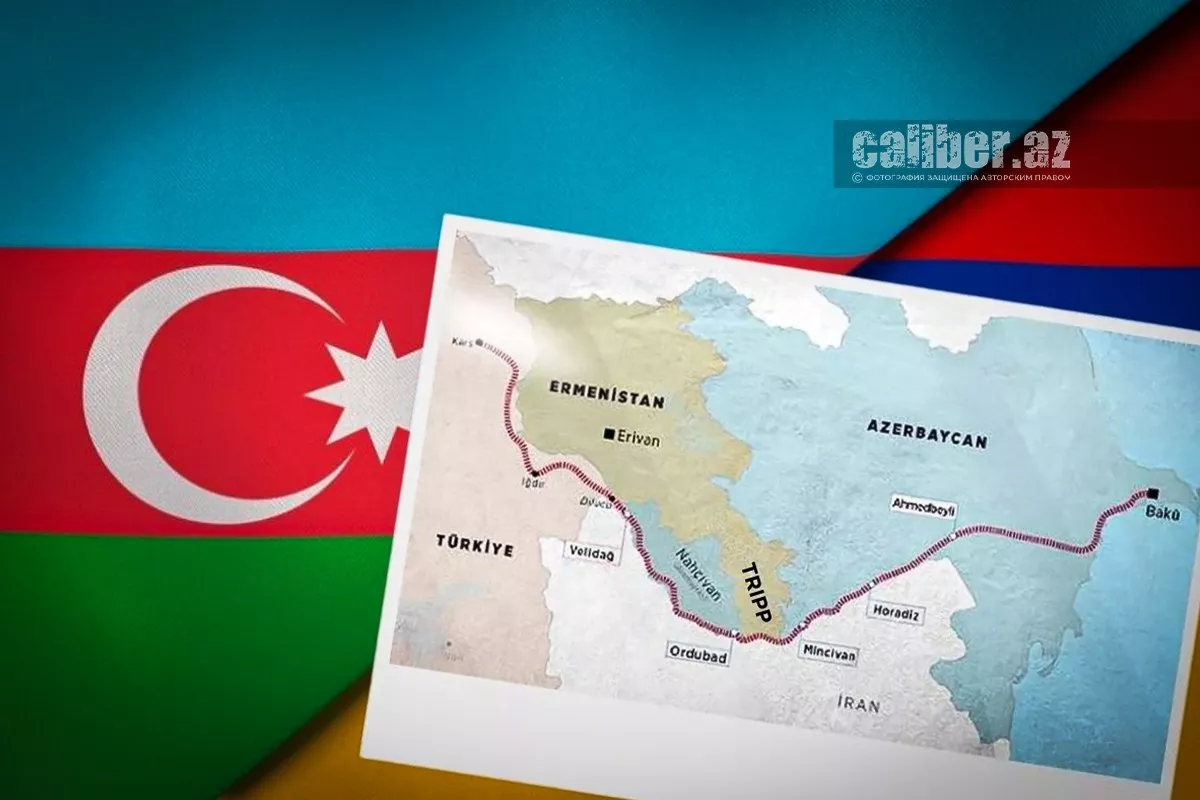
From a security perspective, it is logical to consider specific threats, such as the likelihood of air attacks on transport arteries, while also strengthening border security capabilities through training and technical support. In today’s turbulent geopolitical environment, transport corridors have become far more significant than before, and in this sense, the corridor through the South Caucasus meets the requirements from every angle: both in terms of efficiency and safety. Addressing efficiency, we can see that the Zangezur Corridor is just one important link in the South Caucasus transport network, which includes the Baku–Tbilisi–Kars railway, as well as the potential to launch additional corridors connecting to the Nakhchivan transport system via Georgia and Armenia,” the political analyst said.
Kyrgyz political analyst, former diplomat, and regional security expert Mars Sariev noted that the situation surrounding Iran has once again highlighted just how fragile the usual logistics of global trade can be: when one of the key regions falls into conflict, the question of alternative routes immediately arises. In this context, the significance of the Middle Corridor increases noticeably.
"Currently, the route through the South Caucasus and the Caspian is effectively becoming one of the few stable links connecting Europe and Central Asia. Azerbaijan plays a particularly important role here. Geographically, it sits at the intersection of Caspian transit and overland routes toward Türkiye. Cargo from Kazakhstan and Turkmenistan crosses the Caspian Sea and arrives at the Baku International Sea Trade Port, then continues via the Baku–Tbilisi–Kars railway through Georgia to Türkiye and onward to European markets. Essentially, Azerbaijan is gradually becoming the central transit hub of this route.
Against this backdrop, the question of the Zangezur Corridor inevitably arises. This transport line is intended to connect the main territory of Azerbaijan with the Nakhchivan Autonomous Republic through southern Armenia. After the 44-day war, the issue of reopening communications in the South Caucasus became part of the regional agenda,” the expert said.

According to him, this project could strengthen the resilience of the Middle Corridor by adding another transport branch toward Türkiye, allowing routes to be diversified and reducing dependence on the single route through Georgia (Baku–Tbilisi–Ceyhan). In the context of rising geopolitical risks, such diversification becomes an important factor for stability.
"However, there is also a political dimension. Serious disagreements remain surrounding the corridor. Armenia, for example, still fears losing control over part of its transport infrastructure. In addition, Iran and Russia are closely monitoring the situation, as changes in the region’s transport geography carry strategic implications for them. Therefore, the issue of the Zangezur Corridor is not only about logistics. It is part of a broader struggle over the future transport architecture of Eurasia. And as the global trading system searches for new routes, the importance of the South Caucasus within this architecture will only continue to grow," Sariev concluded.







 editor@caliber.az
 +994 55 444-88-98
 Азербайджан, Баку, ул. Низами, 203, Af Business House, 5-й этаж