










Iranian provocation in Turkish airspace Expert opinions on Caliber.Az
The ongoing conflict between the U.S., Israel, and Iran is steadily drawing more countries into its orbit, regardless of their political stances or positions on the confrontation. On March 4, NATO’s air and missile defence systems stationed in the Eastern Mediterranean intercepted and destroyed a ballistic missile launched from Iran that was headed toward Turkish airspace.
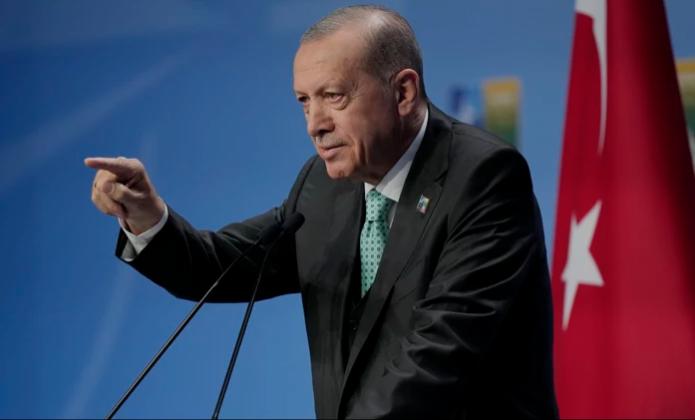
In response, Turkish authorities emphasised that they reserve the right to respond to any hostile actions directed against the country. In particular, President Recep Tayyip Erdoğan, speaking at an iftar with military personnel, stated:
"At a time when our region is going through difficult days, we in no way leave matters to chance. As in today’s incident (March 4 — ed.), we hold close consultations with our NATO allies, take all necessary measures, and carry out required interventions immediately. We also convey our warnings as clearly as possible to prevent similar incidents from recurring."
How does Türkiye’s expert-analytical community assess what happened? Turkish political analysts shared their opinions on the matter with Caliber.Az.

Göktuğ Çalışkan, an expert in international relations at Ankara Center for Crisis and Policy Studies (ANKASAM), believes that this incident marks a highly significant milestone both technically and strategically.
"Let’s look at the event retrospectively: the ballistic missile launched from Iran on March 4, 2026, crossed the airspace of Iraq and Syria and headed toward southern Türkiye, specifically the province of Hatay. According to the official statement from the Turkish Ministry of National Defence, the missile was intercepted and destroyed by an SM-3 missile launched from the American warship USS Oscar Austin, stationed in the Eastern Mediterranean as part of a NATO mission; debris fell in the Dörtyol area.
Regarding the target, it has been reported that the missile’s trajectory and ballistic curve align with the İncirlik Air Base. These details are technically verifiable. So, was this a provocation or an accident? This is a point I would like to examine in detail. As is known, the high command of the Iranian army is largely disorganised, operating under a structure known as ‘Decentralised Mosaic Defence.’ In this system, individual units can act independently. Therefore, we cannot ignore the possibility that this was an uncontrolled launch, resulting from command chaos rather than a deliberate strategic decision,” the expert said.
According to him, Ankara’s position has always been principled and balanced: Türkiye has never allowed the use of İncirlik Air Base for operations against Iran. Turkish Foreign Minister Hakan Fidan communicated the Turkish government’s position to his Iranian counterpart Araghchi in a phone call, and the Iranian ambassador was subsequently summoned to Türkiye’s Ministry of Foreign Affairs.
"It is particularly important to emphasise the following: Türkiye did not seek to be drawn into this crisis; however, it has demonstrated that it will respond decisively when its territorial integrity and airspace are violated. This incident serves as concrete evidence of the delicate balance Ankara must maintain—seeking to avoid becoming a party to regional conflict while simultaneously asserting its deterrence capabilities as a NATO ally," emphasised Çalışkan.

Meanwhile, Turkish international relations expert Kerim Has noted that the launch of the Iranian missile over Turkish territory is one of the most widely discussed topics in the country, with both public opinion and the expert community considering the incident in a broader regional context.
"It is becoming clear that the war is expanding geographically—from the Eastern Mediterranean and Cyprus to the Indian Ocean. We are seeing U.S. strikes on Iranian targets and Tehran’s retaliatory actions against U.S. and Israeli positions in the region. In this configuration, it is unlikely that Türkiye can remain uninvolved without consequences, and it is possible that Iran is signalling to Ankara the undesirability of Türkiye joining U.S. and Israeli plans, including potential ground operations. This primarily concerns northwestern Iran and the Kurdish factor. Reports are already emerging that Kurdish formations, supported by the U.S. and Israel, have become more active and are conducting operations against the Iranian army from Iraqi territory. In this case, Ankara could invoke the Kurdish threat along its borders—including structures linked to the Kurdistan Workers’ Party (PKK) and the Kurdistan Free Life Party (PJAK)—as justification for a future operation," he said.
The analyst also paid particular attention to the missile’s trajectory and the circumstances of its interception, noting that these issues are also being debated within Türkiye.
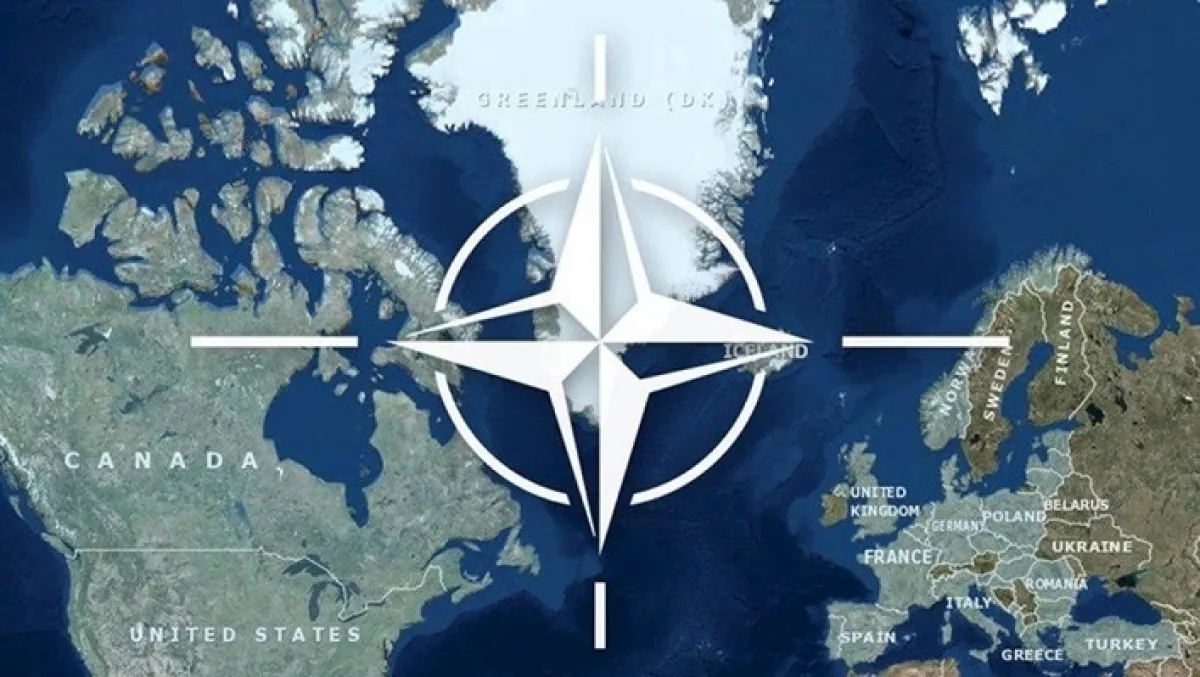
"According to reports, the missile was launched from Iran, passed through the airspace of Iraq and Syria, and was intercepted near the Turkish border. This raises several questions: ‘If it was intercepted by NATO forces, including the Americans, why did it happen precisely there?’; ‘Why not earlier—over Syria, Iraq, or the Eastern Mediterranean?’ It gives the impression that the missile was intercepted close to Turkish territory so that the debris would fall in Türkiye, heightening the sense of a direct threat from Iran. This creates an image of the United States and the alliance as saviours, which could influence public opinion. If the Turkish audience concludes that its own means to intercept ballistic missiles are insufficient and that it was NATO allies who provided the defence, this objectively strengthens the image of the U.S. and the bloc as guarantors of security and could be used politically in the future, especially if Türkiye decides to carry out new operations beyond its borders.
We have already seen a similar scenario in 2014–2016, when, following missiles falling on Turkish territory, Ankara began ground operations in Syria. In the Syrian case, the configuration gradually evolved: initially, Türkiye did not want to get involved, then strikes on its territory occurred, followed by operations and a long-term military presence. Now, a similar logic is being discussed—if regime change in Iran cannot be achieved, pressure might be exerted through the Kurdish factor, potentially involving the Turkish army as an auxiliary force. For this, justifications are needed, which can develop gradually. I do not rule out any scenario—there may be several, and it is not certain that the one that currently seems most obvious will be realised," the expert emphasised.
Regarding Ankara’s position, he noted that, formally, Türkiye does not declare itself a party to the conflict; however, the strategic direction is quite clear.
"The statements by the Turkish leadership about acting together with NATO allies show that Ankara has effectively already chosen to coordinate with its Western partners, primarily the United States. This does not mean open confrontation with Iran, but in strategic, military, and political terms, Türkiye is increasingly cooperating with its Western allies. The only question is in what form and at what stage this participation will become more visible," the expert stated.

Meanwhile, Turkish-Kazakh politician and founder of the “Great Turan Union” Foundation, Serikzhan Mambetalin, believes that the current tensions between Türkiye and Iran have earlier roots. According to him, the starting point was decisions by London and Washington regarding military infrastructure in the Eastern Mediterranean.
"This whole story essentially began after Prime Minister Keir Starmer allowed the Americans to use the British military base in Cyprus. Almost immediately after that, signals emerged that Iran might consider it a potential target. In other words, the tension did not start yesterday, but somewhat earlier," the expert said.
He noted that the missile incident only intensified debates in Turkish society: "The missile was intercepted, and formally it was heading toward Türkiye, but its exact trajectory makes it unclear where it was ultimately aimed. It is quite possible that its target was not a Turkish site, but Cyprus—specifically, the British base on the island. Here, it is necessary to analyse information sources and technical data very carefully."
Mambetalin also drew attention to the rhetoric of official Ankara.
"I have listened to Turkish analysts who noted the rather strong statement from the country’s Ministry of Defence. Today, Türkiye stands on the verge of being drawn into a very serious regional conflict. Support from Washington and Israel for Kurdish formations, which are reportedly becoming active on the Iranian front, undoubtedly adds tension. But it is precisely in such a situation that one must remain calm, carefully analyse what is happening, and avoid panic. Hasty assessments can lead to strategic mistakes," the expert stated.
At the same time, he emphasised that despite the turbulence, Ankara remains stable compared to some other countries.
"If we look at the map of the region, Türkiye today is essentially the only relatively safe and resilient country in the Middle East. That is why it is important for Ankara to act carefully, avoid falling for provocations, and calculate every step. In the current circumstances, the cost of a mistake is too high," Mambetalin concluded.







 editor@caliber.az
 +994 55 444-88-98
 Азербайджан, Баку, ул. Низами, 203, Af Business House, 5-й этаж