










Baku — Astana, the Middle Corridor, and China’s strategic influence Kazakh Scholar on Caliber.Az
In this exclusive interview with Caliber.Az, Kazakh scholar and China expert Erkin Baydarov examines the growing significance of the Baku–Astana partnership, the potential of the Middle Corridor as a regional unifier, and the evolving role of China as a dominant economic and geopolitical actor in Central Asia. Baydarov offers insights into the prospects for Turkic cooperation, the strategic importance of transport and logistics networks, and Beijing’s calculated approach to the Middle East—revealing how regional dynamics intersect with broader global strategies.
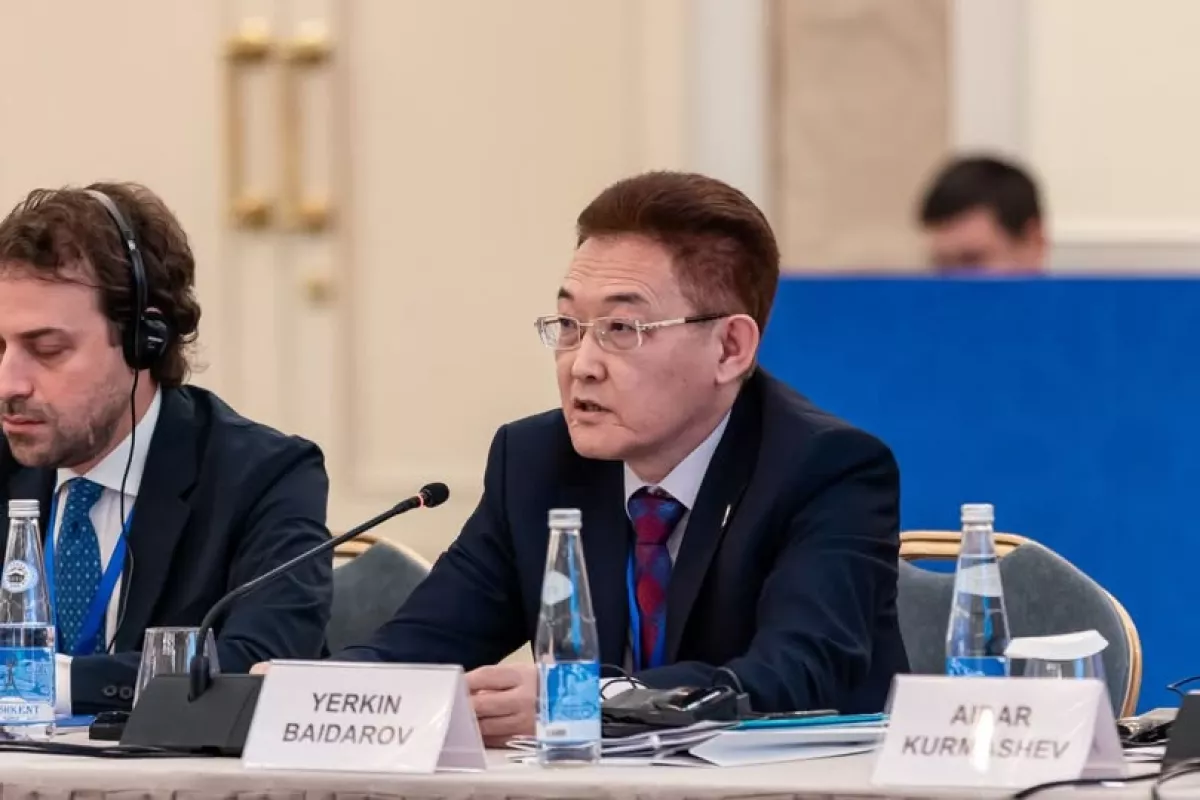
– What is the significance of the interaction between Baku and Astana, and what are its prospects?
– In recent years, cooperation between Azerbaijan and Kazakhstan has shown stable growth not only in the economic sphere but also politically and in cultural and humanitarian areas.
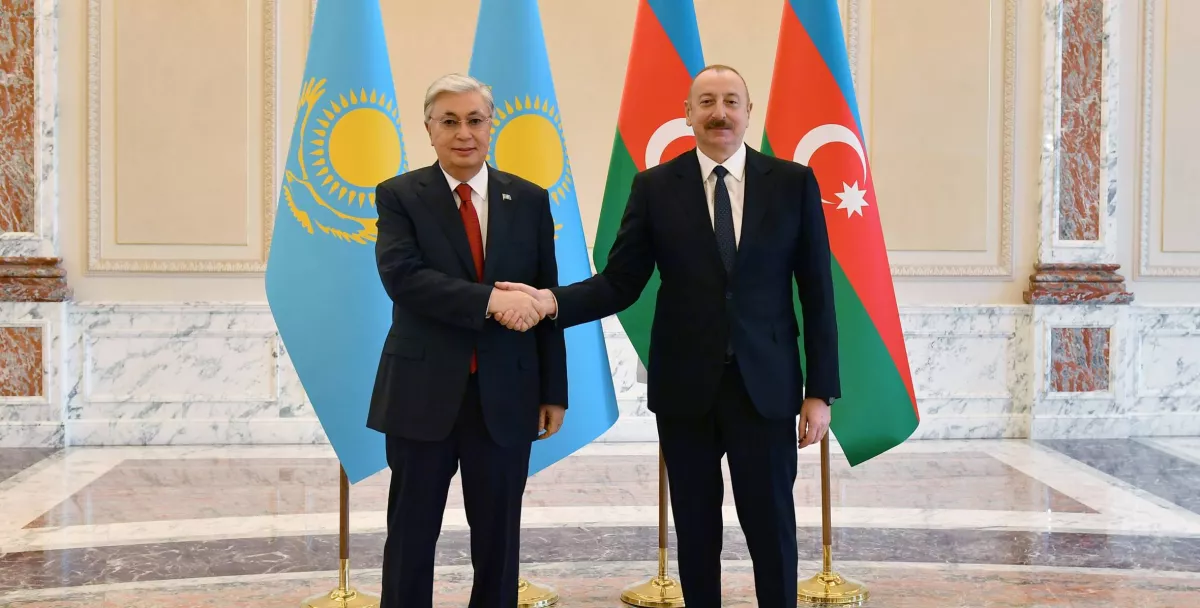
The trustful relations between the leaders of the two countries—Ilham Aliyev and Kassym-Jomart Tokayev—set a high standard for interaction. Frequent meetings between the presidents, both in Baku and Astana, as well as at various international forums, contribute to the development of a unified agenda, within which further bilateral cooperation is built. This is unsurprising, given the close ties between the two countries that have deep historical roots. The Caspian Sea also plays a key role—not only as a natural geographic boundary between the two states but also as a sea whose oil and gas reserves contribute to the economic prosperity of both Azerbaijan and Kazakhstan.
We deliberately place the economy at the forefront. Economic interaction largely determines political and other forms of relations between Baku and Astana. For example, there has been a noticeable growth in trade: by the end of 2025, according to Kazakh sources, trade turnover between Kazakhstan and Azerbaijan rose to $560 million, up from $533 million in 2024. Strengthening the transport and logistics potential of the Middle Corridor has also increased transit volumes. At the same time, trade between the two countries still lags significantly behind Kazakhstan’s trade with other Central Asian states, which is an issue worth considering.
Politically, the signing of numerous agreements between Azerbaijan and Kazakhstan in energy, transport, communications, environmental protection, and other areas fully aligns with the interests of both Baku and Astana, as these agreements largely underpin the sustainable growth of trade and economic cooperation. The two states are steadily implementing joint initiatives, expanding cooperation across various economic sectors. This progress has been made possible through targeted state policies, active dialogue between business communities, and a shared commitment to developing mutually beneficial and partnership-based relations. As a result, there has been a growth in joint investments in each other’s economies.
In a context of geopolitical turbulence and global uncertainty of a stochastic nature, Azerbaijan and Kazakhstan, as regional powers, should continue to strengthen cooperation across all possible areas. All the necessary conditions for this are in place. The sizable Azerbaijani diaspora in Kazakhstan is also a factor that contributes to the Baku–Astana tandem in promoting the prosperity of these fraternal countries.
– Some analysts point to the special role of Turkic peoples in the new geopolitical reality. We also see that the development of the Middle Corridor creates opportunities to strengthen ties among Turkic countries…
– As Turks, and especially as intellectuals, we are inclined to speak of our historical mission. Yes, the Turks have a great history, but at the moment, the Turkic world, like the rest of the world, is going through a period of entropy. Where it will ultimately lead humanity is difficult to say. The Organisation of Turkic States (OTS), despite its strengthening as an international organisation, is still far from perfect. Cooperation and coordination are positive, but each Turkic country has its own national and strategic interests, which often diverge from those of others.
For example, the recent meeting of the foreign ministers of the Organisation of Turkic States (OTS) in Istanbul, where the war in the Middle East was a central topic, demonstrated that under the current circumstances, Turkic countries in Central Asia and the South Caucasus will act with a “unified voice.” The Joint Declaration adopted at the meeting stated that an attack on any member state of the Organisation would constitute a threat to all participating countries, which is commendable.
These documents, however, primarily highlight that the OTS countries are kinship-based ethno-political entities, whose activities focus on close cooperation in areas such as the economy, culture, security, and more.
It is worth noting, though, that at this stage, the Organisation is highly pragmatic and does not pursue grandiose goals, such as a “Turkic renaissance” or some particular historical mission. That question is best left to Turkic intellectuals, whose “labour and lofty thought” are also necessary for the unity of the Turkic world.

At the same time, the Middle Corridor could become a driving force for uniting the Turkic states of Central Asia around the idea of a “Unified Turkestan,” which logically stems not only from ethnic and cultural history but also from practical necessity. Nearly a century ago, Mustafa Shokay noted that, from a geopolitical perspective, the Turkic world “exists under conditions rather unfavourable for unification. Of the entire Turkish world, the ‘geopolitics’ of Turkestan alone fully corresponds to its Turkishness: vast geographic and economic unity matches a large Turkish population.” To clarify: in this context, Shokay’s “Turkishness” should be understood as “Turkic.” In any case, this illustrates the importance of the issue in preserving the region’s cohesion and the independence of Central Asian countries.
– What are the prospects for Central Asian countries’ cooperation with China? Many analysts note that, at present, it is the PRC, rather than the West or Russia, that is the leading geopolitical player in Central Asia, at least because Beijing is the main economic partner of the region’s states. In simple terms, the Middle Kingdom has hopelessly seized the initiative from other players…
– The prospects for Central Asian countries’ cooperation with China must be viewed objectively. In today’s conditions, in my opinion, only the PRC can provide regional states with political and economic “comfort.” The “Treaty of Eternal Good-Neighbourliness, Friendship and Cooperation,” signed in July 2025 during the Astana summit, marked a new milestone in the history of Central Asia’s relations with China.

The establishment of Chinese universities and research centres, forums for Central Asian and Chinese experts, as well as the active promotion of the Chinese language and culture—and, conversely, the languages and cultures of Central Asian countries in China—demonstrate that the states participating in this framework are mutually interested in one another. This also includes the “Belt and Road Initiative,” where Beijing focuses primarily on Xinjiang. For the C5 countries, the Xinjiang Uygur Autonomous Region provides access to the Chinese interior and new opportunities, serving as the main gateway for China’s trade and logistics with Central Asia.
Meanwhile, the construction of transport and logistics corridors from China into Central Asia will allow regional countries both to export to China the resources it needs (oil, gas, metals, etc.) and to gain benefits from the transit of Chinese goods to Europe and beyond.
– Today, many analysts call the PRC the only power to emerge as a winner amid the war in the Middle East. What is Beijing betting on by effectively supporting Iran in its confrontation with the United States and Israel?
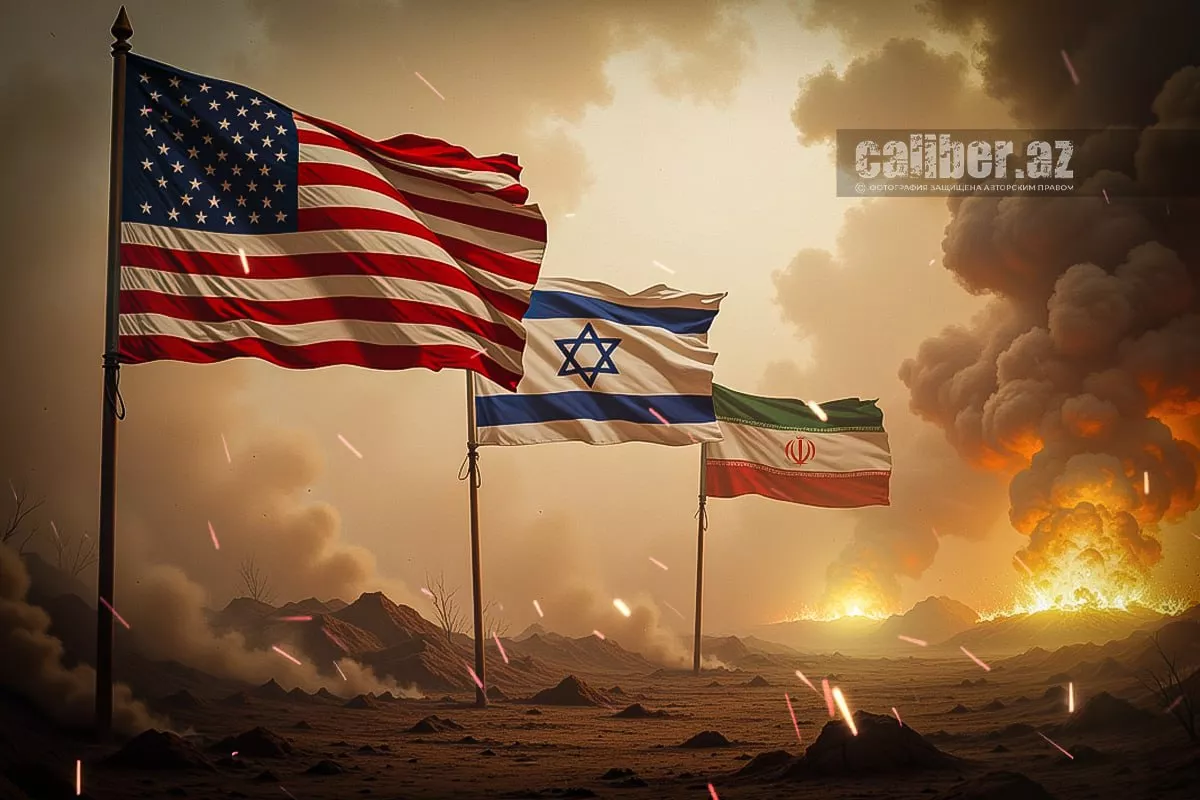
– China’s policy regarding this conflict is consistent with the approach it applies to other regions of the world. In this regard, Beijing has always been consistent. It is well known that one of the objectives of the war in the Middle East is to weaken China by reducing oil production and transport volumes, including shipments to China. However, Beijing had already increased its oil reserves before the conflict began, and this foresight gives China time to address emerging challenges. Moreover, Beijing’s support for the Iranian regime helps Chinese tankers transport Iranian oil through the Strait of Hormuz without hindrance.
At the same time, the fact that the yuan is regarded by Iran as the primary currency for the limited passage of oil tankers further demonstrates that the Middle Kingdom, following its ancient stratagem of “watching the fire from across the river,” is capable of implementing a wide range of political strategies.







 editor@caliber.az
 +994 55 444-88-98
 Азербайджан, Баку, ул. Низами, 203, Af Business House, 5-й этаж