










“Belches” of the Armenian lobby: why US lawmakers keep targeting Baku Expert opinions on Caliber.Az
Forty-six members of the U.S. House of Representatives, led by the well-known Armenian lobbyist Frank Pallone, sent a letter to the leadership of the House Appropriations Subcommittee on National Security and to the State Department, demanding $30 million for defence cooperation with Armenia to strengthen its military capabilities “to address the ongoing threat posed by Azerbaijan.” The letter also calls for $100 million to be allocated to Armenians in Karabakh, a ban on military aid to Azerbaijan, and the imposition of sanctions on Azerbaijani officials under the Global Magnitsky Act.
Additionally, the letter expresses doubts about the implementation of the TRIPP project, citing alleged risks to Armenia’s sovereignty.
Overall, the Armenian National Committee of America (ANCA) — an organisation that has waged an information war against Baku for decades — is involved. As for Congressman Frank Pallone, it is well known that he has long made anti-Azerbaijani rhetoric his political hallmark. He has close ties with the Armenian lobby, enjoys financial and media support from Armenian diaspora structures, and has consistently taken a hostile stance toward Azerbaijan for many years. His activities are a striking example of how lobbying can substitute narrow ethnic agendas for the U.S. national interest.
And, of course, the question arises: what is the purpose of all these initiatives now? Do the authors of these statements not realise the absolute impracticality of all their demands, since they directly contradict the political course adopted by the Trump administration toward the South Caucasus? What drives them to repeatedly put forward initiatives whose time has long passed, even from a historical perspective?
Well-known analysts shared their assessments with Caliber.Az on this matter.

Farid Shafiyev, Director of the Centre for Analysis of International Relations and a diplomat, believes that what is happening can be described as the final “belches” of this long-drawn-out process.
“Of course, ANCA is lobbying for its own interests; mostly within the Democratic Party, there are those who traditionally support it. ANCA opposes Pashinyan, so in this case, the issue is not even about Azerbaijan — they want to create a certain backdrop ahead of the June elections for the Armenian parliament.
But I believe all of this is not serious, and there will be no consequences. The American administration has already determined its policy in the South Caucasus, including through the TRIPP project and support for the peace process between Armenia and Azerbaijan. Although, from time to time, as I said, there may still be these ‘belches’ from the Armenian lobby,” Shafiyev stated.

Geopolitics and security expert and Editor-in-Chief of The Washington Outsider, Irina Tsukerman, noted that the emergence of such initiatives is driven by the logic of American domestic politics rather than their practical feasibility.
“In the U.S. Congress, letters of this kind serve a function of political positioning. They mark the affiliation of a group of legislators with a certain coalition of interests and demonstrate the consistency of their foreign policy priorities. In this context, the letter itself is a tool, not an end goal. Its purpose is to maintain pressure, shape the discussion, and keep a particular issue actively present in political debate.
The figure of Frank Pallone in this process reflects a long-standing pattern of behaviour among certain American lawmakers who have worked for decades in tandem with ethnic lobbying networks. Such politicians build their expertise around specific international issues and, over time, become institutional representatives of those agendas. Their activity does not depend on changes in administration, since their political capital is formed not in the executive branch but in Congress and among support groups. Therefore, their statements continue regardless of whether they align with the current White House policy.
Armenian diaspora structures in the United States operate according to a long-term strategy of maintaining a constant presence in the political system. Their approach is not based on expecting quick victories. It relies on the gradual accumulation of political contacts, regular initiatives, work with congressional staff, and the formation of enduring narratives. Within such a strategy, even deliberately controversial initiatives make sense, as they help sustain political activity and preserve influence.
The maximalist nature of their demands is explained by standard lobbying practices in the U.S. Often, proposals are put forward that are maximally advantageous to the lobbying side, creating a high starting point. Even partial advancement of such demands in the future can be considered a success. In addition, the very fact of their discussion generates additional pressure on foreign policy structures and creates an argumentative foundation for further political action.
A separate role is played by the factor of internal diaspora mobilisation. After significant geopolitical changes, Armenian organisations in the U.S. need to maintain a high level of engagement among their audience. Constant political initiatives serve to demonstrate activity and the ability to influence American policy. This is necessary to preserve financial support, organisational discipline, and media presence.
Such letters also create a bureaucratic effect. They become part of the official record, are used in analytical briefs, discussed at the committee level, and can serve as arguments in future political debates. Even without a direct result, they shape the political backdrop, which can influence the tone of discussions and the perception of regional processes within the American decision-making system,” the expert explained.

According to her, criticism of Azerbaijan in such initiatives is part of a broader informational and political strategy.
“The goal is to create a persistent negative perception of Baku among a segment of the American political class. This is achieved through the constant repetition of accusations, humanitarian rhetoric, and attempts to link regional issues to a broader human rights and sanctions agenda.
The inclusion of transport and regional project issues demonstrates an effort to influence not only the humanitarian and military agenda but also the future configuration of the South Caucasus. Any initiatives perceived as strengthening Azerbaijan’s or Türkiye’s positions encounter organised political resistance from the Armenian lobby. This reflects the struggle to shape a long-term regional balance.
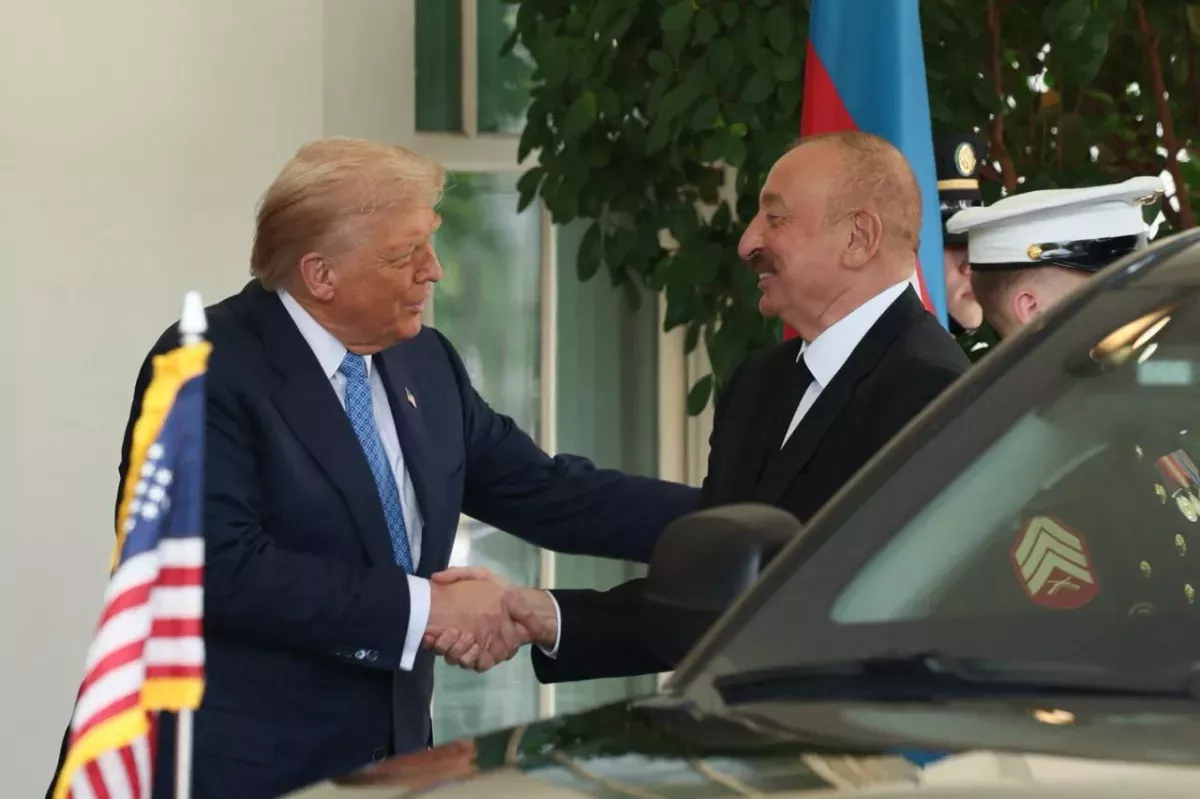
The divergence of these initiatives from the Trump administration’s policy reflects a structural feature of the American system. Congress is not obliged to fully follow the foreign policy line of the executive branch. In practice, the opposite often occurs. Legislators use foreign policy issues to express their own positions and to exert pressure on the administration. This creates a constant tension between the branches of government, which is a normal part of the American political process.
The repeated emergence of such initiatives is explained by the fact that for lobbying structures, long-term influence is more important than winning on any single issue. Regular campaigns, letters, and statements help maintain networks of contacts, demonstrate activity, and prevent waning interest in the topic. This becomes a form of political self-preservation.
Thus, such initiatives arise not from a misunderstanding of political reality, but as the result of the systematic work of lobbying structures, the congressmen linked to these networks, and the mechanisms of American political competition. Their function is to maintain pressure, preserve the agenda, and demonstrate political presence, even when their demands do not align with the current priorities of the executive branch,” Tsukerman concluded.







 editor@caliber.az
 +994 55 444-88-98
 Азербайджан, Баку, ул. Низами, 203, Af Business House, 5-й этаж