










Cooperation based on trust and the “Baku touch” in Israel Holon’s deputy mayor speaks to Caliber.Az
In a candid interview with Caliber.Az, Michael Sutovsky, Deputy Mayor of the Israeli city of Holon and Chairman of the Israel–Azerbaijan Business Council, shares insights from his recent visit to Baku and reflects on the growing economic, cultural, and technological cooperation between Israel and Azerbaijan. From government-level meetings and business forums to fostering connections with the Jewish community in Azerbaijan, Sutovsky highlights the depth of the partnership and the unique “Baku touch” he brings to his work in Holon.
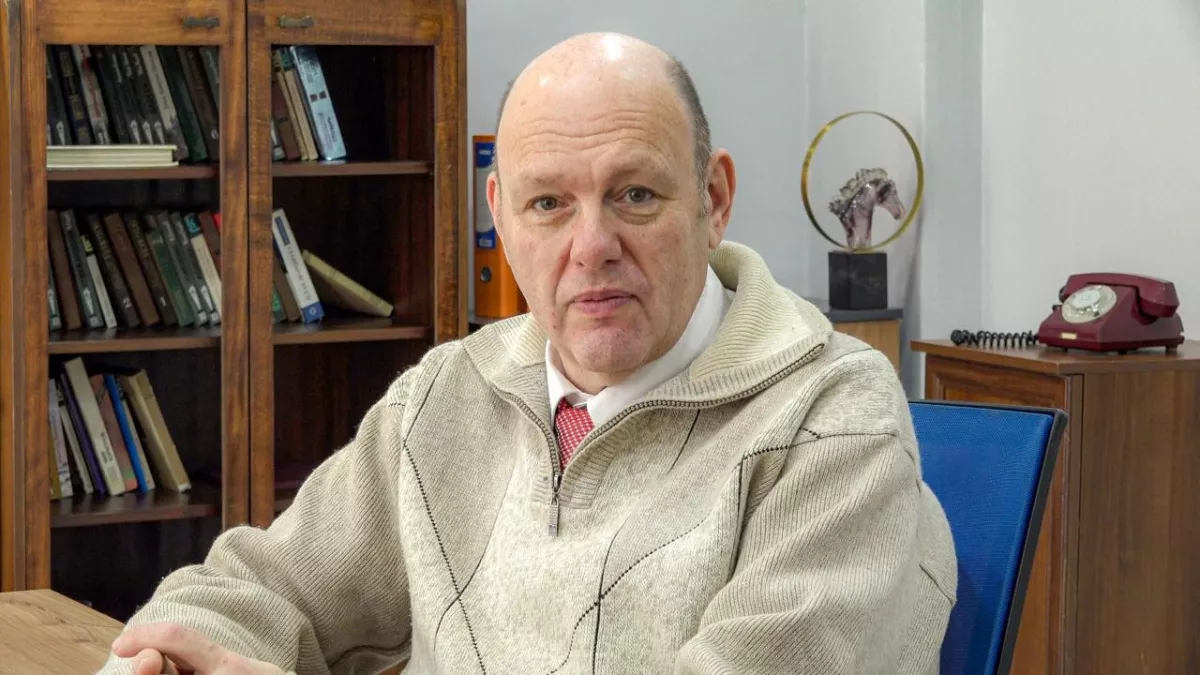
– On your way to Baku, you posted a photo from the airplane on Facebook and asked people to wish you luck. Looking back now, what can you say about the results of the visit?
– Evaluating, if I may put it this way, behind the scenes everything that was discussed—both at official meetings and in informal settings—I can confidently confirm that our mission to Baku was successful. The Israeli Minister of Foreign Affairs and our delegation held a series of very important and highly positive meetings at various levels.
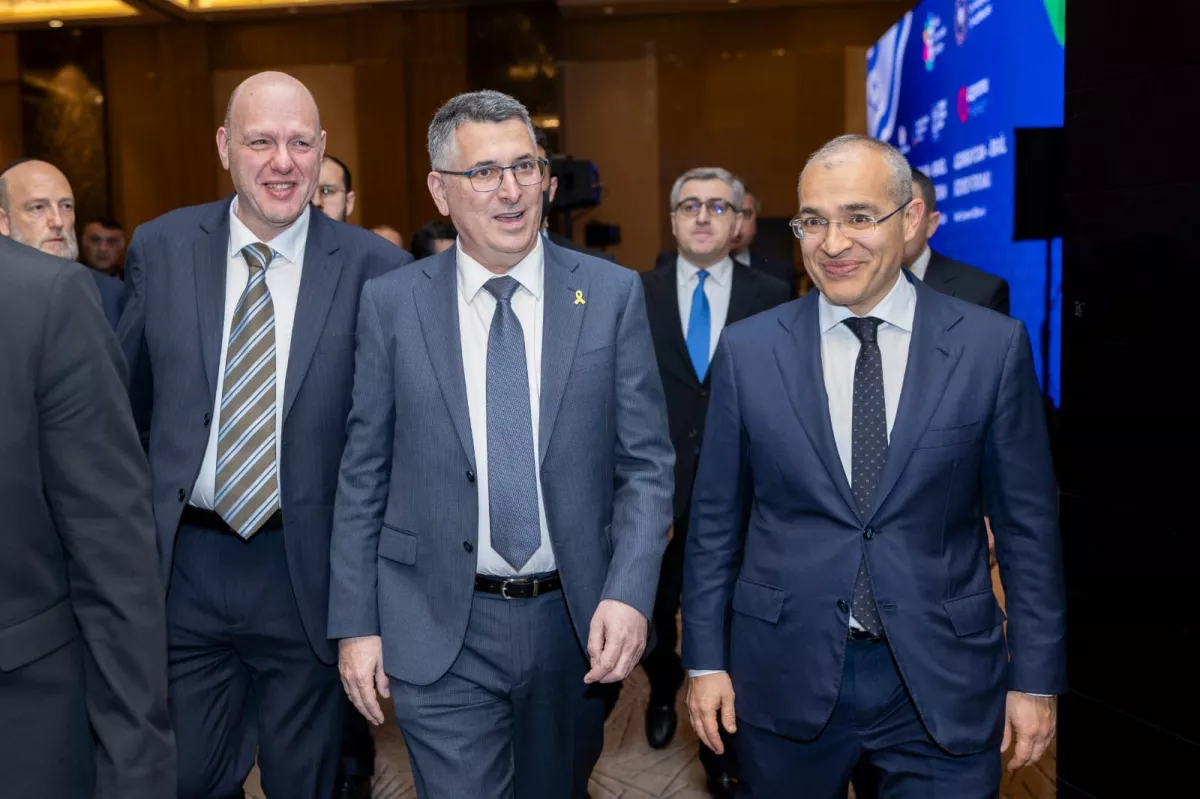
For example, Gideon Sa’ar met with his counterpart, Azerbaijan’s Minister of Foreign Affairs Jeyhun Bayramov, and Minister of Economy Mikayil Jabbarov. During these meetings, they discussed very important and interesting aspects of economic and business cooperation between our countries. In addition, he met with members of the Azerbaijani parliament, some of whom have Jewish roots.
However, the most important audience was the meeting between the Israeli Foreign Minister and the President of Azerbaijan, Mr. Ilham Aliyev, which, according to various sources, was very warm, cordial, and productive.
In addition, during our delegation’s visit to Baku, a business forum was held, attended by representatives of many leading Israeli and Azerbaijani companies.
I am especially pleased that the business projects I directly oversee and represent as Chairman of the Israel–Azerbaijan Business Council received government-level support during the negotiations, effectively being given the “green light” for development. At the same time, we are not seeking to rush things—everything is being done thoroughly and step by step.
Overall, when I had the idea of creating the Business Council, I came to Baku to consult with Azerbaijani colleagues and met with the leadership of the Ministry of Economy, which supported the initiative, as well as personally with Minister Mikayil Jabbarov, who co-chairs the Azerbaijan–Israel intergovernmental commission. His opinion on this matter was extremely important.
I am also proud to note that today, in the area of fostering cooperation, the Israeli side interacts with more than a hundred Azerbaijani companies.
As a result of the business forum, several additional areas of interest for Azerbaijan emerged where we can provide support. In particular, I received requests from a number of Azerbaijani companies to form a consulting group of Israeli specialists to facilitate better integration, implement advanced technologies, and promote their businesses. Here, the focus is primarily on professional support and assistance.
In addition, several Azerbaijani businessmen approached me regarding the conclusion of specific contracts, including in the agricultural sector, particularly in livestock farming.
I would like to emphasise that recently Israel was visited by Azerbaijan’s Minister of Agriculture, Minister of Digital Development and Transport, Deputy Minister of Science and Education, as well as a delegation from TƏBİB [Management Union of Medical Territorial Units]. During these visits, significant documents were signed—for example, a Memorandum of Understanding in the field of artificial intelligence, signed by Erez Askal, Head of the National AI Headquarters, and Minister Rashad Nabiyev, in the presence of Prime Minister Benjamin Netanyahu, and a Memorandum of Understanding on a scientific cooperation programme between the Ministry of Science and Education of the Republic of Azerbaijan and the Ministry of Innovation, Science and Technology of the State of Israel.
As we can see, contacts are ongoing—I would even say that their pace is increasing. Ambassadors of both countries play a very important role in this: Mukhtar Mammadov, who is doing an amazing job building bridges between our states, and Ronen Krausz, who has long-standing, deep knowledge of Azerbaijan and well-established connections within the country. And, of course, there is our team at the Israel–Azerbaijan Business Council, which stays in constant contact with the leadership of the Ministry of Economy. At present, discussions are underway with several Azerbaijani institutions regarding the implementation of interesting projects, which I hope you will hear about soon.
– Azerbaijani media reported that the Israeli foreign minister also met with representatives of Azerbaijan’s Jewish community. How do you assess the results of that meeting?
– It was a very genuine interaction with the Jewish residents of Azerbaijan. The fact that in a Muslim-majority country there are functioning synagogues for three Jewish communities—Ashkenazi, Mountain, and Sephardi—is truly impressive and commands respect and gratitude toward the country’s leadership, and personally toward President Ilham Aliyev.
In terms of its interethnic spirit, Azerbaijan is a unique country. Whenever I visit Baku, I always enjoy quoting poems in Azerbaijani that I learned back in school and still remember—for example, the verses of the great Samad Vurgun—because there are things inside you that you absorb from your earliest days, with the milk of your mother, from your very first steps. In my Facebook posts, I have often noted that Baku feels like my homeland: it is the city where I was born, where I first went to school, where I experienced my first love and first achievements, where I discovered everything for the first time. Azerbaijan and its capital can never feel foreign to me—they are a part of me forever. After all, as the saying goes, “there is such a nation—the Baku people,” and I can assure you, this is not an empty phrase.
As Deputy Mayor of Holon, I often meet people who came to Israel from former Soviet republics. Over the years, many of them stop identifying with their birthplace; at best, they might briefly mention in conversation that they are from, say, Russia or Ukraine. But Baku natives never stop emphasising this fact: they remember it, maintain their connections with each other, even when far from their homeland.
– Is there something that distinguishes Holon from other Israeli cities? Perhaps a “Baku touch” in your style as a city official and leader?
– I’ll tell you what exists throughout Israel, and personally, for me, it is the absence of distance between municipal leaders and the city’s residents. I don’t operate as if I’m the Deputy Mayor and can only be reached by a strict appointment. My phone is publicly accessible; practically anyone can write to me on WhatsApp or Facebook, call me, complain, ask for help, or clarify something. When you walk down the street, citizens constantly approach you with questions. This informality and constant connection with the population are completely normal. More than that—it’s absolutely necessary.
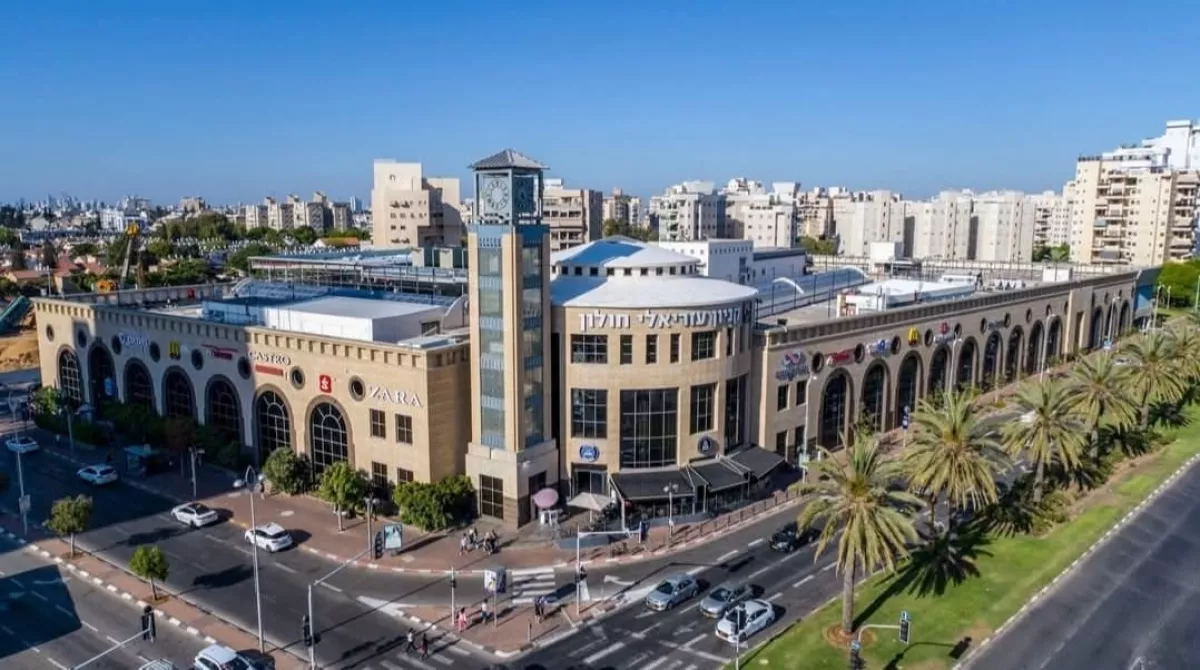
For me, the interests of the residents, the development of Holon, are very important. That’s why, at city-wide events, I often communicate with residents in Russian simply because it is a language that almost everyone in our city understands. We have many immigrants from the post-Soviet space, a kind of “Russian-speaking” conglomerate. I am neither pro-Russian nor pro-Ukrainian; I simply speak in the language that is convenient and understandable to the majority of the city’s residents. It is the most comfortable way to exchange information. And, of course, it would be foolish to deny the enormous influence of Russian culture and its values on any person.
We also take into account the everyday needs of residents. For example, on Shabbat, when almost nothing operates in Israel, I ensured that in Holon, 32 supermarkets with a wide range of goods remain open, along with 5–6 cafés, theatres, a cinema, a library, parks, amusement rides, and museums—that is, essentially the entire city infrastructure. Here’s another unusual example: on December 30, we held a city-wide New Year celebration with a Christmas tree. About 280 people attended—the tables were set, champagne was sparkling, and performers were on stage.
– In the summer of 2025, during the 12-day war, Israel—including Holon—was subjected to rocket attacks. The situation is tense again, and another war in the Middle East cannot be ruled out. Is your city ready for a possible escalation?
– Holon went through a very difficult period during the 12-day war. There was one rocket strike, but it was very significant. We avoided total devastation because, later, an investigation showed that the rocket exploded literally half a metre above the roof of a building, and all the damage was caused by the blast wave, not a direct hit. I wrote about this in detail on social media, showing the mechanics of the explosion and the rocket’s trajectory. Thankfully, there were no casualties. I was on site within 5–7 minutes. Before that, according to the instructions of the Logistics Command, we stayed in reinforced and protected rooms while the sirens were on.
The rocket exploded around 7:52 a.m. The first residents had already been evacuated: initially to a city centre that had been prepared in advance with everything needed. Some, especially elderly people, tried to return to their apartments for medicine or personal belongings, but overall, everyone understood the seriousness of the situation and remained calm. They were then relocated to a hotel in Jerusalem, where all necessary arrangements had been made—thanks to prior planning and well-organised work.
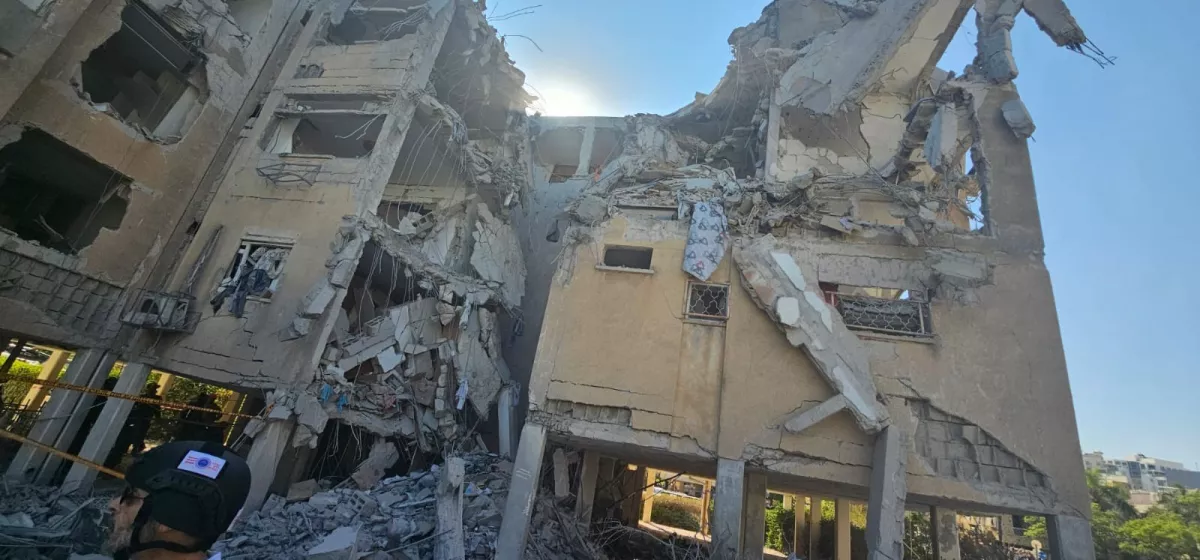
The residents of our city know: when the siren sounds, you go to a shelter. No one relies on “maybe it will be fine,” and that’s precisely why there were no fatalities—those affected mostly suffered from shock. It is, in essence, a miracle, because the level of destruction was very high. The blast wave was so strong that windows, doors, and walls were damaged over a large radius from the explosion. I was about a kilometre from the epicentre—in our reinforced room, the walls were shaking, even though such a wave shouldn’t normally penetrate there, as it is surrounded by four concrete walls—but we still felt its force. For comparison, in a neighbouring city, people died—Ukrainian refugees—because they stayed in their apartments, thinking nothing would happen.
From the very beginning of the war, city command centres were operational, and today Holon also has a 24-hour command centre constantly monitoring the situation. All information flows there and is promptly relayed to the city authorities. I am part of the city’s security and public order commission, serving as its deputy chairman, and I immediately receive notifications about any incidents. Thanks to prior preparation, every city service employee knows exactly what to do in an emergency.
Today, the situation in all Israeli cities is roughly the same: on one hand, people remain vigilant; on the other, they try not to live in constant fear, because that is impossible. Everyone knows that whatever happens, it can be endured, and life will go on.







 editor@caliber.az
 +994 55 444-88-98
 Азербайджан, Баку, ул. Низами, 203, Af Business House, 5-й этаж