










Türkiye–Armenia: Is the ice finally breaking? Expert opinions on Caliber.Az
Türkiye and Armenia have agreed to begin bilateral overland trade, according to the Turkish outlet T24. Two commercial sources familiar with the situation said that Ankara and Yerevan have reached an agreement to launch direct overland trade, according to Al Monitor journalist Ezgi Akin.
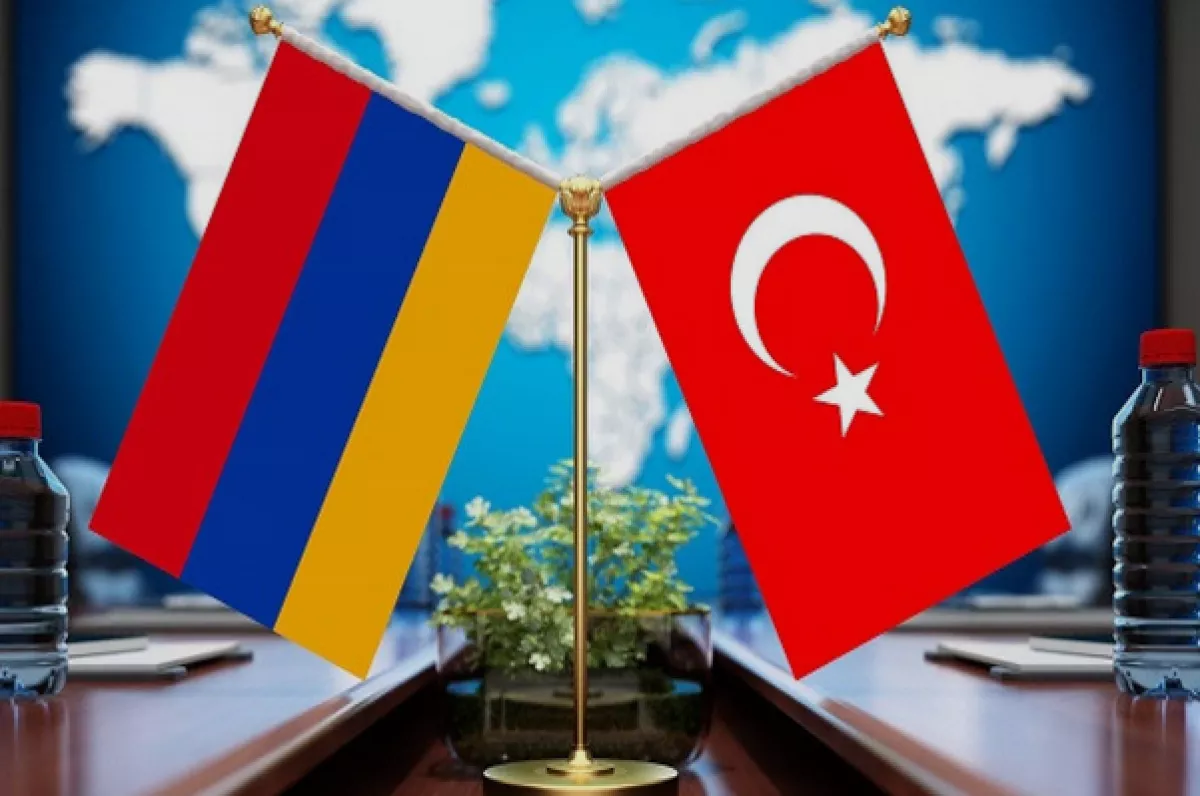
This step comes amid intensified efforts by Türkiye to normalise relations with Armenia as part of the broader U.S.-led regional peace initiatives in the South Caucasus. Türkiye and Armenia do not have official diplomatic relations, and their shared border has been closed since 1993.
Nevertheless, in 2022, the sides began negotiations on normalising relations with the aim of reopening the border and establishing diplomatic ties, the outlet notes.
As part of this process, Türkiye’s Special Representative for Normalisation with Armenia, Serdar Kılıç, and Armenia’s vice speaker of parliament and Yerevan’s special representative, Ruben Rubinyan, held their sixth meeting in Armenia in September, dedicated to the settlement of bilateral relations.
According to one of the sources, following those meetings, Kılıç held talks in November with the head of the Union of Chambers and Commodity Exchanges of Türkiye (TOBB), Rifat Hisarcıklıoğlu, to discuss the technical details of the new arrangement.
“The decision was made some time ago, and the technical works were already underway,” said the deputy chairman of the executive board of the Turkish – Armenian Business Development Council (TABDC), Noyan Soyak.
Until now, overland trade between the two countries had been carried out through intermediary companies in Georgia using quasi-re-export schemes. Turkish goods bound for Armenia were officially reclassified upon entry into Georgia as a separate export.
Under the new agreement, transit via Georgia will no longer be treated as “re-export”: shipments will retain their original export status throughout the entire route. This will make direct bilateral trade possible without Georgian intermediaries and without reopening the closed land border.
An industry source noted that, in practice, overland trade via Georgia has already become possible, although companies will need time to adapt to the new rules.
In 2022, Türkiye and Armenia also launched direct cargo flights as part of the normalisation process.
According to data from the Statistical Committee of Armenia, bilateral trade between Türkiye and Armenia exceeded $336 million in 2024. Imports from Türkiye to Armenia amounted to about $335 million, with roughly 40 per cent of deliveries carried out overland via Georgia. This means the new direct transit arrangement will primarily benefit Turkish exporters.
The main Turkish exports to Armenia are machinery and mechanical equipment, iron and steel products, industrial goods, and textiles.
Although official data for 2025 has not yet been published, Soyak estimates that the potential trade volume could reach about $400 million.
Could the easing of mutual export conditions lead to an improvement in Armenian–Turkish relations at the grassroots level — among the people directly involved in trade and logistics?
Well-known foreign experts shared their views on this issue with Caliber.Az.

Political commentator for the Turkish NTV channel and PhD in political science Ümit Nazmi Hazır said that after the Second Karabakh War, the paradigm in the South Caucasus changed fundamentally.
“Armenia realised that hostility with its neighbours — Türkiye and Azerbaijan — cannot continue indefinitely, and Pashinyan took rational steps. In this context, Turkish–Armenian relations began to gradually normalise.
Trade between Türkiye and Armenia existed before, but it was carried out indirectly. When I visited Armenia in 2017, I saw Turkish goods in Armenian stores. However, the absence of diplomatic relations, as well as the land border being closed since 1993 (due to Armenia’s occupation of Azerbaijani territories) and the resulting transport and logistics restrictions over many years, effectively created an economic blockade and embargo for Armenia. As Turkish–Armenian relations gradually normalise, these obstacles are being removed step by step. Recently, the normalisation process has noticeably accelerated,” the expert believes.
In his view, the agreement between Türkiye and Armenia to allow direct overland trade via Georgia will be beneficial for both Turkish and Armenian exporters.
“What is called a supply chain consists of regular calls, visits, contract signing, and the cycle of ‘payment — goods — resupply.’ As long as this cycle functions reliably, a partner develops a perception of predictability. In other words, trade inevitably creates a kind of everyday diplomacy. As trade links expand, relations between the two peoples will strengthen, and levels of prejudice will gradually decrease,” Hazır believes.
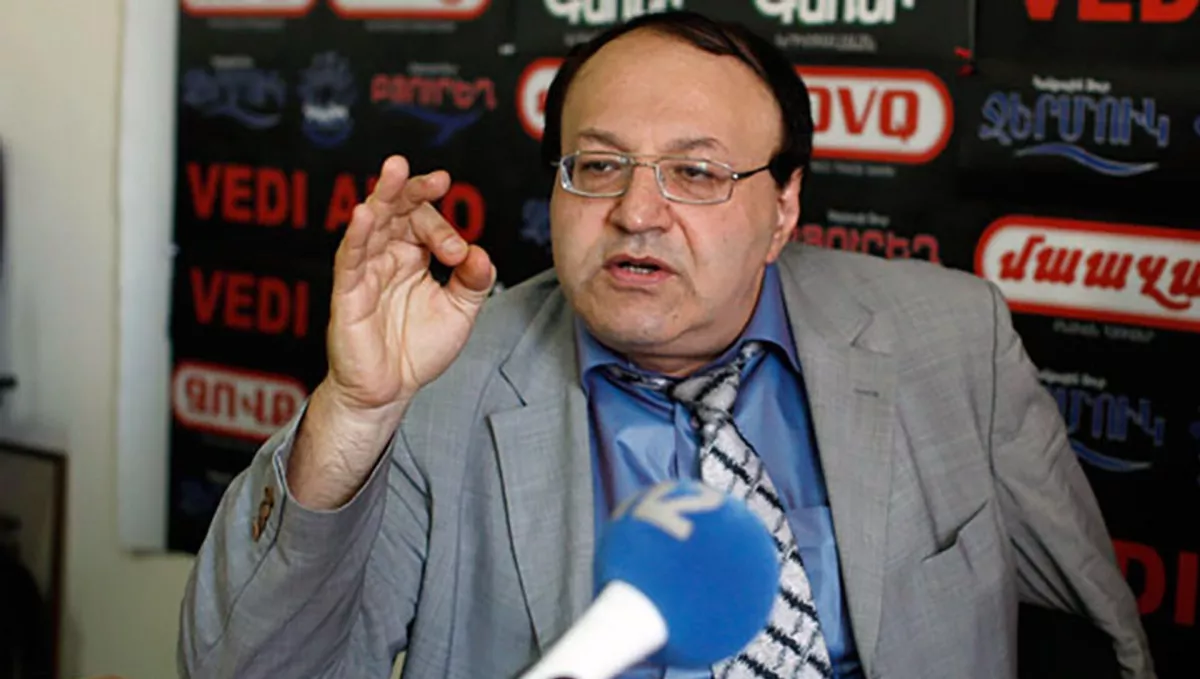
The President of the Association of Political Scientists of Armenia, Doctor of Political Science Hmayak Hovhannisyan, noted that the opening of direct overland trade is significant for Armenian–Turkish relations.
“Direct overland trade, which allows entrepreneurs to interact without obstacles, is the best path toward good neighbourly relations. Undoubtedly, at the initial stage, Armenian producers will find it difficult to compete with Turkish companies. However, ending the ‘greenhouse’ conditions under which Armenian business has developed will benefit us in the long term and serve as a stimulus for modernisation and growth.
Open borders and the free movement of people and goods, as long as necessary security conditions are met, are drivers of development for all countries. In our region, political obstacles must be removed to achieve these goals.
As an example, one can point to the declaration signed on August 8 under the auspices of U.S. President Donald Trump by the leaders of Azerbaijan and Armenia, which confirmed the existence of a mutual willingness for good-neighbourly relations. This is already a significant step forward. As the saying goes, the ice is starting to break. It remains to be hoped that following the upcoming parliamentary elections in Armenia in four months, institutional mechanisms will be strengthened to ensure the steadfastness of the course toward unlocking the region and removing the ‘iron curtains’ that hinder its development.
This is also important for our shared international prestige, as the world witnesses the peaceful intentions and goodwill of countries demonstrating an example of overcoming mutual distrust and hostility,” the expert stated.
According to him, this example could also be taken by Russians and Ukrainians — two East Slavic peoples with shared historical roots.
“Just five or six years ago, it was hard to imagine that it would be the Azerbaijanis and Armenians — whom ill-wishers claimed were doomed to perpetual enmity — who would become an example referenced by the U.S. president in his appeals to Russia and Ukraine for peace and good-neighbourly relations. Let the whole world see the nobility, peacefulness, and dignity of the Armenian and Azerbaijani peoples,” Hovhannisyan concluded.







 editor@caliber.az
 +994 55 444-88-98
 Азербайджан, Баку, ул. Низами, 203, Af Business House, 5-й этаж