










Azerbaijan at the centre of US South Caucasus strategy Experts analyse Vance’s historic trip to Baku
U.S. Vice President J.D. Vance is visiting Baku on an official trip, marking the first visit by an American official of such high rank to Azerbaijan since 2008.
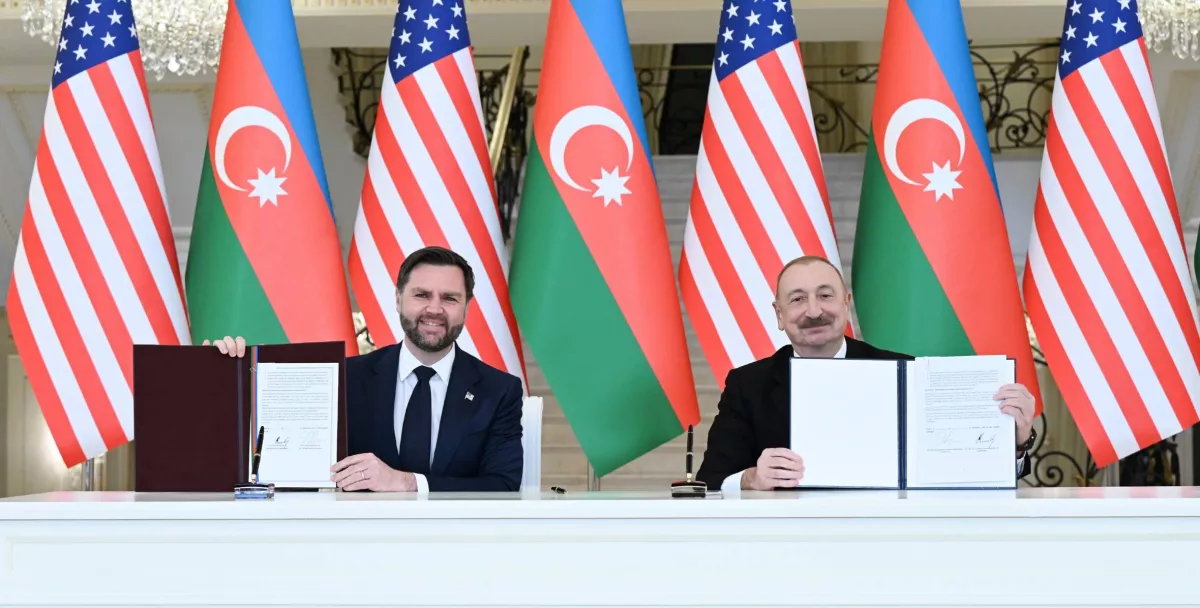
Following their talks on February 10, J.D. Vance and Ilham Aliyev signed a document formalising the strategic nature of U.S.–Azerbaijan relations: the Charter on Strategic Partnership.
In addition, the United States announced the delivery of American patrol boats to Azerbaijan to protect its territorial waters.
The main purpose of the visit was to advance Donald Trump’s plan for achieving peace in the South Caucasus, known as the Trump Route to International Peace and Prosperity (TRIPP). The sides also discussed the development of the transport corridor bearing the same name.
Particular attention was paid to cooperation in artificial intelligence, the creation of data centres, and the development of high technologies. On the eve of the visit, Ilham Aliyev met in Baku with executives of major American companies, including Apple, Meta, and ExxonMobil.
Ilham Aliyev described Vance’s visit as “historic” and a symbol of the final rapprochement between the two countries.
What is Azerbaijan’s overall significance for the Trump administration?
Well-known American experts shared their views on this issue with Caliber.Az.
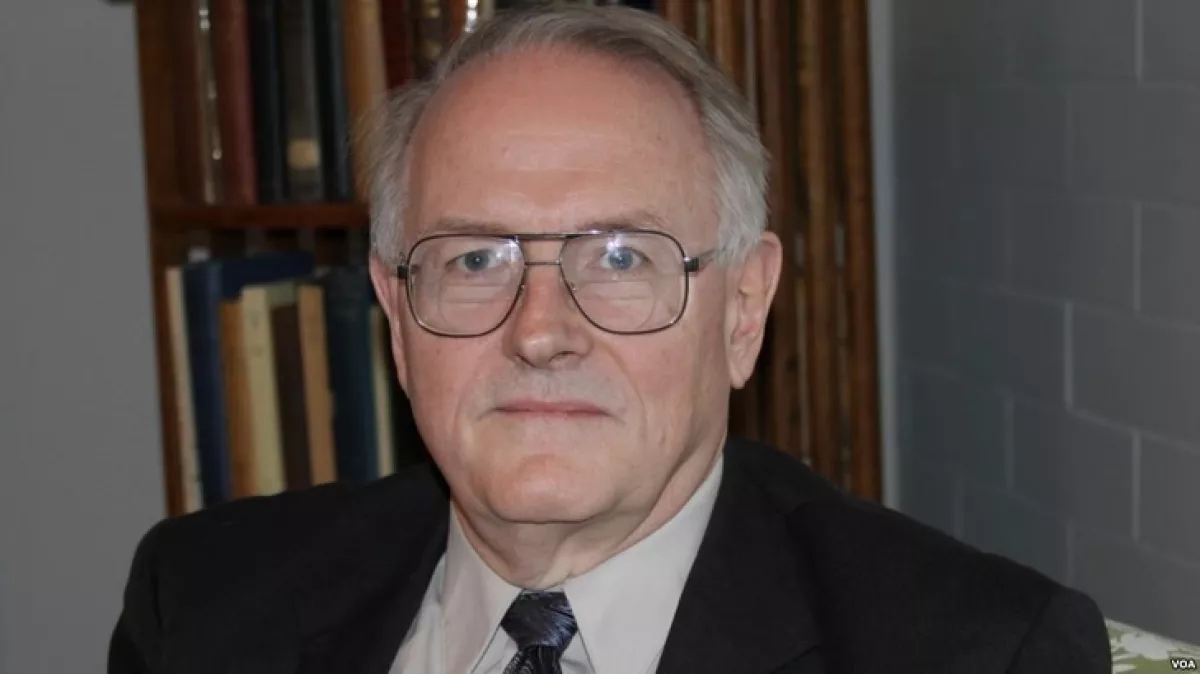
Analyst and former special adviser to the U.S. Secretary of State, Paul Goble, noted:
“A visit by Vice President J.D. Vance signals that, for the United States, Azerbaijan is the most important player in the South Caucasus — a key source of stability, oil and gas, as well as transit routes. Given past events, this is indeed highly significant.”

Professor Richard Tempest of the University of Illinois believes the situation should be viewed in two dimensions.
“First, the geopolitical one. Vance’s visit should be seen as another step in strengthening partnership — and possibly even allied — relations between the United States and Azerbaijan. It also reflects the continuing U.S. effort to push Russia out of the South Caucasus and shape an energy configuration on the global market that is favourable to Washington (the recent strike on Venezuela).
Second, the presidential-charismatic dimension. Trump likes to repeat that during his second presidency, he stopped eight wars, including the conflict between Azerbaijan and Armenia. For the U.S. president, the phrase ‘blessed are the peacemakers’ from the Sermon on the Mount carries not so much a biblical as a personal meaning,” Tempest argues.

Analyst and professor Grigory Ioffe noted that Vance’s visit to Azerbaijan is highly significant for the United States, representing an important diplomatic milestone and delivering concrete strategic dividends.
“The central event of the visit was the signing in Baku of the Charter on Strategic Partnership between the United States and Azerbaijan by Vice President Vance and President Ilham Aliyev. The agreement formalises bilateral relations and elevates them to a qualitatively new level. The document covers: economic cooperation — expansion of trade, investment, and joint projects; energy security — strengthening Azerbaijan’s role as a key supplier of energy resources to Europe and beyond, bypassing Russian dominance; security and defense, including the sale of U.S. military equipment (such as body armor, patrol boats, and an undisclosed number of vessels for protecting territorial waters), counterterrorism cooperation, and the development of broader military ties; advanced technologies — collaboration in artificial intelligence, cybersecurity, data centers, and potentially critical minerals and digital connectivity.
Both leaders described this as the beginning of a ‘completely new phase’ and a ‘historic step,’ reflecting months of preparatory work and a shift from ad hoc arrangements to a long-term institutionalised partnership,” the expert emphasised.
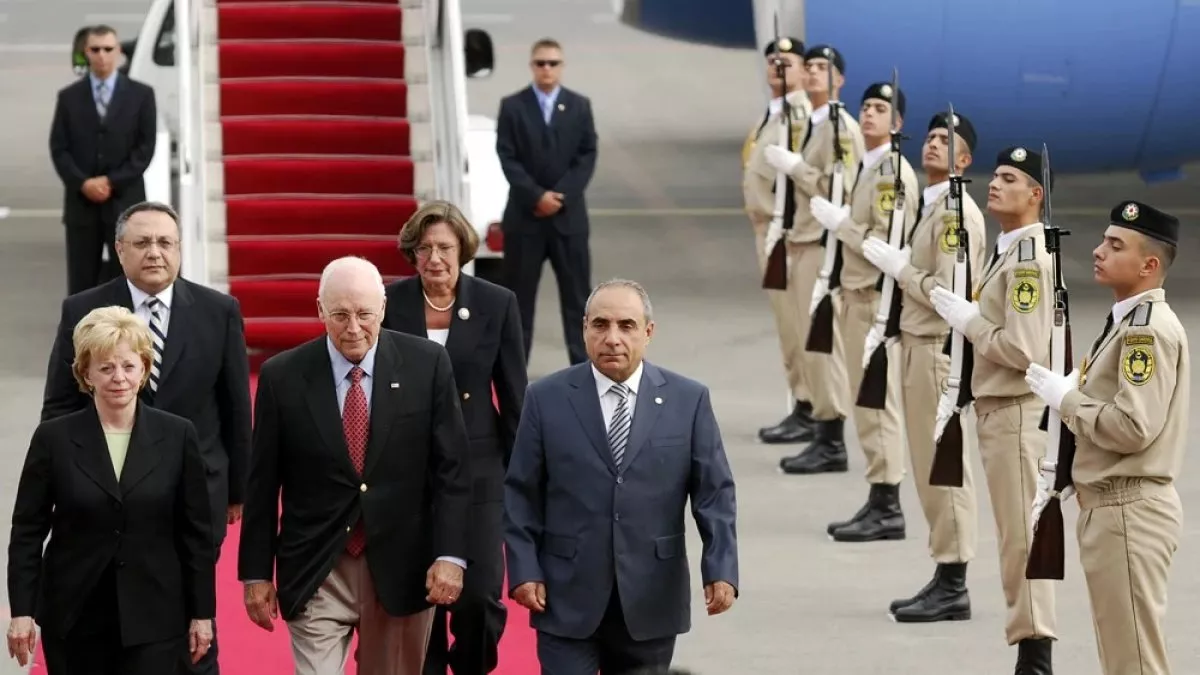
As Ioffe noted, this is the highest-level visit by an American official to Azerbaijan since Dick Cheney’s trip in 2008.
“The visit also advances the U.S.-led peace process with Armenia, building on the agreement reached at the White House in August 2025. Vance emphasised the need to solidify these arrangements and move forward with the Trump Route — a proposed 43-kilometre transit corridor through southern Armenia that would connect mainland Azerbaijan with Nakhchivan and onward to Türkiye.
This corridor, encompassing highways, railways, energy pipelines, and fibre-optic infrastructure, will provide Baku with direct access to the Nakhchivan Autonomous Republic (NAR), resolving a longstanding geopolitical challenge. It will also create new east–west trade routes linking Central Asia and the Caspian region with Europe, bypassing Russia and Iran.
For Azerbaijan, this signifies geopolitical diversification — reducing dependence on Russia, which has historically dominated the region, and strengthening ties with the U.S. and the West. It also opens up economic opportunities: turning Baku into a major energy and transit hub, attracting American investment, and enhancing its position in global energy markets.
Moreover, it serves as a symbolic endorsement — demonstrating U.S. support for President Aliyev’s leadership and Azerbaijan’s role in the post-conflict period, positioning the country as a reliable partner for NATO and the EU.
Overall, the visit underscores Azerbaijan’s growing significance in U.S. strategy in the South Caucasus and promises long-term dividends in security, geopolitical connectivity, and influence,” Ioffe concluded.







 editor@caliber.az
 +994 55 444-88-98
 Азербайджан, Баку, ул. Низами, 203, Af Business House, 5-й этаж