










Could the Far East become the next major war flashpoint? Experts weigh in
North Korea has accused Japan of preparing for an “aggressive war” amid Tokyo’s plans to increase its defence budget to a record 8.9 trillion yen (approximately $56 billion). According to the Korean Central News Agency (KCNA), Pyongyang believes that increased military spending will lead to an expansion of Japan’s military capabilities.
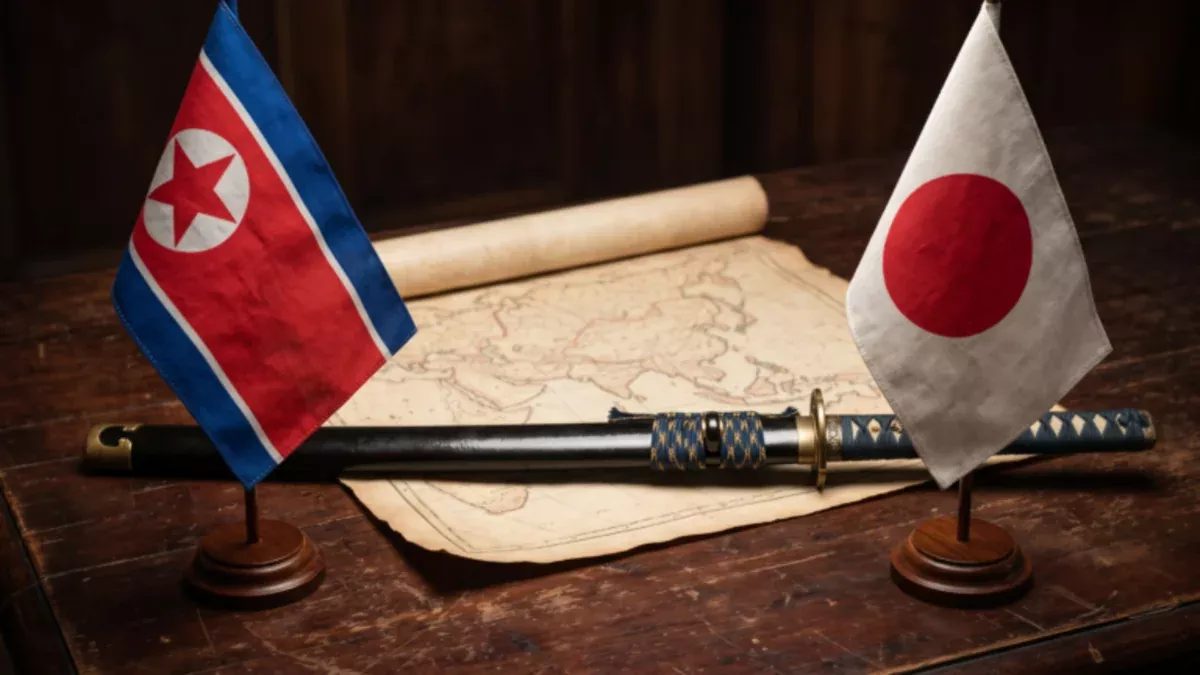
Japan is gradually moving away from its postwar pacifist course: it is increasing defence spending, strengthening cooperation with the United States and South Korea, deploying missile systems on remote islands, and considering changes to its pacifist constitution. Tokyo is taking these steps against the backdrop of China’s growing military power and threats from North Korea.
At the same time, North Korea itself possesses nuclear weapons and regularly makes aggressive statements toward Japan and South Korea. This raises the question: Does the current escalation point to the risk of a new military conflict — this time in the Far East?
Caliber.Az asked prominent experts to weigh in on this question.

According to sinologist and Doctor of Military and Political Sciences, Professor Vakhtang Maisaia (Tbilisi), the claim that North Korea expects an attack from Japan is fabricated and unfounded.
“Japan has a distinctly pacifist constitution. The country is effectively prohibited from maintaining conventional armed forces, which is why its defence establishment is officially known as the Self-Defense Forces. Their activities are governed by the principle of defending Japan’s own territory against external aggressors, of which there are effectively three in the Far East.
The first is the Russian Federation, which has never signed a peace treaty with Japan. The two countries still have unresolved issues concerning the territorial status of four islands north of Japan. Vladimir Putin’s highly publicised visit to one of these islands, which Tokyo considers its territory, was an overt demonstration of military force. As a result, Japan is compelled to increase its military spending to $56 billion.
The second challenge is China, which is expanding its military influence as well as its methods of non-military penetration, particularly in the direction of the Sea of Japan and Taiwan. The growing military power of the People’s Liberation Army of China is also regarded as one of the greatest security threats facing Japan.
The third challenge is North Korea itself. The DPRK possesses nuclear weapons and delivery systems capable of reaching Japanese territory in just 10–15 minutes. Pyongyang’s latest nuclear tests are a source of deep concern for Tokyo. Since Japan does not possess nuclear weapons of its own, it relies on the US nuclear triad.
The Treaty of Mutual Cooperation and Security between the United States and Japan contains Article 5, which provides for US protection of Japan in the event of an armed attack.
Thus, the security of Japanese territory is also ensured by the US nuclear capability.
At the same time, Japan adheres to three non-nuclear principles: not possessing nuclear weapons, not producing them, and not permitting their deployment on its territory. The country’s defence doctrine is based on these principles,” the professor explained.
In this context, he continued, the risk of a direct military conflict between North Korea and Japan remains, as the DPRK regularly threatens Tokyo with nuclear strikes.
“At the same time, tensions between Japan and Russia are also rising. In the expert’s view, Vladimir Putin’s visit to Iturup was, in effect, a military challenge to Tokyo.
Pyongyang’s actions are provocative, whereas Tokyo’s policy remains strictly defensive. Japan’s defence doctrine has a clear legal basis and is aimed at protecting the country against three aggressive neighbours.
The situation is further complicated by the fact that strategic military cooperation between Japan’s two aggressive neighbours has been developing actively since 2024. In effect, North Korea and Russia have formed a military-political alliance directed not only against Ukraine but, most likely, also toward Japan. Under these circumstances, the Japanese leadership is absolutely right to assess the matrix of challenges and threats posed by these states,” Maisaia emphasised.

Ukrainian political strategist Taras Zahorodniy, for his part, said nothing was surprising about North Korea’s behaviour, arguing that China is speaking through the DPRK: North Korea depends on China and acts as its proxy.
“Japan’s militarisation is causing serious concern in China, as Beijing understands where this is heading. Japan’s military power — and especially the prospect of Japan acquiring its own nuclear weapons — poses a serious challenge to Beijing.
From a technological standpoint, Japan has long been capable of doing so. At the same time, the United States is actively supporting its militarisation. Given the difficult history of relations between China and Japan, Beijing is also concerned that the strengthening of Japan’s military gives Tokyo the ability to effectively defend Taiwan, something Japanese officials have repeatedly stated.
If China were to seize Taiwan, it could effectively blockade Japan, which is why Tokyo is actively preparing for such a scenario. Given Japan’s technological capabilities and its alliance with the United States, this gives Tokyo a serious lever of pressure against China.
But Japan will continue its militarisation because it has no other choice. China poses an existential threat to Japan, as does the possibility of an attack on Taiwan. This should also be viewed in the context of the growing military capabilities of the Philippines, Taiwan, and other countries concerned about China’s actions.
Nor should we forget South Korea’s position. Seoul is also seeking to acquire nuclear weapons, as it is technologically capable of doing so. Therefore, North Korea’s statements about Japan’s militarisation, against the backdrop of Pyongyang’s repeated missile launches toward Japan, can be summed up by the saying: ‘You reap what you sow.’
Japan is increasing its resources, including its naval capabilities. Despite being called the ‘Self-Defense Forces,’ it is a very powerful military force and is now becoming even stronger. So nothing is surprising about North Korea’s statements,” Zahorodniy concluded.







 editor@caliber.az
 +994 55 444-88-98
 Азербайджан, Баку, ул. Низами, 203, Af Business House, 5-й этаж