










Vance’s visit: a milestone in US-Azerbaijan relations Expert opinions on Caliber.Az
A visit by the Vice President of the United States, J.D. Vance, is expected in Azerbaijan. It will be the highest-level visit by an American official to the country in recent years and, as highlighted in a statement by the U.S. Embassy in Baku, demonstrates the strength of Azerbaijani-American relations. The visit also reflects the shared commitment of both countries to expanding cooperation and strengthening peace and stability in the South Caucasus.

J.D. Vance will visit Azerbaijan on February 10–11, 2026. This is the first visit by a U.S. official of this level since 2008.
Earlier, the key objectives of the visit were identified as promoting the peace initiatives of the Trump administration in the South Caucasus, as well as implementing the Trump Route for International Peace and Prosperity (TRIPP) project. The project envisages the development of transport and digital infrastructure in the region, including the creation of a corridor between Azerbaijan’s main territory and Nakhchivan.

Vice President Vance will be accompanied by U.S. Deputy Secretary of State for Economic Affairs Jacob Helberg.
The visit is regarded as an important diplomatic signal, reaffirming Washington’s strategic interest in Azerbaijan, as well as its support for the peace agreements reached in August 2025.
What is Azerbaijan’s overall significance for the Trump administration? Prominent American analysts shared their assessments on this issue with Caliber.Az.

Irina Tsukerman, a geopolitical and security expert and editor-in-chief of The Washington Outsider, noted that Azerbaijan occupies a prominent place in the strategic thinking of the Trump administration as a country combining geographic significance, institutional stability, and a pragmatic approach to foreign policy.
“For Washington, it is a partner with whom long-term agreements can be built, based on aligned interests, economic rationality, and manageable risks. This format of engagement aligns with the Trump administration’s view of international politics as a tool for achieving concrete results, where priority is given to infrastructure, trade, investment, and secure routes.
In the current logic of the Trump administration, the South Caucasus is seen as a space of strategic connectivity. The region gains importance as a transit zone linking European markets with the Caspian, Central Asia, and the Middle East. Within this framework, Azerbaijan serves as a key hub, ensuring the stability and continuity of routes that are becoming increasingly significant amid the global restructuring of logistics and energy chains.
Azerbaijan’s geographic position allows it to function as a pivotal state through which energy, transport, and communication flows pass. For the Trump administration, such hubs are crucial as points of concentrated influence, enabling the shaping of regional architecture through infrastructure solutions and economic incentives. Developing these hubs is viewed as a way to cement American presence without the need for direct political or military involvement,” the editor said.
The energy dimension remains one of the key elements of Azerbaijani-American relations, she continued.
“Azerbaijan is viewed as an important participant in the regional energy system, capable of ensuring stable supplies and transit under long-term contracts. For the Trump administration, energy is considered a factor in the macroeconomic stability of allied markets and serves as a foundation for broader economic cooperation, including investment in related infrastructure.
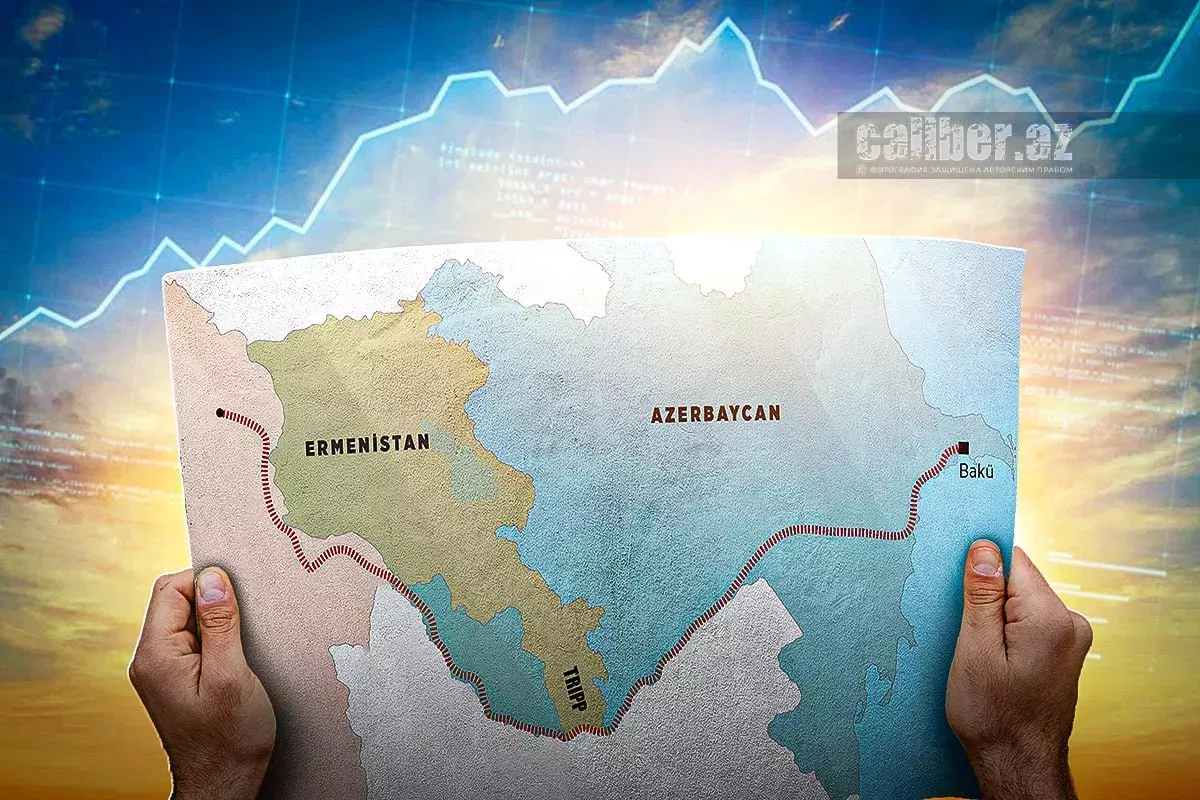
Transport initiatives, particularly the TRIPP project, occupy a central place on the agenda of the visit. For Washington, they are tools for shaping a new economic geography in the region, where speed, reliability, and political predictability of routes are key parameters. The corridor between Azerbaijan’s main territory and Nakhchivan is seen as a component of a system capable of integrating the South Caucasus into wider trade and transit chains oriented toward Western markets.
One of the objectives of the visit is to discuss the practical aspects of U.S. involvement in developing transport and logistics infrastructure. This involves not only political support but also the engagement of American companies, financial institutions, and technology contractors. For the Trump administration, it is important to secure the U.S. role as one of the key external partners in shaping these new corridors, providing long-term economic and strategic dividends.
Digital infrastructure represents a separate set of objectives for the visit. Azerbaijan is seen as a potential platform for developing regional digital routes, data centres, and telecommunications hubs. The Trump administration places particular emphasis on digital sovereignty, cybersecurity, and control over data flows, making dialogue with Baku in this area an important element of a broader technological strategy,” the political analyst said.
In the security sphere, she said, the visit aims to deepen coordination on regional stability and the protection of critical infrastructure.
“For Washington, it is important to discuss mechanisms to prevent escalations that could threaten transport and energy projects. In this context, Azerbaijan is seen as a state capable of playing a stabilising role and ensuring predictability in a sensitive region.
A separate priority on the agenda is supporting the peace agreements reached in August 2025. For the Trump administration, the vice president’s visit serves as confirmation of U.S. interest in consolidating these agreements and creating conditions for their practical implementation. Discussions with the Azerbaijani leadership are aimed at preventing a resurgence of tensions and integrating the peace process into the region’s economic and infrastructure plans.
Economic cooperation is another important goal of the visit. The Trump administration seeks to identify areas for expanding trade, investment, and joint projects with a focus on long-term returns. Of particular interest are logistics, energy, digital technologies, and industrial infrastructure, where Azerbaijan can serve as a regional hub.
The political signal of the visit carries independent significance. The presence of the U.S. vice president in Baku underscores Azerbaijan’s recognition as an important partner and a standalone regional actor. For the Trump administration, it is a way to secure Baku’s role in the emerging architecture of Eurasian connections and signal readiness for deeper engagement based on pragmatism and mutual benefit.
Taken together, the objectives of the visit amount to solidifying Azerbaijan as one of the cornerstone states in the U.S. strategy for the South Caucasus, advancing infrastructure and economic initiatives, and maintaining a stable regional environment conducive to trade, transit, and investment. This reflects the Trump administration’s approach of relying on concrete projects and partnerships that establish a long-term U.S. presence in key Eurasian hubs,” Tsukerman concluded.

Political scientist Dr. Andrew Korybko noted that Azerbaijan is an extremely important partner for the Trump administration, primarily due to its geostrategic position.
“The TRIPP project optimises logistics to expand American trade not only with the South Caucasus but also with Central Asia through Azerbaijan — an indispensable transit state for facilitating U.S. trade with the region’s landlocked countries.
In November last year, the U.S. signed memorandums of understanding with Kazakhstan and Uzbekistan on cooperation in the field of critical minerals. Earlier this month, representatives from these countries, along with delegations from more than 50 states, participated in the first U.S.-organised ministerial meeting on critical minerals.
In this context, J.D. Vance took the opportunity to propose the creation of a critical minerals trade bloc, with securing the corresponding supply chains being one of Washington’s key priorities. Progress in implementing TRIPP, which is one of the goals of his visit, could provide the U.S. with sustainable access to critical mineral supply chains from Central Asia.
Looking ahead, TRIPP could also be used to optimise military logistics for the U.S., Türkiye, and ultimately NATO toward Central Asia — facilitating joint exercises, weapons deliveries, and other forms of cooperation with three of Russia’s CSTO partners, which could, over time, lead to their effective exit from the bloc, similar to Armenia.
Any serious steps in this direction could also trigger the classic security dilemma in relations with Russia, similar to the situation in Ukraine, significantly increasing the risk of a new military conflict. This is why the U.S. and its partners will most likely exercise extreme caution regarding the potential military-logistical aspect of TRIPP,” Korybko said.







 editor@caliber.az
 +994 55 444-88-98
 Азербайджан, Баку, ул. Низами, 203, Af Business House, 5-й этаж