










Transport, logistics and resources: US strategy in Central Asia Expert opinions on Caliber.Az
The geopolitical processes unfolding in the world today are increasing the interest of international players in regions whose role as transport and logistics hubs and suppliers of valuable resources is difficult to overestimate. In this context, Central Asia occupies a special place. This is evidenced, among other things, by the C5+1 summit held in Washington in November 2025, which demonstrated the Trump administration’s interest in the countries of the region.
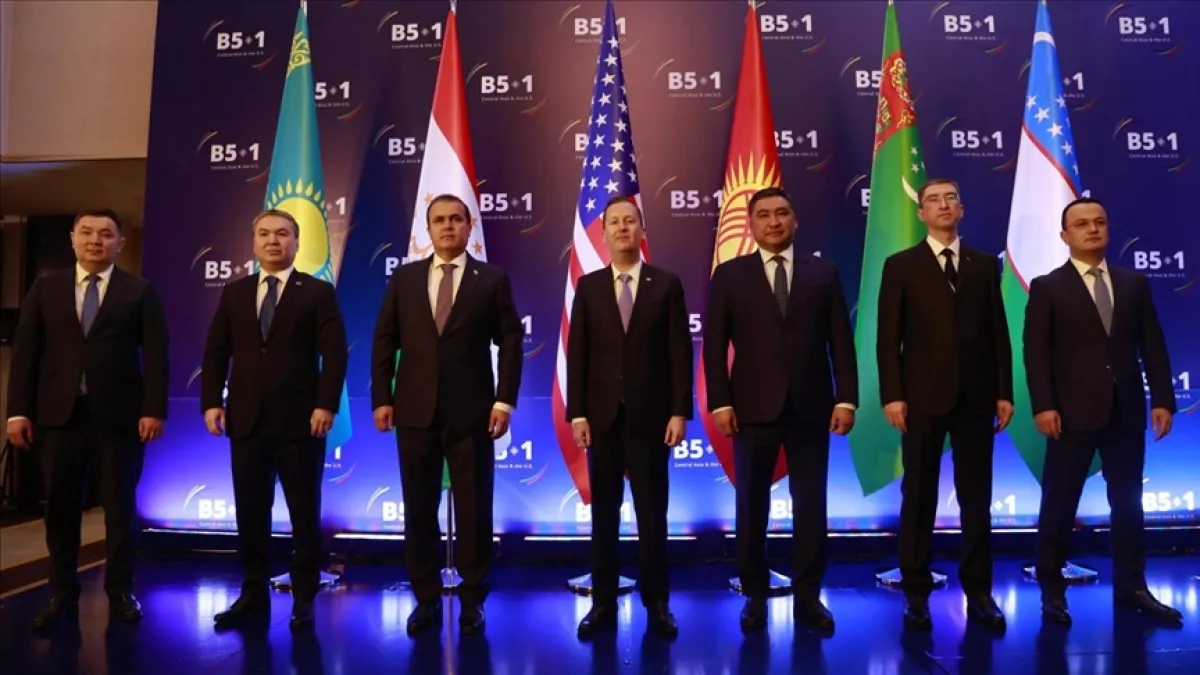
The meeting did not end there. Recently, a two-day B5+1 forum was held in Bishkek, bringing together representatives of business communities and government institutions from the Central Asian countries and the United States. Notably, a central place on the agenda was given to the Trump Route for International Peace and Prosperity (TRIPP) project. In particular, U.S. Special Envoy for South and Central Asian Affairs Sergio Gor stated that following the historic summit in Washington on August 8, 2025, the United States has continued to advance this initiative.
“Since President Trump’s historic peace summit that brought Armenia and Azerbaijan together, we continue to advance the Trump Route for international peace and prosperity, which will facilitate seamless transit connectivity from Central Asia through the South Caucasus and onwards to the West—a historic step towards building strong, interconnected economies and sustaining peace in the region,” the White House envoy emphasized.
How do experts in Central Asia assess the outcomes of the B5+1 forum and Washington’s interest in developing the Trump Route and the Middle Corridor? Economic analysts from Kazakhstan and Kyrgyzstan share their views with Caliber.Az.

Kazakh politician and economic analyst Petr Svoik believes that heightened U.S. activity in Central Asia and the South Caucasus is driven by an effort to entrench American positions in “As the saying goes, you need to stake your claim first, then see if it’s worth anything. Similarly, the Americans need to signal—and in some areas actively expand—their presence to secure what is already there. In Kazakhstan, for example, this includes American-European concessions in Tengiz, Karachaganak, and Kashagan, and most importantly, the CPC pipeline leading to the port of Novorossiysk, in which American interests have a stake. Even in processes such as the peace negotiations over Ukraine, it appears that the Americans will likely be allowed to retain their concessions in Central Asia,” he said.
According to the political analyst, the core issue is that the previous world order is transforming, while the new one is not yet fully defined, which makes all strategies more akin to reconnaissance than firm planning.
“Regarding the development of the Middle Corridor, it is important to understand the following: who is the receiving country, who is the sending country, and who is the transit country. From the perspective of sender or receiver status, the TRIPP corridor is important to the United States not on its own, but in the context of the entire Middle Corridor along its full length over the long term. Tomorrow, it could just as easily be a route from Russia across the Caucasus—either to Türkiye, Iran, or some other destination—used by the Chinese, the Russians, or all together, which is still unclear. Naturally, this concerns Washington.
The obvious resource exporters here are Kazakhstan, for oil, and Azerbaijan, for both oil and gas. In addition, Azerbaijan also acts as a transit country. Moreover, depending on the scenario, China could become a major sender, while the main recipient remains uncertain: Russia, India, Pakistan, Iran, or Europe? The fate of these corridors will also depend on who the recipients are. However, U.S. interest is clear in any case: to secure a presence in order to limit China’s influence. Americans would probably like to participate in some north–south transit flows, meaning along the line from Russia to the Indian Ocean, but to do so, they would need to coordinate everything with Russia.
As for the Zangezur Corridor and the TRIPP section, the launch of such communications should ideally be overseen by a single, clearly defined coordinator responsible for the entire Caucasus. But that, it seems, is a matter for the future,” Svoik concluded.

Meanwhile, Kyrgyz analyst and economist Umar Mutaliev believes that the B5+1 business forum represents a serious challenge to many global actors seeking to expand their influence in the region, causing particular concern in China and Russia.
“At the opening of the forum, First Deputy Prime Minister of Kyrgyzstan, Daniyar Amangeldiev, spoke about reforms in energy security, the judicial system, and tax legislation, and emphasised that Central Asia—with a market of over 80 million consumers—has become an important hub for global trade and logistics routes. Meanwhile, Kazakhstan’s Minister of Industry and Construction, Yersayin Nagaspayev, noted that the Central Asian countries are working on introducing a unified tourist visa to attract more travellers to the region. ‘We are proud that the United States is the largest investor in Kazakhstan, with total American investments reaching $100 billion,’ he said. This illustrates the scale of U.S. cooperation and presence in the region,” the expert stressed.
According to him, the Central Asian region is currently witnessing a practical struggle among centres of power for influence, and the intensity of this competition is increasing.
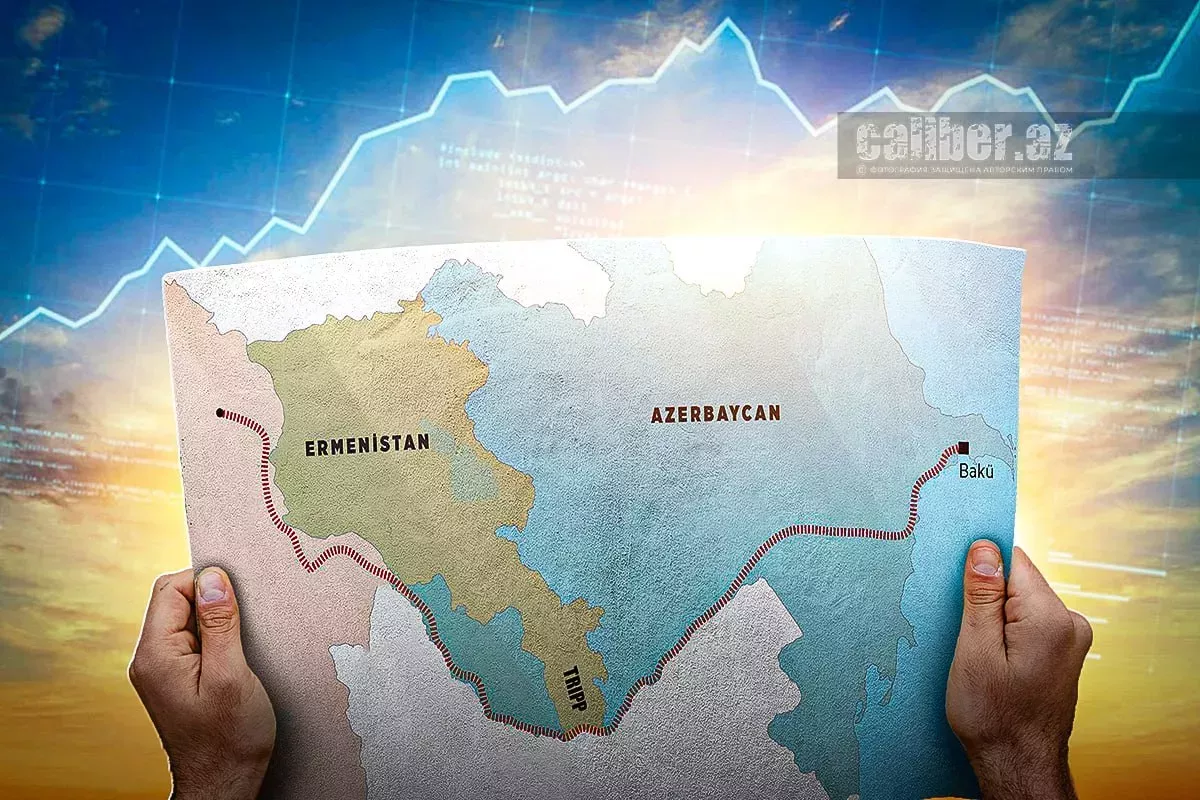
“U.S. Special Envoy Sergio Gor spoke about TRIPP at the B5+1 business forum in Bishkek for a reason. The United States is entering Central Asia with a broad strategic agenda, and TRIPP is presented as an example of geopolitical and economic success. In essence, it functions as an economic showcase for development and promotion. Therefore, the trajectory of the ‘Trump Route’ is highly significant as a visible indicator of U.S. success, particularly within the framework of cooperation in Central Asia. The forum also demonstrated that the Americans are choosing to pursue a strategy based on finance and innovation — in other words, a model similar to China’s approach, focusing on substantial investments of capital and scientific resources into the economies of regional countries.
In addition to emphasising the development of infrastructure along the Middle Corridor, the United States, according to the stated agenda, aims to fully digitise all structures of Central Asian states. At the forum, experts in digital economy and e-commerce stressed that Central Asia could leapfrog several stages of development if it focuses on digital services, cross-border platforms, and unified digital regulation. Analysts and industry representatives note that Central Asia is gradually becoming a target of U.S. attention and that of its partners as a potential source of raw materials for high-tech sectors.
As for the development and investment in the Zangezur Corridor in the South Caucasus, it currently sits at the crossroads of competing global interests. After the United States, strategists from Brussels are turning their attention to it, and new initiatives from China and Arab states may soon follow. Already, each country must determine how much it can invest in its own cargo flows through the Zangezur Corridor, as spheres of influence in the region are partly being shaped by these decisions,” Mutaliev concluded.







 editor@caliber.az
 +994 55 444-88-98
 Азербайджан, Баку, ул. Низами, 203, Af Business House, 5-й этаж