










Kyrgyzstan faces EU sanctions: a test case for Central Asia Expert opinions on Caliber.Az
The European Union is considering imposing sanctions on Kyrgyzstan as part of another package of restrictive measures against Russia, Bloomberg reports.
If approved, this would mark the first instance of the EU applying sanctions to a post-Soviet state for assisting in circumventing anti-Russian restrictions. Brussels believes that Kyrgyzstan has been used as a transit hub for shipments to Russia of goods subject to the sanctions regime. This includes, in particular, industrial equipment and radio-electronic components, which were subsequently used in the Russian manufacturing sector.
According to Bloomberg, the EU may employ a special anti-circumvention mechanism that has not previously been applied in practice. This instrument was specifically developed to exert pressure on third countries suspected of facilitating the re-export of sanctioned goods to Russia.
No official statements have yet been issued by the Kyrgyz authorities on this matter. It is known, however, that the country’s leadership, including President Sadyr Japarov, has repeatedly opposed sanctions imposed by Western states on Kyrgyz companies, calling them unlawful and one-sided.
In 2025, several Kyrgyz financial institutions and companies were already targeted by EU and U.S. sanctions on suspicion of facilitating the circumvention of restrictions. In particular, the European Union imposed sanctions on Tolubay Bank, Eurasian Savings Bank, and the company Tro.Ya. Authorities in Bishkek expressed dissatisfaction with these measures, emphasising their extraterritorial and politicised nature.
How well-founded are such accusations? Which other post-Soviet states could be subject to EU sanctions? Do these countries have real mechanisms to limit the ability of their national businesses to supply prohibited goods to Russia?
Caliber.Az discussed these questions with well-known foreign experts.
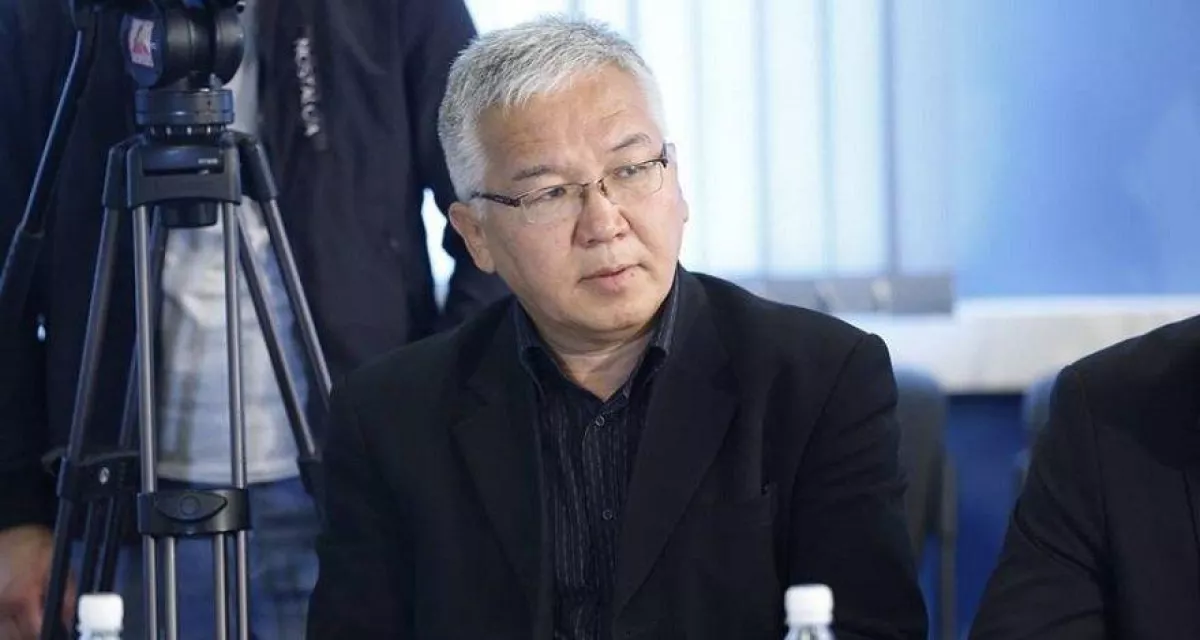
Kyrgyz political analyst, former diplomat, and security expert Mars Sariev noted that he would not dismiss this information as mere noise.
“This is no longer hints or testing the waters. If a topic like this appears in Bloomberg, it means it has long been discussed in Brussels and has already passed the trial stage. One simple thing must be understood: sanctions are no longer about law, and not even about economics. They are a tool of pressure, and sometimes a form of ‘education.’
Formally, we are talking about private companies, not state policy. But formalities play an increasingly minor role in this story. The European Union operates according to the logic of outcomes: if a flow of sanctioned goods passes through a country, then responsibility is attributed to that country.
You can argue about this at length, but in practice, it changes very little. Once a political decision is made, legal arguments usually take a back seat.
In this case, Kyrgyzstan is in the spotlight because it is the most consistently pro-Russian country in Central Asia. Not rhetorically, but in terms of real dependence—labour markets, money transfers, the EAEU, security issues. And that is precisely why it is inconvenient. The West does not want a sharp turn by Bishkek—it wants this orientation to cease being unequivocal. In this sense, sanctions serve as a reminder that such a course carries a price.
So, there is certainly a political motive here. To say it’s all about microchips and equipment is to ignore reality. Sanctions are always about the behaviour of the state.
Essentially, Kyrgyzstan is being told: either you start playing by our rules, or you will remain under constant pressure. This is not an ultimatum, but neither is it a neutral signal,” the expert emphasised.
According to Sariev, the domestic political context in Kyrgyzstan is of fundamental importance in this case, and Brussels is well aware of it.
“There is an ongoing discussion in the country regarding presidential powers. The president was elected under the old Constitution for a six-year term, whereas the new Constitution now stipulates a five-year term.
Some experts believe that, for the stability of the political system, it would be advisable to hold elections this year, thereby removing legal uncertainty. This is a serious discussion, and it is not going away.
Sanction pressure can influence this debate—not directly, but indirectly. No one in Brussels is saying: ‘Hold elections.’ However, the sanctions environment affects everything—elite sentiment, the arguments of various groups, and public perception of the foreign policy course.
In these conditions, proponents of a more pro-Western orientation gain additional arguments: look, the cost of aligning with Russia is rising.
The European Union has stepped up now because several processes coincided. Sanctions on Russia are largely being circumvented, transit through third countries has become systemic, and there is internal political sensitivity within Kyrgyzstan itself.
From Brussels’s perspective, this is a convenient moment to apply pressure and observe the reaction.
Kyrgyzstan can be seen as a test case for the region. Pressuring larger states is more difficult and costly. Kyrgyzstan is more vulnerable, but the signal is not addressed solely to it. It is being closely observed in Kazakhstan, Armenia, and Uzbekistan as well.
The meaning is clear: previous multi-vector policies without consequences are over. We live in a period where neutrality is no longer comfortable.
Kyrgyzstan finds itself at a point where external pressure intersects with internal questions of development and legitimacy. This is not a catastrophe, but it is not an ordinary episode either. There are no simple solutions, and any choice will carry its own cost—economic, political, and foreign policy-related,” Sariev concluded.
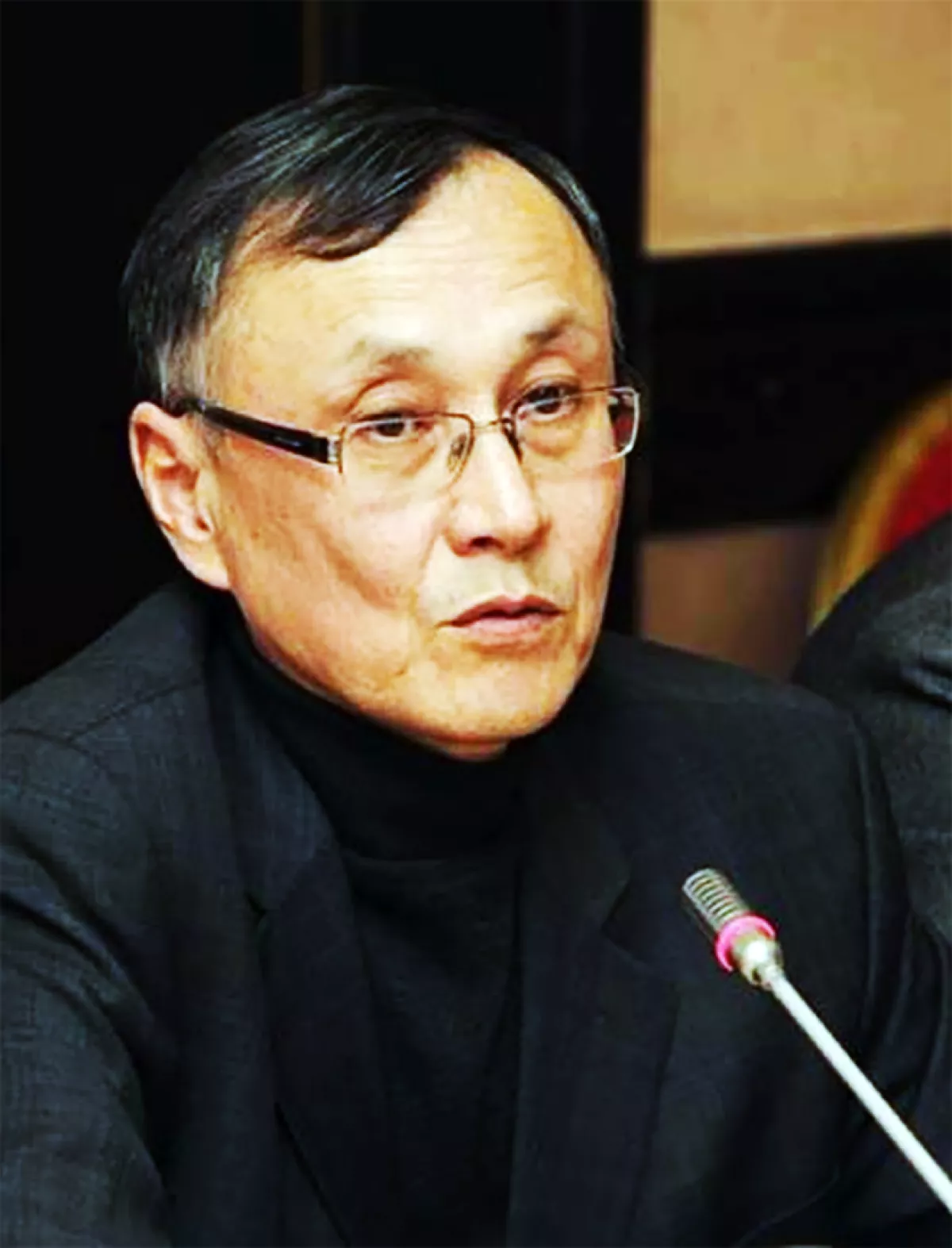
Kazakh political analyst Kazbek Beisebaev believes that, in theory, the European Union could impose sanctions on any post-Soviet country, and such measures could have a significant impact.
“I believe the European Union will act selectively on this issue. For example, Kyrgyzstan objectively will not be able to respond adequately to sanctions pressure. From a trade and economic standpoint, it is not a critical partner for Europe.
The situation is entirely different with Kazakhstan. European nuclear energy cannot operate without Kazakh uranium, and Brussels is well aware of this.
On the other hand, by imposing sanctions on post-Soviet states, the European Union would be pushing them closer to Russia. Therefore, if Brussels is indeed considering such measures, it must carefully assess the potential consequences of its actions,” Beisebaev concluded.







 editor@caliber.az
 +994 55 444-88-98
 Азербайджан, Баку, ул. Низами, 203, Af Business House, 5-й этаж