










"A new wave of hybrid warfare against Baku – this time from the North" Farid Shafiyev on Caliber.Az
Azerbaijan is facing a fresh wave of hybrid attacks, this time reportedly originating from the north, targeting the country’s leadership, institutions, and international image. Farid Shafiev, Chairman of the Center for Analysis of International Relations (AIR Center), tells Caliber.Az that these coordinated campaigns are part of a broader strategic effort to pressure Baku amid shifting regional dynamics.
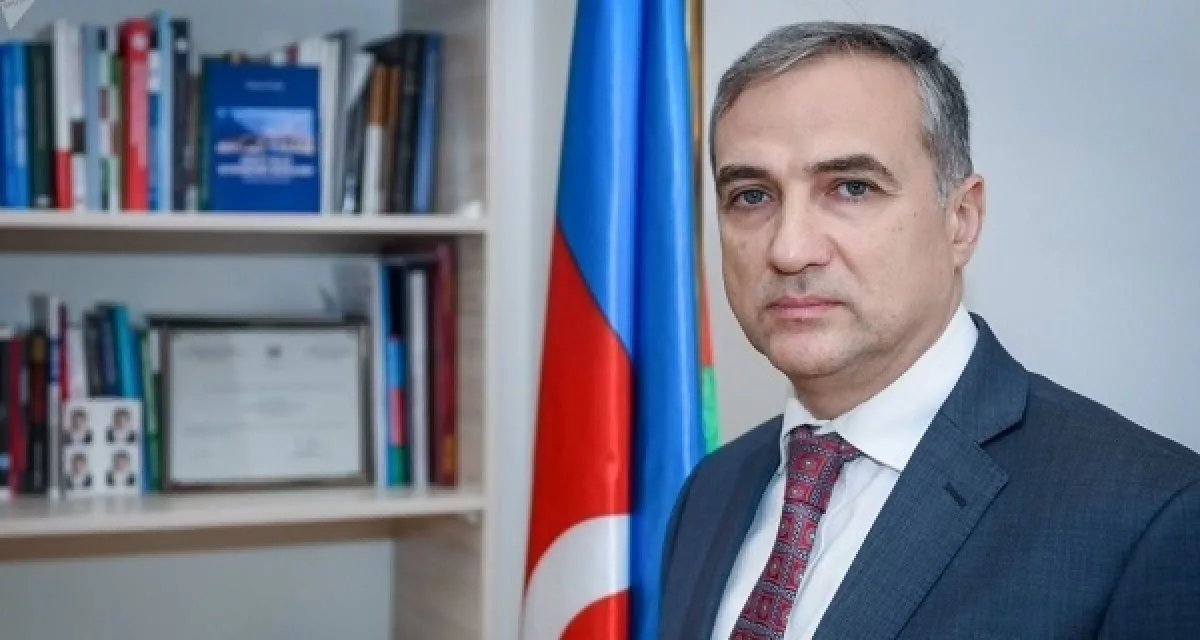
– Recently, against the backdrop of an extremely tense geopolitical situation in the South Caucasus region, there has been another wave of hybrid attacks against Azerbaijan on social media, Telegram channels, and in some media outlets. We saw similar activity, for example, during the counter-terrorist operation in 2023 and ahead of COP-29. What do you think is behind the current wave?
– Yes, without a doubt, there is a targeted campaign against Azerbaijan. A distinguishing feature of this campaign is the use of fake messages specifically targeting the President of Azerbaijan and members of his family. These messages show a Ukrainian element, and it is clear that there is a political context here – I am referring to the tense Azerbaijan-Russia relations following the incident in December 2024, when Russian air defence shot down an AZAL civilian plane. Although there was a moment when it seemed the issue could be resolved, unfortunately, we must note that the problem remains unresolved.
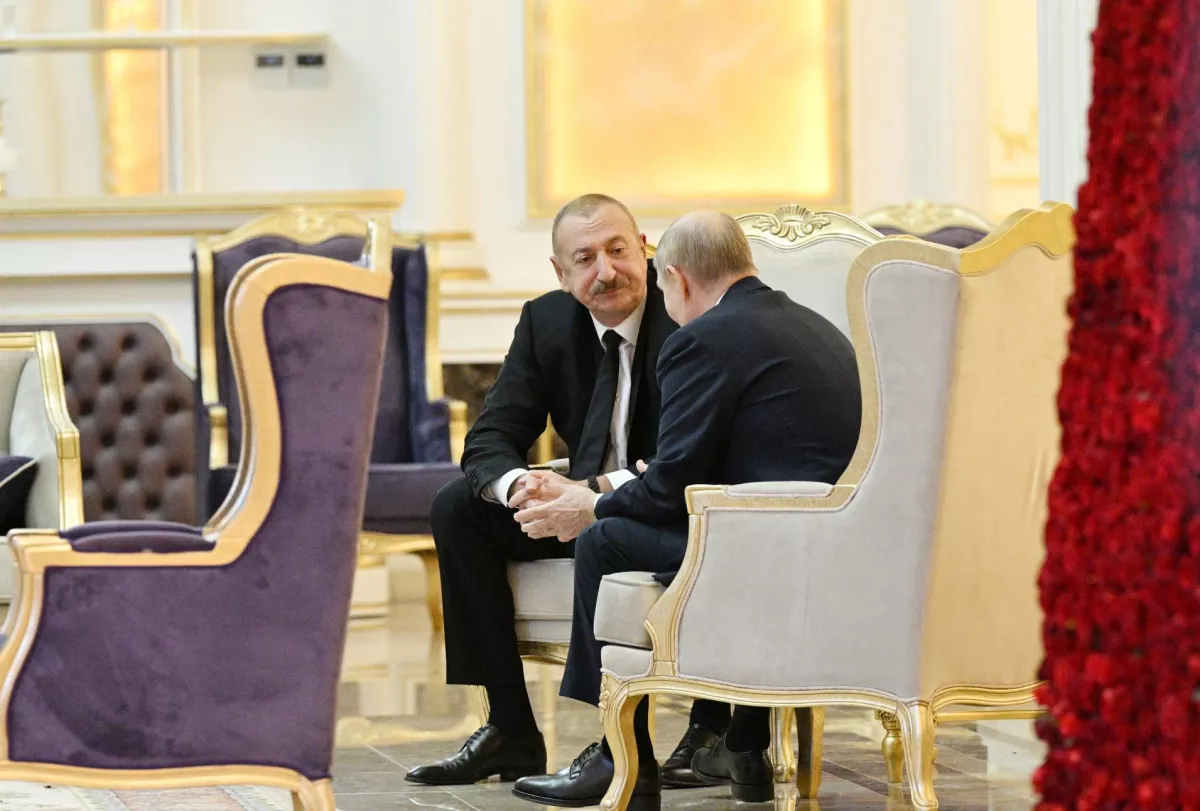
I want to emphasise that this problem was not created by Azerbaijan, which has always respected Russia’s interests, but Baku also demands equal and respectful treatment from Moscow. This, by the way, aligns with the spirit of the allied relations declared in February 2022. Yet some seem to believe that interstate obligations only run in one direction. Allied relations cannot develop under such conditions.
If we look at the sequence of events after the plane incident, we see that instead of easing tensions, the opposite occurred – every three to four months, a new incident took place, often initiated by Russia. In February 2025, there was a major cyberattack on Azerbaijan. Modern technologies allow the source of such attacks to be traced – and they originated from Russia. Then in June, tragic events unfolded in Yekaterinburg, followed by a wave of pressure on the Azerbaijani diaspora in Russia. There were attacks on SOCAR’s energy infrastructure in Ukraine, and later an attack on Azerbaijan’s diplomatic mission in Kyiv. As the President of Azerbaijan recently noted in Munich, if this had been a single attack, it could be seen as a coincidence. But now, looking at all these events together, it’s clear that someone in Moscow believes this is a way to foster good-neighbourly relations.
Well, the recent campaign against the presidential family leaves no doubt that everything is coordinated.
– In your opinion, what is Russia’s goal in this campaign?
– Before answering that question, I want to once again emphasise that Azerbaijan has given no reason for this. The president has stated regarding various centres of geopolitical power—be it Brussels, Moscow, or elsewhere—that Azerbaijan aims for equal partnership and will not tolerate diktats. For us, the red lines are independence, sovereignty, and territorial integrity. Over the past two decades, we have built relationships with many global centres of gravity. We have strategic relations with China, we signed a Charter of Strategic Partnership with the United States, and we develop and participate in numerous international platforms.
With Russia, we also have many political, economic, and humanitarian ties. One thing has fundamentally changed—the occupation of Azerbaijani lands has ended. Perhaps this is unacceptable to some, because the Armenian-Azerbaijani conflict was a tool for control and pressure, like any other conflict.
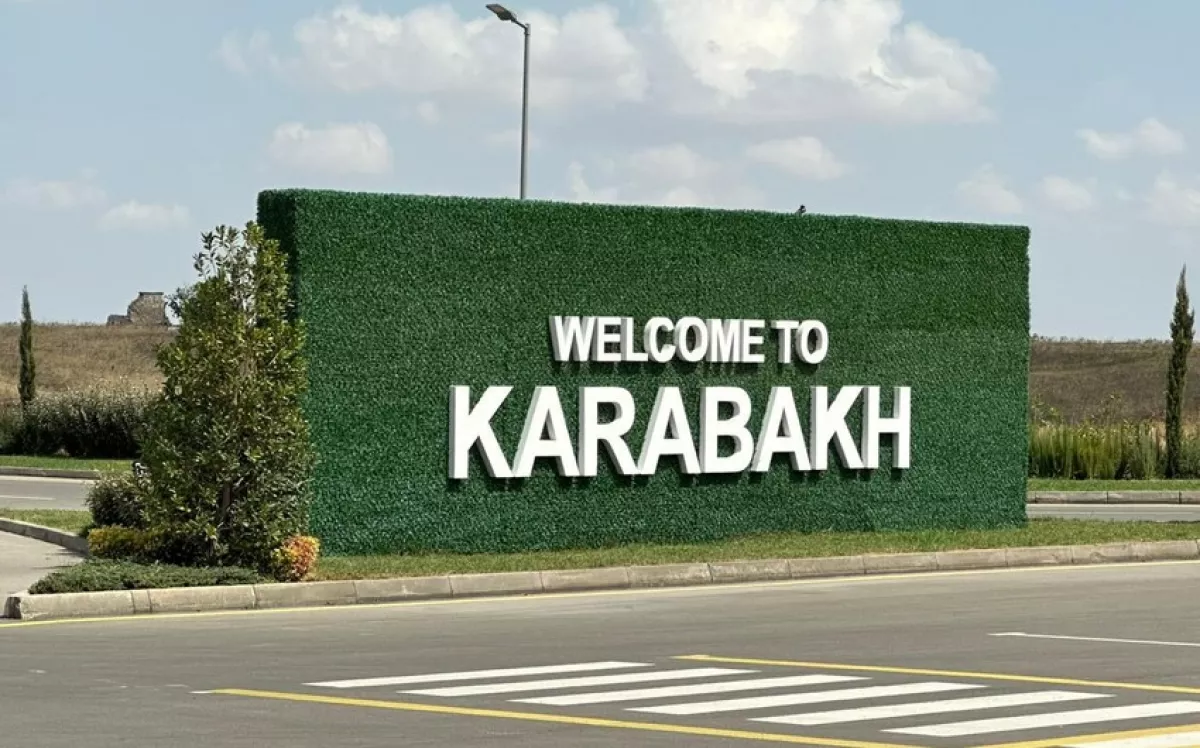
But, as history shows, this is a temporary instrument, and in the long term, it does not benefit those who pursue the “divide and rule” principle. A new period of peace and cooperation is opening in the South Caucasus. Here, regional players have a choice—to become part of the economic engagement process or to attempt to revive a conflict agenda. For Moscow, which is bogged down in the war against Ukraine, the choice should be obvious. Especially since this war has already alienated and cooled its relations with many neighbours.
– By the way, speaking of neighbours. Moscow’s relations with Armenia are not in the best state. Armenian authorities also hint at hybrid attacks coming from Russia.
– By attempting to revive a conflict agenda, Russia is effectively losing both Azerbaijan and Armenia.
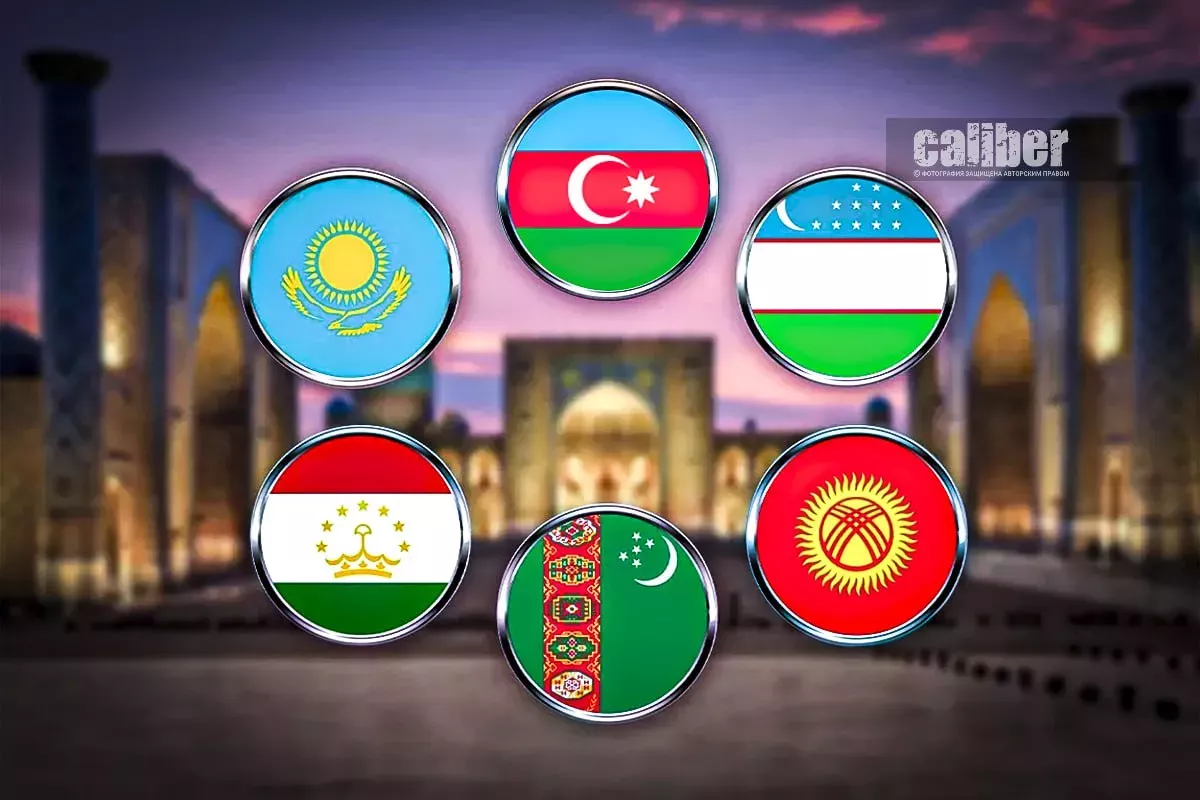
– Let’s look at another neighbouring region—Central Asia. By the way, AIR Center recently held a forum of analytical centres in the C6 format. What are your thoughts on this?
– The forum was held for the first time after Azerbaijan became a member of the Consultative Meeting of the Heads of State of Central Asia last year—the so-called C5. Colleagues from the Central Asian countries noted that Azerbaijan initiated such a platform, since under the C5 format, no forum of analytical centres was held. So, I hope that the C6 format will become an important discussion platform.
We discussed many issues related to expanding cooperation on security, economic, and cultural matters. In the humanitarian field, there was also a desire to expand cooperation within the media sector.
By the way, it is worth noting in the context of hybrid attacks that some Russian- and Central Asia–focused media targeting this region have also deployed a specific narrative against Azerbaijan. The view is being spread that Azerbaijan is promoting ideas of Pan-Turkism or even NATO expansion. This echoes the propaganda of the 1930s, when, under the pretext of fighting Pan-Turkism, thousands of intellectuals were repressed.
Here, I would like to emphasise the following:
-
Azerbaijan has paid a high price for its independence and territorial integrity. It has no intention of sharing either its independence or its territories with anyone. On the other hand, the geopolitical situation dictates strengthening statehood, including through allied relations. We have such relations with Türkiye, and today they are also developing with the countries of Central Asia.
-
Azerbaijan is developing various global and regional platforms. Let us recall the Non-Aligned Movement. The Organization of Turkic States (OTS) is also an important format. At the same time, we are developing other formats—and here the C6 is very important. This format includes Tajikistan, which is a brotherly country for Azerbaijan.
Why do I speak about this in some detail? Because there is a deliberate attempt to create points of tension between Azerbaijan and its allies. There are different forces interested in this. For example, in Türkiye, the Gaza issue is sometimes brought up—perhaps by other forces—but in this case, speaking about Central Asia, we can clearly observe it in Russian-language media. This region, like the South Caucasus, has historically been a space of interaction among different civilisations—Turkic, Persian, Arab, and others. And it will remain so. Unfortunately, this issue is being politicised.
It is very encouraging that in Central Asia, tension between Kyrgyzstan and Tajikistan has been eased, and border delimitation has been carried out. These processes, by the way, took place without Russia’s involvement, under the mediation of the Central Asian countries themselves. Moscow could have attempted to contribute. Alas, so far we see anti-immigrant attacks in Telegram channels targeting Tajiks, Uzbeks, Azerbaijanis, and other ethnic groups.
– My final question: what do you see as the way out of the current tension?
– I think that the recent campaign personally targeting the President of Azerbaijan and his family members is a very serious step against bilateral relations. Therefore, de-escalation must be undertaken by the party that initiated it.







 editor@caliber.az
 +994 55 444-88-98
 Азербайджан, Баку, ул. Низами, 203, Af Business House, 5-й этаж