










Reset with Washington, pause with Brussels: Georgia’s foreign policy in flux Expert opinions on Caliber.Az
Georgia’s relations with the European Union—and with the Western world more broadly—remain turbulent. From Tbilisi’s perspective, the EU’s rhetoric toward the country is, at best, patronising and critical, and at worst, Brussels appears willing to back a scenario resembling a new “Orange Revolution,” openly expressing sympathy for Georgian politicians now in opposition, particularly former President Salome Zourabichvili.
Recently, in his annual address to parliament, Georgian President Mikheil Kavelashvili accused the European bureaucracy of openly interfering in the country’s internal affairs and applying double standards.
At the same time, more than a year after the Trump administration took office, and contrary to forecasts of a swift reset in Georgia’s relations with the West, the level of political dialogue between Washington and Tbilisi remains uncertain. Notably, U.S. Vice President J.D. Vance visited Yerevan and Baku without making a stop in Tbilisi. Nevertheless, analysts believe that a full restoration of the strategic partnership between Washington and Tbilisi could take place in the near future. Otherwise, Russia may attempt to seize the initiative from the United States—and, according to experts, Washington is aware of this and preparing for diplomatic manoeuvring.
So, is the expected reset of Georgia’s relations with the U.S. and the West, including the European Union, possible—and if so, when? Georgian political analysts attempted to answer this question in comments for Caliber.Az.
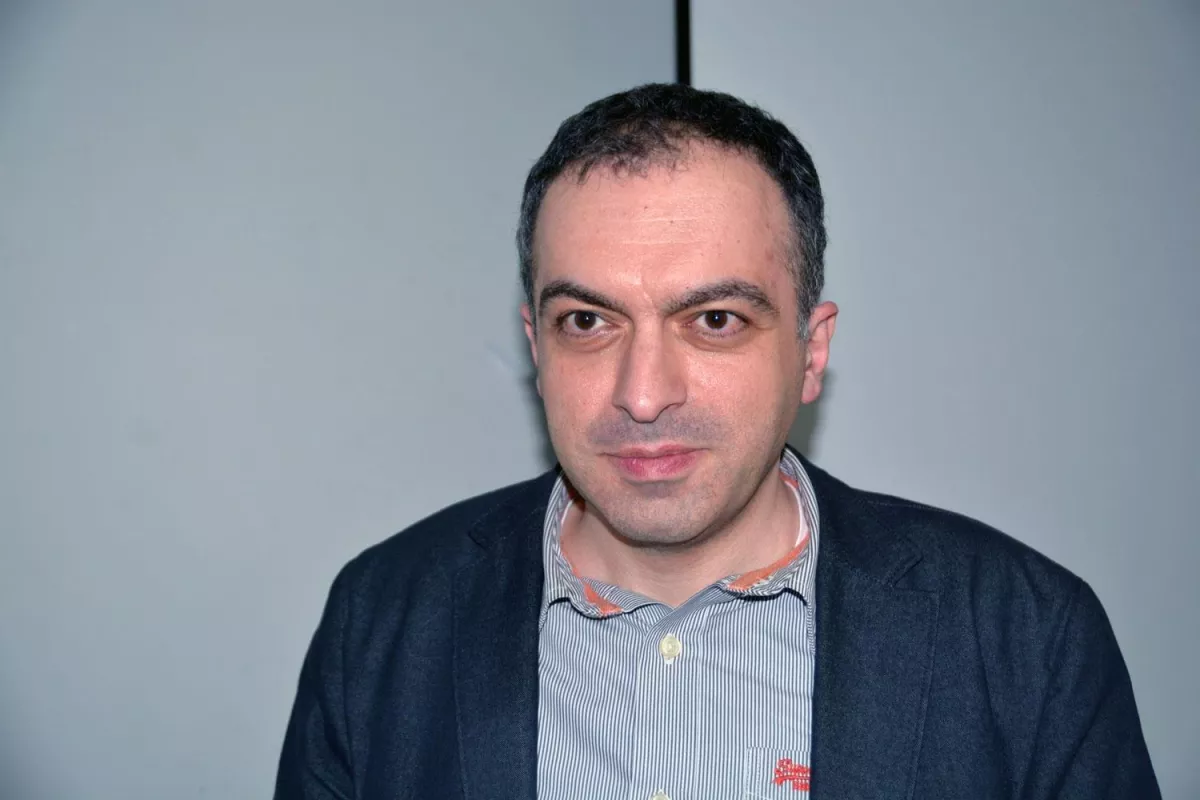
Tornike Sharashenidze, professor and the head of the MA Program of International Affairs at the Georgian Institute of Public Affairs (GIPA), believes that if the current level of relations between Tbilisi and Washington were assessed on a five-point scale, it would fall around a “four minus.” This is primarily because official Washington has refrained from criticising Georgia for quite some time and, on the contrary, certain positive signals have begun to emerge.
“For example, on February 6, 2026, Georgian President Mikheil Kavelashvili met with U.S. Vice President J.D. Vance and Secretary of State Marco Rubio in Italy. Although it was an informal, brief exchange during the opening ceremony of the Winter Olympic Games, the parties discussed bilateral relations between Georgia and the United States. Vance promised a reset in relations and emphasised Georgia’s historic connection to Christianity. The meeting was described as warm,” the analyst recalled.
According to him, the ruling Georgian Dream party is indeed currently in a waiting mode, anticipating a reset in relations with the United States.
“At the same time, it must be acknowledged that if this does not happen in the near future and the U.S. administration continues to ignore Georgia, the Georgian authorities will not suffer significantly from it—it is still preferable to receiving lectures or facing criticism from the White House,” the political scientist noted.
As for the European Union, he believes that Tbilisi’s relations with individual EU member states are less strained than its relations with official Brussels.
“Georgia has developed solid relations with several European countries. However, the core problem, without doubt, is that Tbilisi has failed to find common ground with the European Commission—or what Georgian officials themselves describe as the EU’s ‘special bureaucracy.’ There are several reasons for this.
First, after the outbreak of the war in Ukraine, the EU, in coordination with the Biden administration, formed a united front against Russia and sought to bring into it post-Soviet states closely engaged with the bloc. Georgia, however, only partially aligned with the sanctions against Russia, which led to disappointment in Brussels.
Second, the ruling Georgian Dream party has demonstrated greater political independence than, for example, Moldovan President Maia Sandu. It pursues its own course and does not simply follow Brussels’ directives.
Moreover, the tone of the European Union’s foreign policy toward former Soviet republics is shaped to a significant extent by the Baltic states. They view the Georgian Dream party unfavourably and would be more comfortable with a politician like Mikheil Saakashvili, who advocates a firmly hardline stance toward Moscow. Georgian Dream, by contrast, supports a more cautious and pragmatic approach toward Russia and has no intention of taking destabilising steps.
Finally, against the backdrop of the war in Ukraine, many European countries—particularly Poland and the Baltic states—have been actively seeking signs of Russian influence in Georgia. Taken together, these factors have contributed to the current strain in relations,” Sharashenidze noted.

Georgian analyst and political science candidate Teimuraz Garishvili is convinced that Tbilisi will be able to improve its relations with the United States in the near future, while the European Union, in his words, will “catch up” later.
“We can see that the Trump administration still faces challenges in overcoming the political stereotypes about Tbilisi that were established during the Biden era. It must be acknowledged that the Biden team contributed significantly to creating palpable tensions. That administration issued numerous sharp statements—particularly expressing dissatisfaction with the adoption of the law on foreign agents and with the results of the 2024 parliamentary elections.
In doing so, Georgia succeeded in defending its sovereignty despite pressure from the United States and the EU. In this context, the protracted pace of the reset is understandable: Trump needs to fundamentally recalibrate U.S. policy in the South Caucasus, which will likely require a targeted ‘personnel reshuffle’ within the State Department and the White House. I believe a resolution to this issue is therefore not far off.
Regarding the European Union, the tense—and at times sharp—tone in its dialogue with Tbilisi is expected to persist in Brussels’ rhetoric for now. This narrative, it seems, will remain relevant for another year to year and a half. Nevertheless, it is evident that EU leadership will eventually have to overhaul its approach to Georgia—either by following the U.S. lead or by initiating the process independently, without waiting for directives from Brussels,” Garishvili concluded.







 editor@caliber.az
 +994 55 444-88-98
 Азербайджан, Баку, ул. Низами, 203, Af Business House, 5-й этаж