










Four years of Ukraine’s war of attrition: what’s next? Expert opinions on Caliber.Az
Today, February 24, marks exactly four years since the full-scale Russian invasion of Ukraine began. The war, which started in 2022, has now entered its fifth year. On this anniversary, reflections are being made in Ukraine and around the world on the country’s resilience, the enormous human losses, and the widespread destruction. Since late 2025, the United States has mediated attempts at peace negotiations, but by February 2026, they have not led to a halt in the fighting. Russia continues to carry out massive missile strikes, and the front line remains a zone of active clashes.
Four years give reason to reflect on how and why this war became possible. Could it have been avoided? What are the expectations for the future? When and how might it end, and with what outcome?
Renowned analysts shared their thoughts on these questions with Caliber.Az.
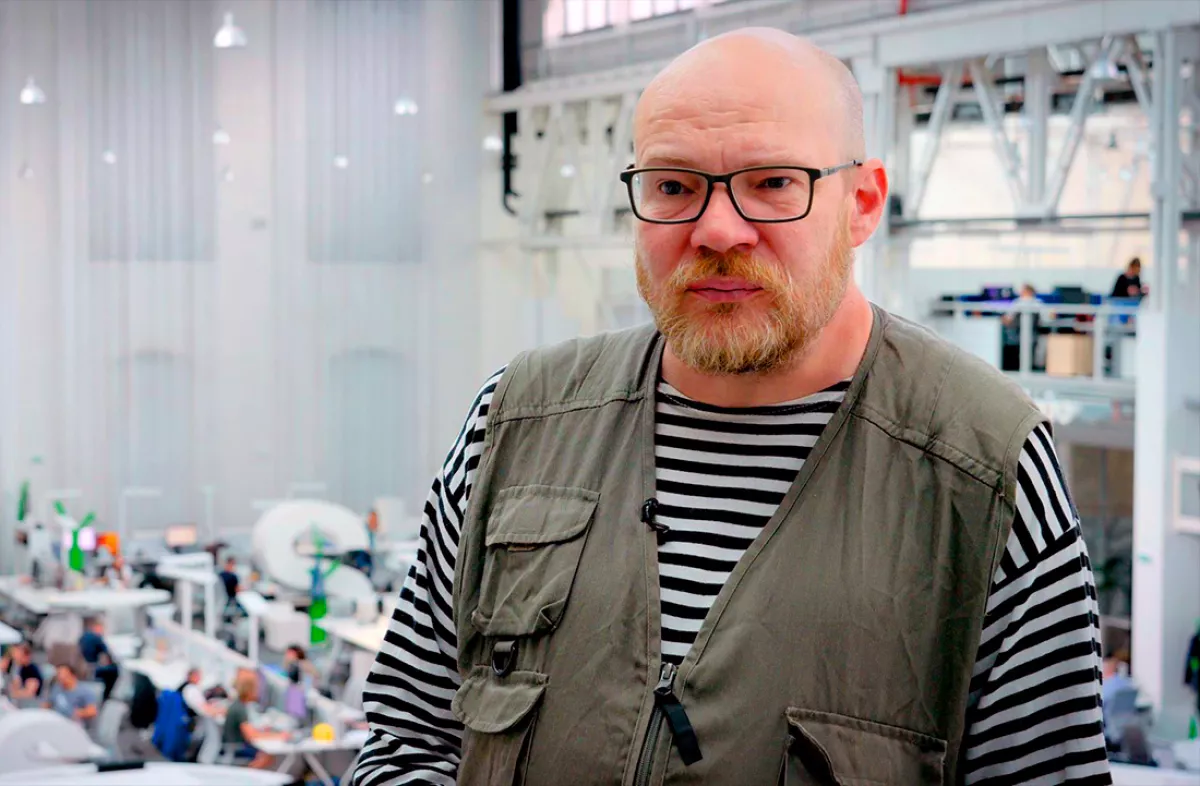
Ondřej Soukup, an expert on post-Soviet countries and a correspondent for the international affairs department at Czech Radio (Prague), noted that the role of individuals in history is usually overestimated, since most historical processes tend to follow their own logic rather than the whims of a single person.
“However, in this case, it is hard to underestimate the role of Vladimir Putin, who, as we now understand, sometime around mid-2020 decided that in order to change the situation in Russia, restore its imperial character, and regain great-power status, he personally would be ready for a major conflict. Of course, events could have developed entirely differently, since no one was threatening Russia. But because of the decision of this one person, everything moved toward war.
And, honestly, I don’t believe that the war could have been avoided even at that point. By then, at least, the ultimatum of the second half of 2021 had already been issued, which effectively aimed to revert the situation to 1996, including demands that all of the Baltics, and indeed the Czech Republic, Poland, and Hungary, leave NATO, among other things. I think the Kremlin understood that these conditions were completely impossible, and only Europe didn’t understand why such strange, obviously unattainable demands were being made. And all those calls from Macron, trips by Olaf Scholz to Moscow, probably could no longer change anything,” the expert believes.
He says the current situation is, in principle, understandable. “This is a war of attrition, and the Kremlin believes it is winning. They think they have more resources, that the West in its current state will eventually collapse and will no longer be able to support Ukraine, and without Western support, Ukraine will be forced to capitulate.
The question we don’t know the answer to is how far Vladimir Putin (and again, only he will make the final decision) is willing to let this go. In other words, is he capable of reasoning: ‘Well, I’ve achieved what I could; of course, this isn’t the full subjugation of Ukraine that I intended in 2022, but at least there’s something; and if I push further, it could cause problems in Russia; so let’s stop.’ We simply don’t know whether he believes that moment has arrived.
And that also determines the last question: what can we expect? We don’t know where Vladimir Putin will decide to stop. Will it be in the form of a slow, ongoing conflict that could continue for several more years, or will he decide that it’s time to consolidate what has been achieved, start somehow restoring the economy, easing sanctions, and so on? Everything will depend on that.
If Vladimir Putin and his close circle believe they have achieved everything they could, then direct military actions might indeed end, and some long-term negotiations could begin. If not, the war could continue for years. Because, unlike at the start of the war, Ukraine has strengthened and is capable of continuing to fight for some time even without Western military aid—maybe one year, maybe two,” Soukup believes.
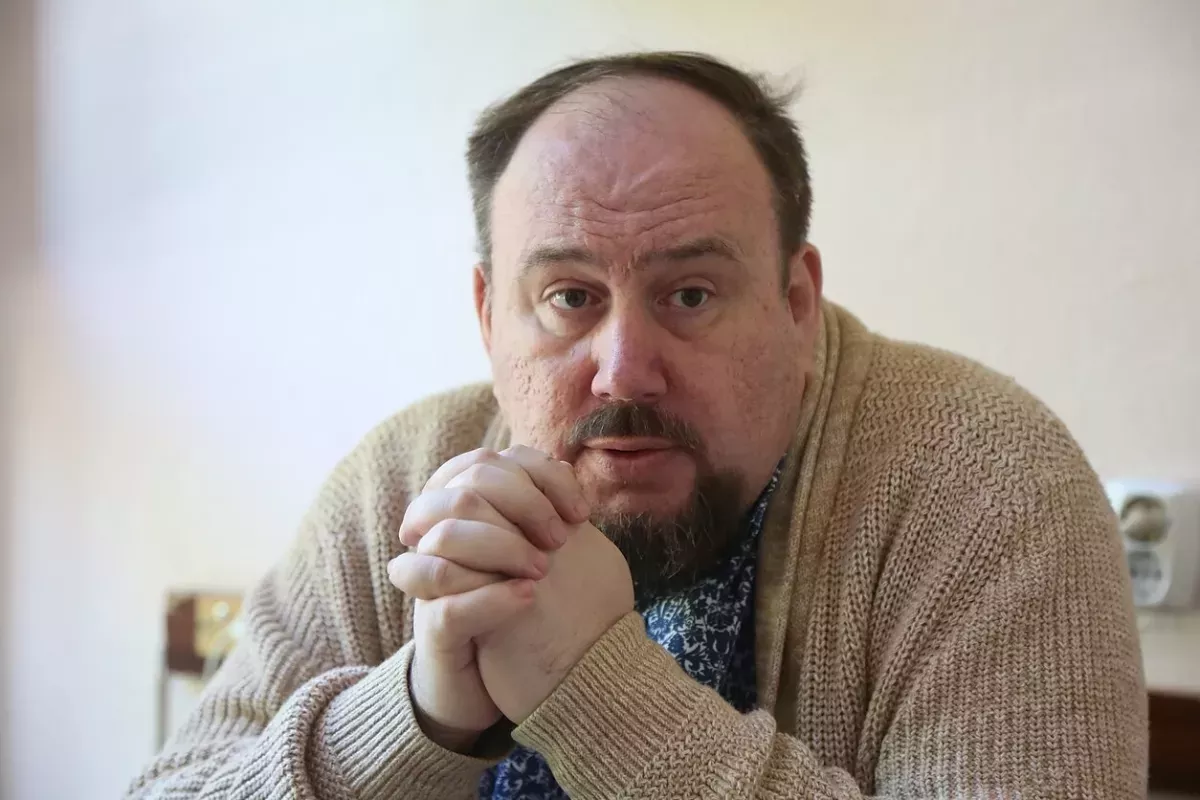
Ukrainian military expert and historian Mykhailo Zhirohov, in turn, recalled that the full-scale invasion of 2022 was already foreshadowed by Putin’s 2007 speech at the Munich Security Conference (MSC).
“Everything that happened after that was merely preparation: the war with Georgia, the annexation of Crimea. These were ‘test balloons’ to gauge the West’s reaction, which turned out to be very favourable in Putin’s eyes. That is why he decided he could seize Ukraine without consequences and without serious international pushback.
The fact that it happened specifically in February 2022 was due to a range of circumstances. One of them was Putin’s calculation that Ukraine’s current president, Zelensky, was not supported by the Ukrainian people and would surrender easily, given his background—that he had always been Russian-speaking and appeared, in Putin’s view, to be ideologically close. Everything else was just a continuation of this policy,” the historian insists.
Answering the question of how the war might end, he suggested that a temporary ceasefire is quite likely.
“But overall, as long as the objectives remain unresolved—whether it’s the full conquest of Ukraine or the collapse of the Russian Federation—the war will continue. A very vivid example is the war over Karabakh. The first campaign ended effectively in Azerbaijan’s defeat, followed by two more major operations. As a result, until one side achieves its goal through military means, the conflict does not end. This is roughly applicable here as well: this is an existential conflict between Russia and Ukraine, which could end either with Ukraine’s complete defeat or Russia’s complete disintegration.
When this will happen—10, 15, or 20 years from now—no one can say. Resolving the Karabakh conflict, for example, took more than 30 years. So everything is relative. But any current ceasefire will not mark the end of the conflict or a peace treaty—it will be exactly that: a ceasefire,” Zhirohov concludes.







 editor@caliber.az
 +994 55 444-88-98
 Азербайджан, Баку, ул. Низами, 203, Af Business House, 5-й этаж