










EU defence industry: Can Europe match ambitions with capability? Expert opinions on Caliber.Az
The European Commission is calling on the defence-industrial complex of EU countries to increase production fiftyfold. This was stated by European Commissioner for Defence and Space, Andrius Kubilius, speaking at a defence forum in Madrid. According to him, since the outbreak of the war, Ukraine has “boosted its defence production by 50 times.” “Europe’s ambitions must be the same. New plants must be built, cutting-edge equipment brought into operation, and skilled workers recruited to produce as many weapons as possible,” said the commissioner.
Kubilius believes that EU countries must ensure a “long-term and stable demand for weapons” for the industry, which, according to him, is necessary “to maintain peace in Europe.” In this context, he called on EU members to legislate “the need to maintain substantial military arsenals” so that defence companies can have confidence in the reliability of their investments.
How serious is the threat that the EU defence commissioner foresees? Will Europe be able to ramp up the required amount of armaments? Renowned international political analysts shared their assessments on this issue with Caliber.Az.
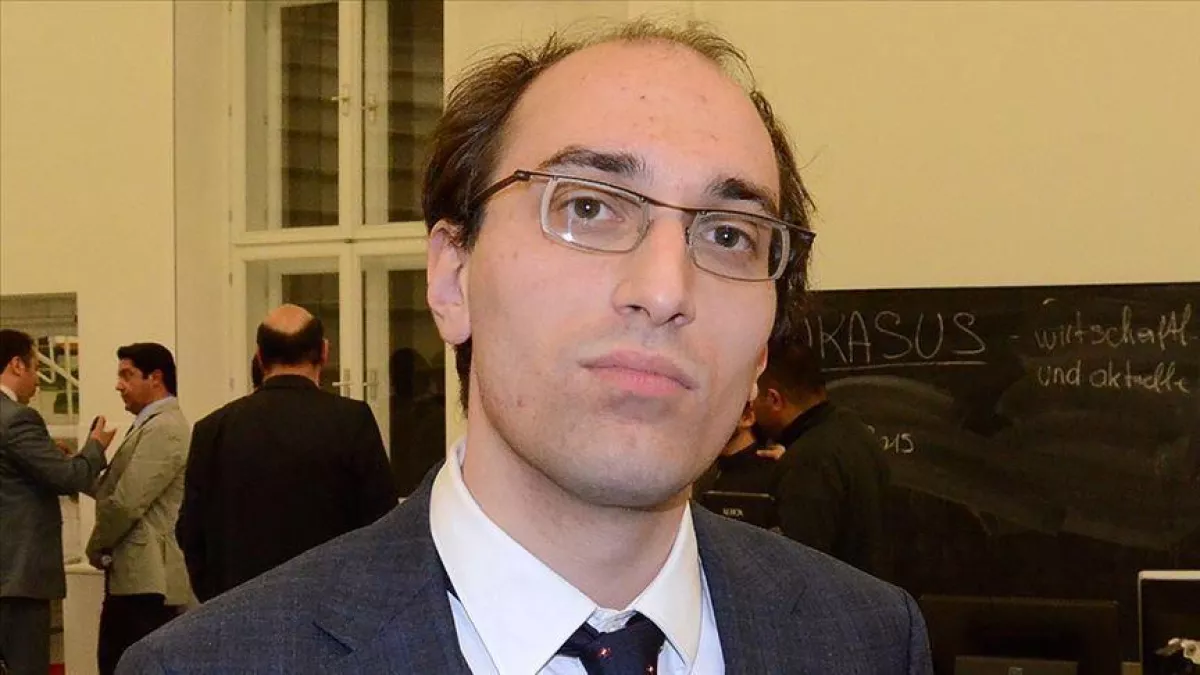
French historian and researcher Maxime Gauin began by noting that when considering unconventional attacks, also called hybrid warfare, it is not just a danger but a reality: cyberattacks on various institutions, including hospitals; sabotage (for example, in Poland); explosions (the first occurred in the Czech Republic as early as 2014); espionage; airspace violations; GPS signal jamming, including for civilian aircraft; and so on.
“CEOs of European defence companies are now under heightened police protection. You also saw hybrid warfare in Azerbaijan, which is why the local branch of Sputnik was closed in 2025, and Ramiz Mehdiyev was arrested.
Regarding conventional attacks, the consensus among EU intelligence agencies (their concerns have been publicly expressed) is that Russia plans to attack at least one Baltic state in the near term. Lithuania has a population of 2.8 million, and Estonia has fewer than 1.4 million. None of the Baltic states have real air forces, and their strategic depth is limited—only about 200 to 300 km between the Russian border and the Baltic Sea. An attack on Poland or Finland is considered unlikely, given their size, population, and military capabilities. For example, Finland has a million reservists and NATO-standard air forces; its geography (numerous lakes and forests) is ideal for ambushes; Finland is one of the world’s leading producers of sniper rifles, manufactures its own infantry fighting vehicles, and possesses significant stocks of anti-tank weaponry.
At present, fierce Ukrainian resistance—made possible by domestic production and international assistance—has prevented Russia from creating a second invasion army. Since 2022, the Russian military has lost the majority of its armoured vehicles, as evidenced by the disappearance of stockpiles in satellite images and the fact that most of the vehicles destroyed by the Ukrainian army since January 2025 are civilian cars or trucks, rather than armoured vehicles.
In 2024, the Ukrainian army launched an attack in the Kursk region, forcing Russian command to redeploy most of its soldiers from Kaliningrad to the Kursk front, where they suffered heavy losses. Today, Kaliningrad barracks are nearly empty. Initially, Russia’s plan was to attack Lithuania from both the west and the east to create territorial continuity with the Kaliningrad exclave. Now, one half of these ‘pincers’ has vanished.
That is why, since the end of 2024, the most alarming scenario has been considered an attack on Narva, a city in northeastern Estonia, involving a disproportionately large number of Russian forces (50,000 or 100,000) simply to undermine NATO guarantees. Russia is losing about 1,000 soldiers per day, 30,000 per month, so losing another 30,000 in a failed attempt to take Narva would not be a tragedy for Moscow, while success would demonstrate the unreliability of NATO guarantees.
However, due to these losses, amassing 50,000 or even 100,000 troops is currently impossible. Russia is recruiting Africans, offering false promises (supposedly for civilian work), but quantitatively this does not come close to compensating for its losses,” the French researcher explained.
In his view, the most effective way to avoid the worst outcome is to be prepared for it.
“That is why Estonia ordered 12 CAESAR howitzers (the model most feared by Russian artillery crews) in 2024 and received them in less than a year; another 12 were ordered this month. By 2025, Estonia already had 36 South Korean K9 Thunder howitzers, and in 2025 it received six HIMARS rocket launchers. The Baltic states and Poland are making significant efforts to fortify their positions, inspired by the Ukrainian experience.
Naturally, Russia would not spare the territory of European countries that sent their armies to aid the Baltics. The Russian Air Force has lost more than a third of its helicopters and aircraft; the war confirmed NATO’s overwhelming air superiority. It also exposed the technical backwardness of the Russian Navy: Ukraine, with almost no ships, sank a third of the Russian Black Sea Fleet using Scalp/Storm Shadow missiles, Neptune missiles, and naval drones. As a result, a war against European NATO members would be catastrophic for Russian forces.
Even more concerning is Russia’s ability to produce Iranian drones in large quantities. That is why Europe is strengthening its anti-aircraft artillery and ramping up production of inexpensive air-defence missiles and interceptor drones.
The war against Ukraine has demonstrated that Russian hypersonic missiles, the Kinzhal and Zirkon, can be intercepted by SAMP/T and Patriot systems. The problem lies in having a sufficient number of Aster missiles (for SAMP/T), the production of which has been increasing since 2022. In 2026, next-generation SAMP/T systems will be delivered to Ukraine for testing under real combat conditions; Emmanuel Macron announced that the first ready units would be sent specifically to the Ukrainian army, not the French army.
The final aspect is Russia’s economic and financial catastrophe. In January 2026, the budget deficit amounted to almost half of the annual plan, revenues from oil and gas are declining due to sanctions and strikes on refineries, and the cost of the war continues to rise. The National Wealth Fund has lost most of its liquid assets, including dollars, pounds, and euros. Inflation has spiralled out of control: in 2025, the volume of cash in circulation was five times higher than in 2024. Even Uralvagonzavod, the country’s only tank manufacturer, announced in November 2025 plans to cut its workforce by 10% due to sanctions on machinery and electronics,” Gauin states.
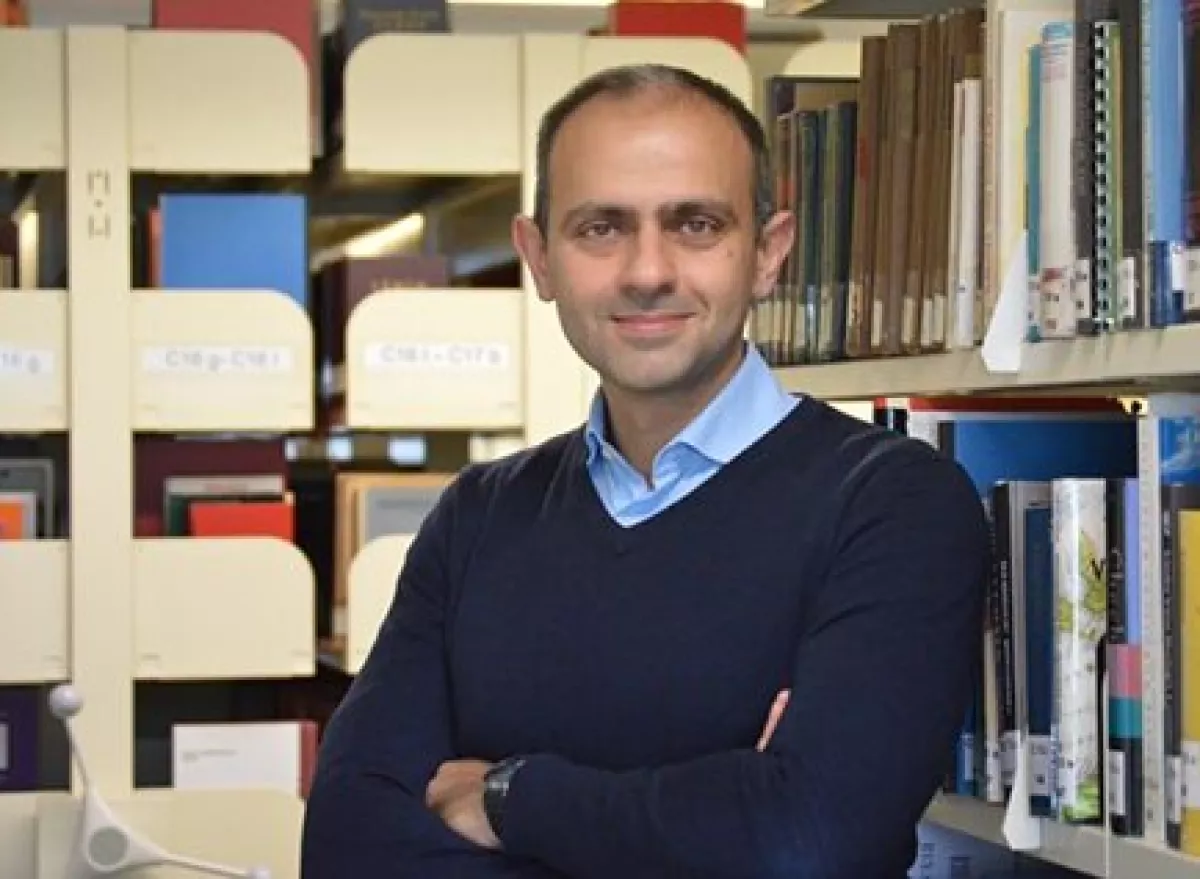
German political scientist, Doctor of History, and lecturer in the Department of Russian and Eastern European History at the University of Bonn, Zaur Gasimov, believes that the European Defence Commissioner’s remarks should be viewed in the context of a pan-European approach to defence, which prior to 2022—before Russia’s full-scale war against Ukraine—was not considered a priority.
“Most European Union countries, especially France, Germany, Italy, Spain, and Portugal, saw themselves firmly within the transatlantic security framework and relied entirely on cooperation with the United States. They provided assistance where they could but did not prioritise the development of military technologies, digitalisation, or the creation of new types of weapons, whether for the navy or ground forces. This actually applied to the entire military and defence sector as a whole.
After 2022, the situation changed radically: Russia’s war against Ukraine is taking place on European soil, and from the perspective of countries like Germany and France, they are directly involved. What is happening in Ukraine is perceived in Europe—especially in the Baltic states, Poland, the Czech Republic, and even Germany itself—as merely a phase in Russia’s potential further expansion westward. As a result, all European countries have begun paying much greater attention to defence production,” the expert explained.
He considered it necessary to recall that during Donald Trump’s first administration, the United States demanded an increase in the share of defence spending in national budgets, but in 2016–2017, not all countries were willing to comply.
“Most of the activity was seen in Eastern European countries, while countries like Germany and several other Western European states took a more passive approach. The situation changed radically after 2022 and Trump’s second coming to power, when it appeared that the transatlantic alliance, although still intact, had developed serious cracks. Views on many issues began to diverge: the question of Greenland arose, a new format for negotiations on Ukraine appeared, involving the United States and Russia, while Europeans were effectively left out of the process. Consequently, Paris and Berlin decided to pay even more attention to defence, having the necessary levers in the form of strong global economies and the ability to implement large-scale joint projects.
All of this must be considered in the context of Europeans assessing potential threats to their security from Russia. Different timelines for such threats are cited—some see them within the next few years—so Europeans want to be prepared,” Gasimov stated.







 editor@caliber.az
 +994 55 444-88-98
 Азербайджан, Баку, ул. Низами, 203, Af Business House, 5-й этаж