










Baku–Washington partnership: corridors, security, and geopolitical stakes Expert opinions on Caliber.Az
The Charter on Strategic Partnership signed in Baku between the governments of Azerbaijan and the United States marks a significant geopolitical milestone for Azerbaijan, strengthening its cooperation with Washington.

The dialogue between Azerbaijan and Europe and the United States has long been complicated, shaped by biases formed in the 1990s under the influence of the Armenian lobby, as well as by resistance to Azerbaijan’s independent foreign policy. Unlike Yerevan, Azerbaijan has consistently sought to engage as an equal partner rather than a subordinate.
However, times are changing. Baku’s carefully calibrated diplomacy, combined with Donald Trump’s return to the White House, is beginning to deliver tangible results. J.D. Vance’s visit opened a new chapter in U.S.–Azerbaijan relations, while the Charter signed by the Azerbaijani president and the U.S. vice president has the potential to serve as a defining framework for bilateral cooperation for decades.
Furthermore, the document sends a clear and strategic signal to all major international actors—both in the region and beyond—whether they are inclined toward cooperation or seeking to assert influence in the South Caucasus.
What do analysts think about the U.S. Vice President’s visit to Azerbaijan and the Charter signed in the Azerbaijani capital? Domestic and foreign political experts shared their views on the matter with Caliber.Az.
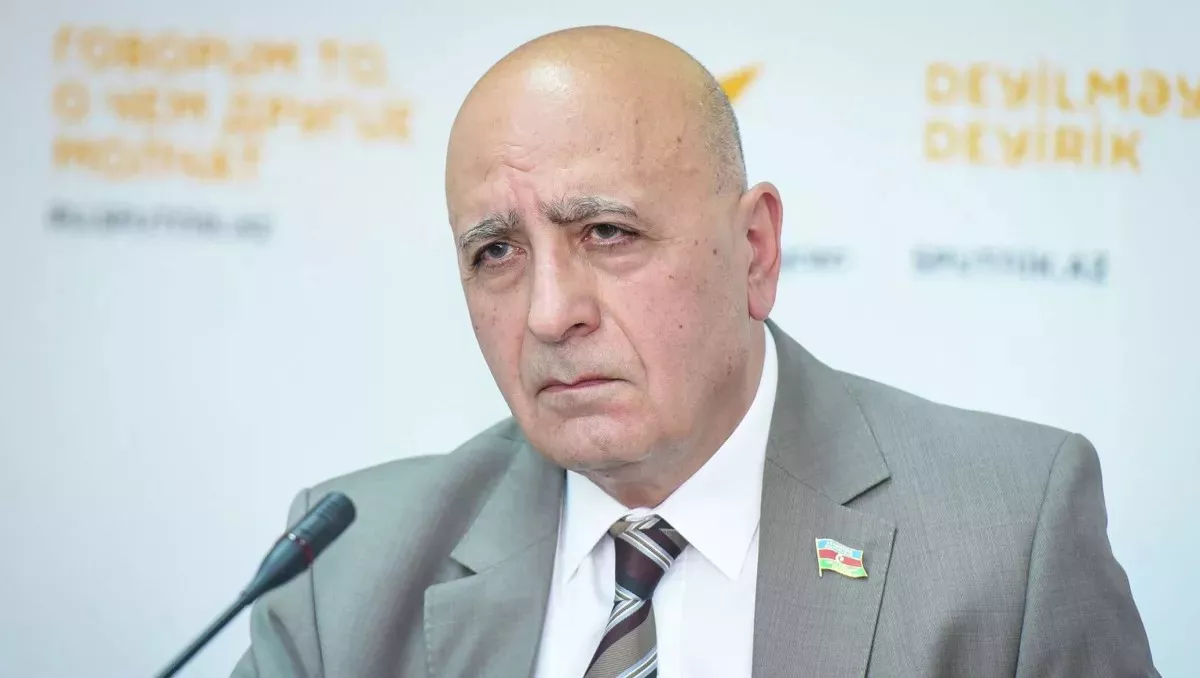
According to Azerbaijani MP and political analyst Rasim Musabayov, the geopolitical subtext of Vice President Vance’s visits to Armenia and Azerbaijan lies in demonstrating the United States’ interest in the Middle Corridor, which will provide the U.S. and Western Europe with access to Central Asia. It also reflects Washington’s broader concern for the region and its security, while sending a clear signal to Russia and Iran that the United States is present in the area.
“Those in Russia who mindlessly talk about some kind of ‘sphere of influence,’ addressing it to Armenia, Azerbaijan, and Georgia, as well as those in Tehran who make similar claims, must take into account the United States and Washington’s interest in ensuring security in the region. This stance is driven by the global significance of the Middle Corridor, which the U.S. intends to use to transport strategic metals—including uranium, rare earth elements, and other resources abundant in Central Asia, where the U.S. has made no secret of its interests. In geopolitical terms, the key point is this: the land bridge between the Black Sea and the Caspian Sea must operate effectively,” stated Musabayov.

At the same time, according to American expert Andrew Korybko, the timing of Vice President Vance’s visits to Armenia and Azerbaijan coincides with ongoing U.S.-mediated negotiations between Russia and Ukraine. This suggests that Washington, through political successes in the South Caucasus, aims to increase pressure on Russia, thereby enhancing the likelihood of securing concessions from Moscow.
“The visits of the U.S. vice president to Armenia and Azerbaijan were aimed at advancing several interconnected strategic objectives, the most pressing of which is progress on the TRIPP trade corridor through southern Armenia. This corridor was announced following the White House summit in August 2025 and carries not only economic significance but also enormous strategic importance.
Firstly, it serves as an alternative to Russia’s plan to establish a corridor along the same route under the protection of Russian forces, thereby challenging the Kremlin’s political influence in the South Caucasus following the 44-day war. Secondly, it functions as a means to optimize Western logistical access to the resource-rich, landlocked Central Asian republics via Azerbaijan and Türkiye. These Central Asian countries are of particular interest to the United States due to their valuable rare minerals. In November 2025, the U.S. signed memoranda of understanding with Kazakhstan and Uzbekistan on this matter.
In parallel, Vice President Vance proposed the creation of a trade bloc focused on critical minerals during the first ministerial conference attended by representatives of over 50 countries, further justifying his visit to the South Caucasus a week later.

Military plans cannot be overlooked either. With Russia’s originally planned route through southern Armenia replaced by a corridor in which the U.S. will hold a controlling stake, Türkiye—as Washington’s representative—can now optimise its military logistics in Central Asia, where four of the five states are members of the Collective Security Treaty Organization (CSTO), and Kazakhstan and Kyrgyzstan are also Russian allies within the framework of the organization.
Consequently, the Organisation of Turkic States is gaining increasing significance, which can be interpreted as an attempt to challenge Russia’s security influence on its vulnerable southern periphery. Kremlin concerns are further heightened by Kazakhstan’s announcement at the end of 2025 to produce NATO-standard ammunition, likely encouraged by the fact that TRIPP facilitates U.S., Turkish, and ultimately NATO military logistics in the event of a crisis with Russia,” concluded Korybko.







 editor@caliber.az
 +994 55 444-88-98
 Азербайджан, Баку, ул. Низами, 203, Af Business House, 5-й этаж