










Pragmatism and new priorities: South Caucasus in Berlin’s focus Expert opinions on Caliber.Az
Recently, a conference titled “Turning Point in the South Caucasus: Historic Peace Between Azerbaijan and Armenia” was held in the German capital, organised by the ICI Institute and Ludwig Maximilian University of Munich.
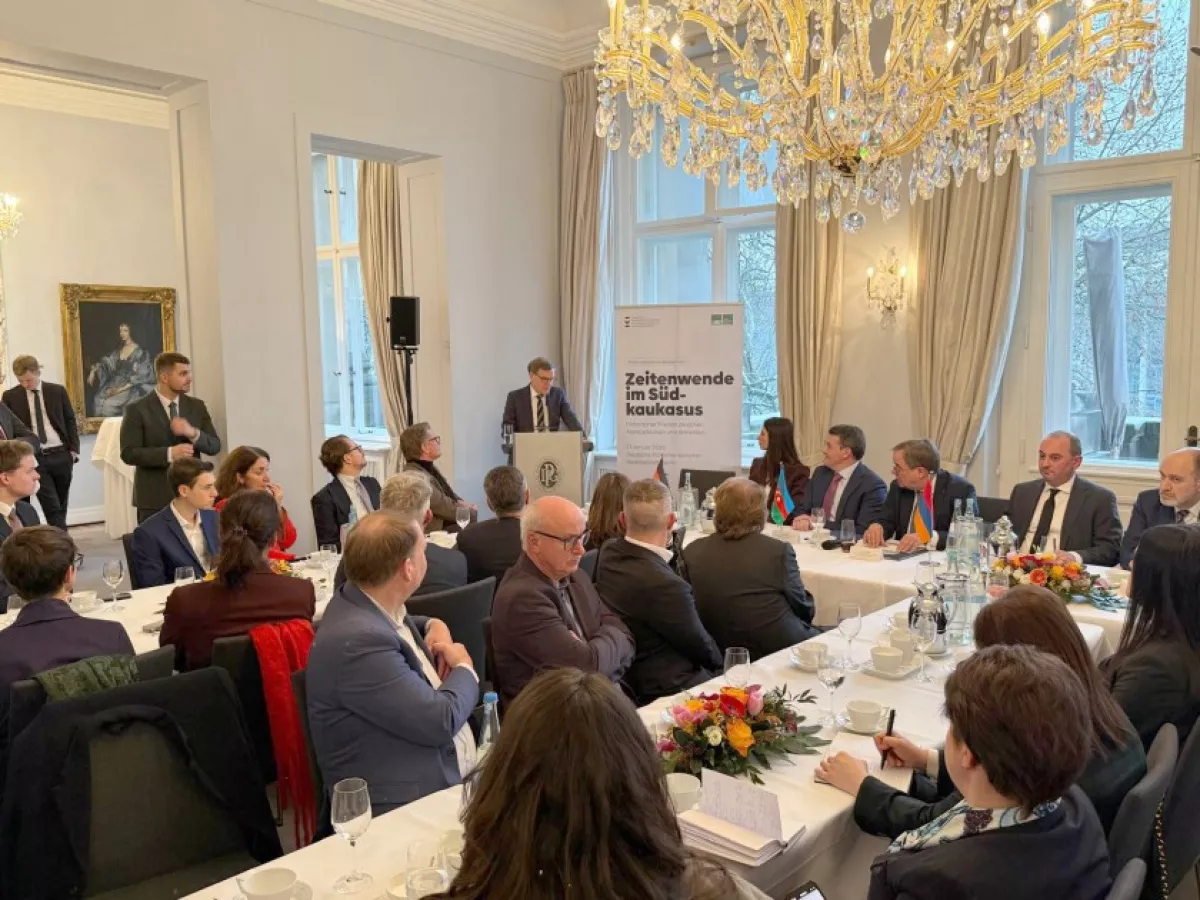
The event was attended by representatives of the German government, members of the Bundestag, experts, journalists, and prominent figures from Germany’s political, economic, and academic spheres, as well as the ambassadors of Azerbaijan and Armenia to Germany.
In his speech at the conference, German Foreign Minister Johann Wadephul called the results of the peace process between Baku and Yerevan a significant achievement not only for the two countries but for all of Europe. Meanwhile, Armin Laschet, chairman of the Bundestag Committee on Foreign Affairs, emphasised the strategic importance of establishing peace for the opening of transport corridors to Central Asia and noted that this would create new economic opportunities for the European market.
Special attention at the event was given to communications, particularly emphasising the importance of implementing the Armenian section of the Zangezur Corridor (TRIPP), which, according to participants, would not only link the region through shared financial interests but also significantly diversify trade routes, improving global supply chains for European and German partners.
Given the scale of the event in the German capital and the prominence of its participants, a natural question arises: “Can Berlin’s focus on this issue be interpreted as an intention to engage more closely with regional countries under the new realities emerging in the South Caucasus?” Caliber.Az sought the opinions of experts from Germany and Georgia on this matter.
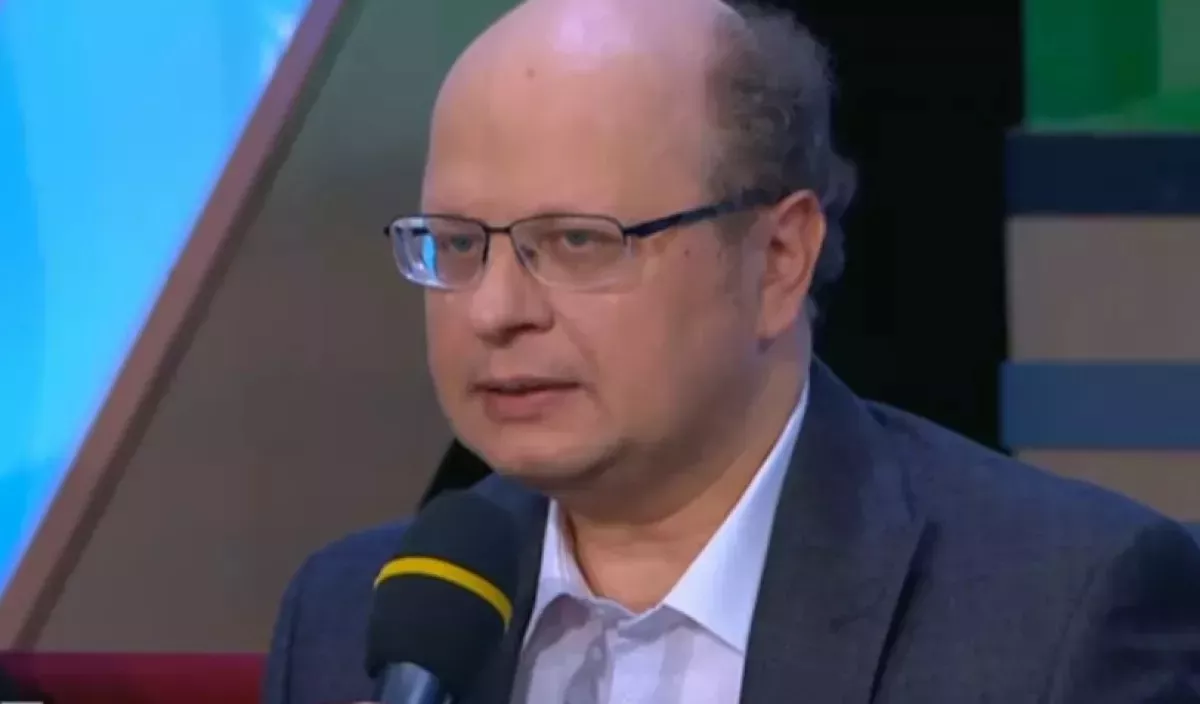
German political analyst Yevgeny Kudryats suggests looking at Germany–Azerbaijan cooperation from several perspectives.
“Take, for example, the political-economic aspect: after 2022, Berlin’s primary concern has been energy security amid efforts to reduce dependence on Russia. Germany has a clear interest in the Southern Gas Corridor as part of its diversification strategy, so the authorities are invested in stability in the South Caucasus, which serves as a transit region. On the other hand, Baku sees Germany as a kind of anchor within the European Union. The Azerbaijani side is interested in technology, investment, and the transition to ‘green’ energy, while German companies are particularly focused on Azerbaijan’s solar and wind energy potential.
At the same time, Germany recognises that Azerbaijan does not intend to become part of the EU. For Berlin—and for the EU more broadly—Baku is thus a partner in strategic values rather than in institutional structures. This is a fundamental distinction between Azerbaijan and other countries such as Ukraine, Moldova, or Georgia. Therefore, the primary role of the Republic of Azerbaijan for the EU lies in its ability to offer an alternative to Russian gas through the Southern Gas Corridor and to diversify transit routes, without demanding EU protection, status, or membership in return—behaving instead as a self-sufficient partner.
From a geopolitical and security perspective, according to EU logic, the South Caucasus is seen as a buffer zone between Russia, Türkiye, and Iran, as well as a corridor linking the Caspian region with Europe. Of course, Azerbaijan faces certain challenges in its perception within the EU and Germany, and here the influence of the Armenian lobby is evident,” he noted.
However, he emphasised that today no one in Europe is imposing political conditions on Azerbaijan—economic cooperation has taken priority, a development largely enabled by Baku’s multi-vector and independent foreign policy.
“In conclusion, I will offer a short medium-term forecast, looking three to five years ahead. In my view, cooperation between the countries will not only continue but also develop further, though the focus is likely to shift from gas to logistics. Germany appears ready to play a role in establishing transport communications in the region, although it is too early to say exactly what steps will be taken. Nevertheless, it is clear that Germany’s economic role as the EU’s locomotive will only strengthen, making Berlin’s active contribution and participation in logistics projects in the South Caucasus highly expected,” Kudryats said.

Meanwhile, Georgian international relations expert and political science candidate Teimuraz Garishvili believes that Europe approaches cooperation with Azerbaijan and Armenia on transport communications from its own perspective, a method that does not entirely satisfy Berlin.
“In spring 2025, Brussels, while emphasising the importance of cooperation on communications in the South Caucasus and their connection to the Middle Corridor, somehow focused solely on the Baku–Tbilisi–Kars railway, almost dismissing the significance of the Zangezur Corridor. After receiving a ‘wake-up call’ from Trump in the form of TRIPP, the European Union began a new round of ‘grand declarations,’ assuring that it was actively working on transport transit cooperation with all South Caucasus countries. Yet, progress remains minimal.
Tbilisi is also highly dissatisfied with EU populism, which talks a lot but does almost nothing. This may reflect the cooling of EU–Georgia relations. In terms of establishing transport arteries, the Trump administration has already achieved far more than Brussels, notably through the implementation of the ‘Trump Route’ project, including a visit to Tbilisi and negotiations to support the operation of the Georgian section of the Baku–Tbilisi–Ceyhan (BTC) corridor as one of the key elements of global logistics in the South Caucasus.
Thus, what we are likely witnessing is a reset of the formal approach of certain European countries, in particular Germany, which is examining its cooperation with Azerbaijan very concretely, including in the launch of transport projects. In this context, there is still much work to be done in the region, as it is not simply a matter of Armenia and the United States dividing TRIPP shares between themselves—other foreign actors can also participate in the consortium’s activities, either as contractors or, potentially, as project stakeholders.
Therefore, one can hope that this conference serves as a precursor to serious German cooperation with the regional countries, about which, hopefully, we will learn more in detail soon,” Garishvili concluded.







 editor@caliber.az
 +994 55 444-88-98
 Азербайджан, Баку, ул. Низами, 203, Af Business House, 5-й этаж