










Balance strategy: How Baku shapes stability in a turbulent world Expert opinions on Caliber.Az
Despite the complex geopolitical situation in the world, Azerbaijan demonstrates stability and development, continuing an active dialogue with entirely different centres of power and moderating active political processes.
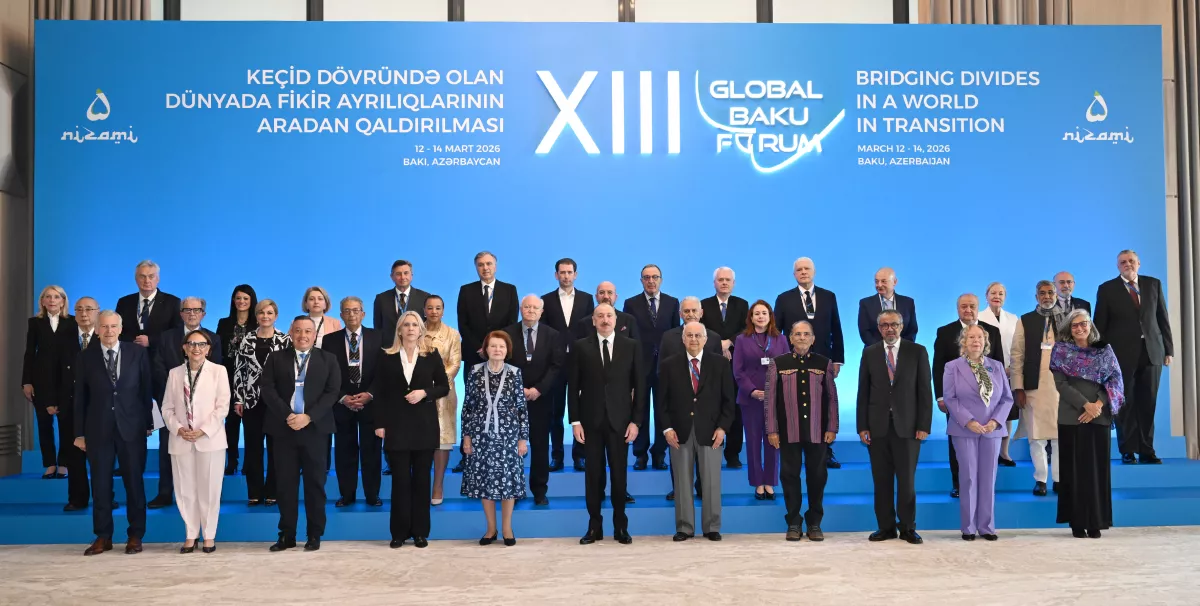
Recently, two important political events took place in Baku: the visit of the President of the European Council, António Costa, and the 13th Global Baku Forum, themed “Bridging Divides in a World in Transition.” While the visit of the high-ranking EU representative marked a transition of Azerbaijan–European Union relations to a qualitatively new level, the forum once again reinforced Baku’s status as an important international hub—a platform where politicians from different countries meet to discuss and generate contemporary political, economic, scientific, and social agendas.
Notably, both during the negotiations with the President of the European Council and in his speech at the Baku Forum, Azerbaijani President Ilham Aliyev made a number of important statements regarding Baku’s strategy, which other countries might also consider as a reference. In particular, speaking at the forum, the Azerbaijani leader emphasised that “now it is more obvious than ever before that issues of security, stability, and safety should be number one on the agenda of any country, because without that all the rest is absolutely useless. Countries that have been investing for years, for decades, in their development now face risks. Therefore, security and stability should be the main factor on which we should unite our efforts.”
But what do foreign experts think about Azerbaijan’s strategy? Caliber.Az addresses this question by consulting political scientists from Belarus and Tajikistan.

According to the Belarusian political scientist and economist Sergey Tomits, against the backdrop of active large-scale conflicts in both Europe and the Middle East, Baku demonstrates an exceptionally high level of stability and political will, which strengthens its authority with renewed force.
“Baku’s strategy has always been precise, unshakable, and well-calibrated, ultimately leading to effective results. Even when it was necessary to use force, Azerbaijan consistently emphasised that it was employed in the name of peace and order. During the liberation of its territories, the Azerbaijani state continued to adhere to the principles of diplomacy, despite a whole cohort of European countries attempting to provoke Baku emotionally, accusing it of a fabricated ‘genocide’ and ‘expulsion of Armenians.’ As a result, it is precisely the calm, pragmatism, and foresight of the country’s leadership that have led to a gradual reduction of toxic pro-Armenian rhetoric in Europe. France now seeks to restore dialogue with Azerbaijan, and Baku and Yerevan are confidently speaking of peace and mutual understanding.
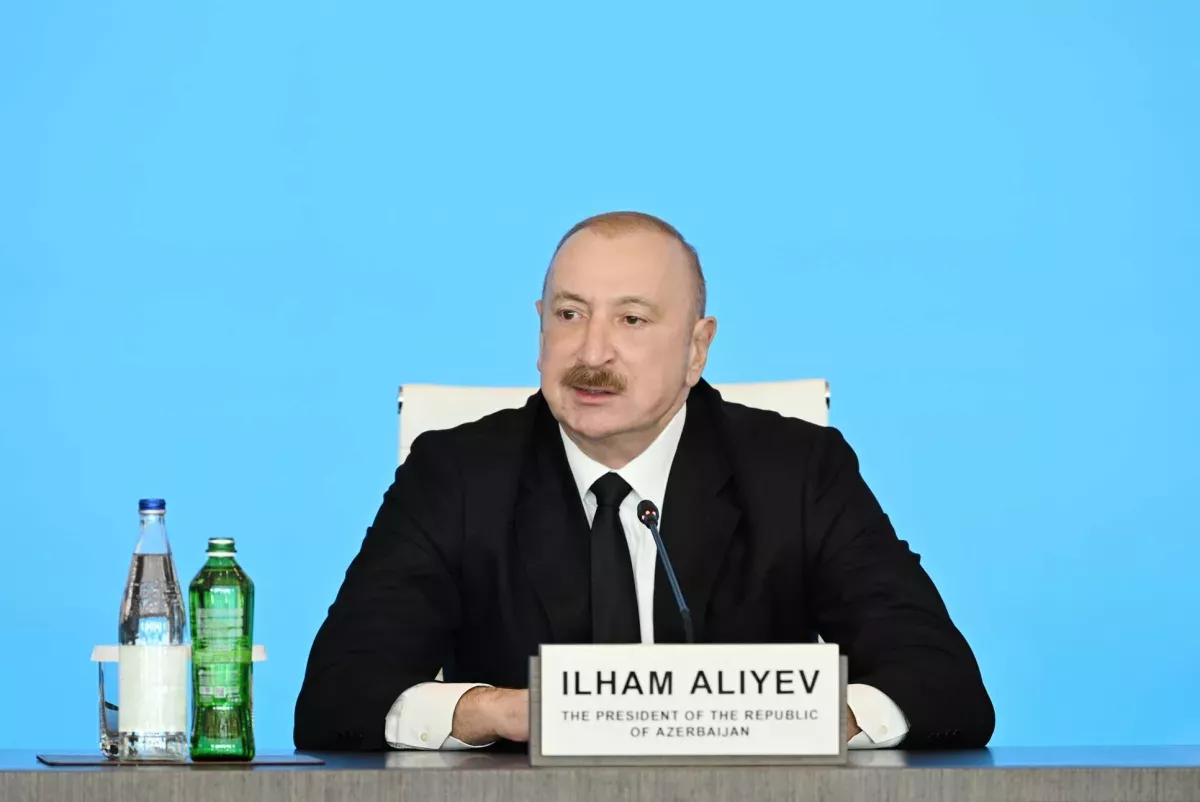
It was this positive experience of building peace and stability that Ilham Aliyev highlighted in his speech at the Global Baku Forum, emphasising that ‘protracted conflicts continue, and new hotspots emerge on the global map. In our case, the peace between Azerbaijan and Armenia is also a unique situation, when the time from the last bloody clash in September 2023 to peace in August 2025 took less than two years.’
In my view, the following words of the Azerbaijani president are particularly important: ‘I think it's an unprecedented speed of normalisation, and that was possible because of strong political will and because of understanding that there cannot be eternal hostility and that the war should end.’ Another statement by Ilham Aliyev is also noteworthy: ‘I said many times, and I will not stop repeating it, that there is nothing better than peace’—which he stated in the context of his conclusion that ‘hotspots’ and ongoing protracted conflicts are a threat to the structure of international behaviour.
The messages of the Azerbaijani leader are always simple, clear, and wise, and they are free from excessive emotion: it is precisely through this calm and measured assessment of ongoing political processes that Baku has earned its authority as an international arbiter and a centre of power in the most complex situations,” stated Tomits.

Meanwhile, Tajik political scientist Eraj Alimov believes that Baku’s political activity, focused on a constructive agenda of peace and development amid military, economic, and political instability in a number of regions, attracts key political players to the South Caucasus.
“Even if we set aside such an important aspect for Europe as the energy component, we see that Azerbaijan remains a very important political zone for decision-making and policy formulation, successfully operating between completely different regions, some of which are in turmoil or stagnation.

The constructive work of the Azerbaijani state in building cooperation and a peaceful order is more important today than ever before. I would even say more: Baku’s actions, its principle of non-intervention in conflicts on behalf of any party, and its maximally objective and neutral assessment of events create an important balance of power in the region.
In this context, Azerbaijan acts as almost the main tactical and coordinating link for the Turkic states, demonstrating a high standard of diplomacy and independence in decision-making. In tandem with Ankara, this strategy is only reinforced and serves to reduce negative tensions, preempting the ambitions of actors who wish to plunge this part of Eurasia into chaos and disorder,” summarised Alimov.







 editor@caliber.az
 +994 55 444-88-98
 Азербайджан, Баку, ул. Низами, 203, Af Business House, 5-й этаж