










NATO under scrutiny: do Europeans need their own army? Foreign experts comment for Caliber.Az
Rather than creating a European army, NATO Military Committee Chairman Admiral Giuseppe Cavo Dragone said in an interview with Corriere della Sera that Europe should focus on developing new forms of military cooperation with the United States.
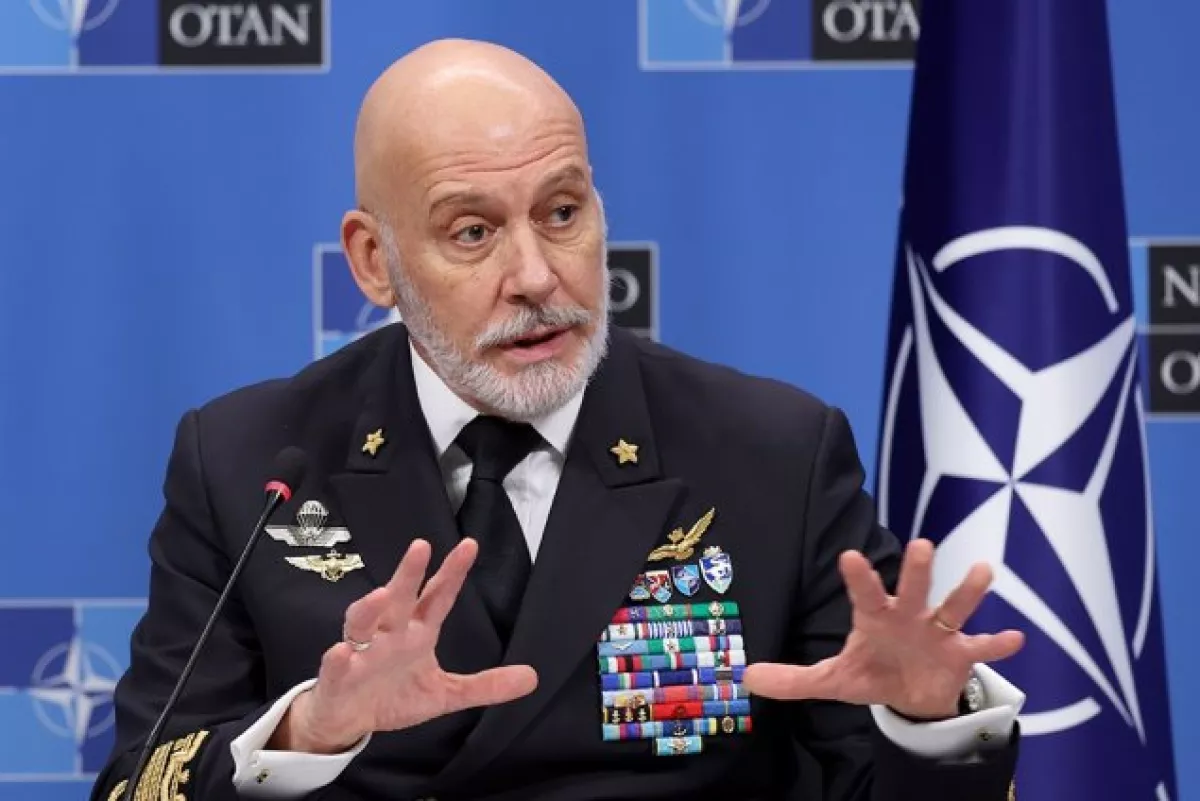
“NATO has all the tools to respond to a crisis and ensure its own resilience. Rather than talking about a European army, we should look for new ways of military cooperation between Europe and the U.S.,” he emphasised.
According to the admiral, a positive signal is that European countries have committed to increasing defence spending. “Now operational commitments must also be increased,” he added.
At the same time, Cavo Dragone believes that the U.S. still holds the leading role in NATO and shares the position of the alliance’s Secretary General that, in this context, the transatlantic link between the U.S. and the EU remains key.
The admiral also sees no signs of a NATO crisis, which some had suggested amid the situation around Greenland.
“NATO is not in any crisis. A catalyst was needed—and we got it. New horizons are now opening up, and all criticism, even harsh criticism, should be taken calmly,” he noted.
However, how accurate are the admiral’s reflections? In recent years, the international expert community has increasingly voiced radical assessments of NATO’s condition—even going so far as to claim that the alliance has de facto lost its viability. Critics point to a lack of political will and clear mechanisms for action in the event of real threats to member states.
It is against this backdrop that, in recent years, some European politicians have begun advocating the creation of a unified EU army. This raises a natural question: does Europe truly need its own army, or would it be sufficient to reform and adapt NATO to the new realities?
Well-known Western experts provided their answers to these questions for Caliber.Az.
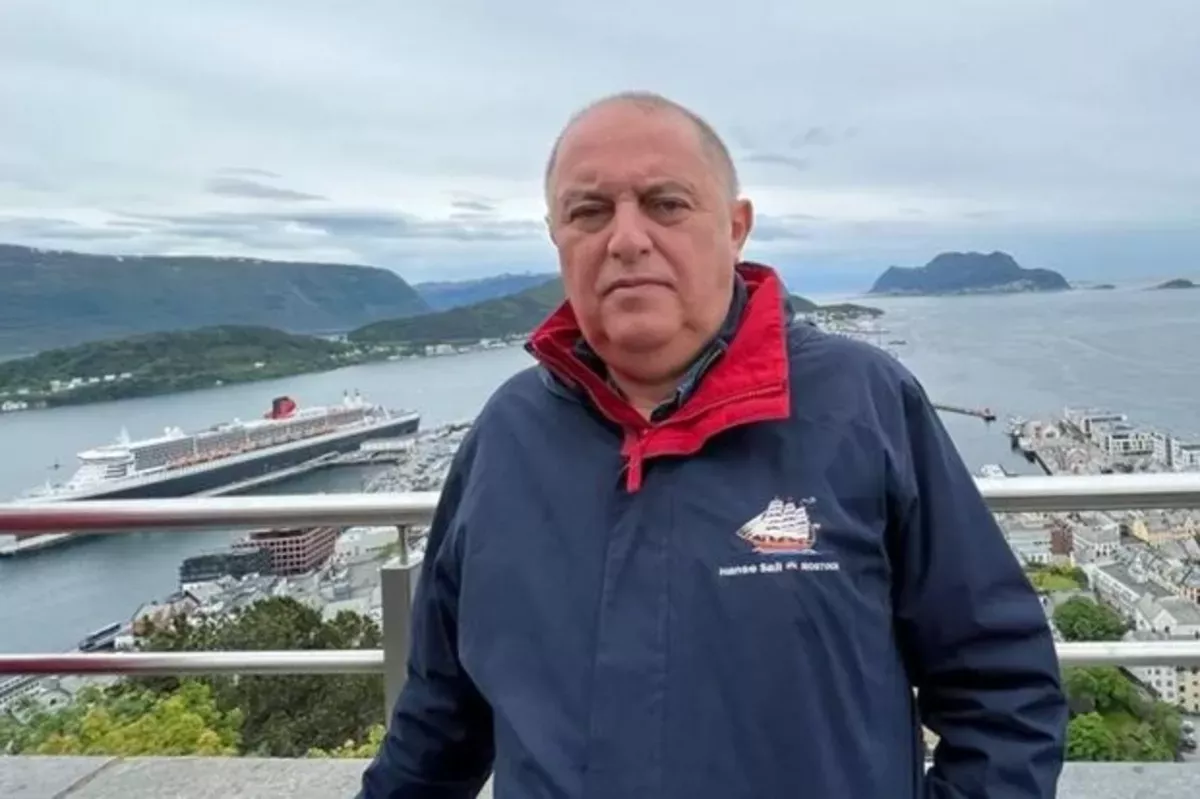
Alexander Cherkassky, analyst, publisher, and editor-in-chief of the magazine Neue Zeiten and the YouTube channel Neue Zeiten TV (Germany), agrees with the admiral on the need to develop new forms of cooperation between the U.S. and Europe.
“I also view positively the fact that Europe has finally decided to increase defence spending at the level of individual states. Germany, for example, has taken the restoration of its army’s capabilities very seriously. At the same time, some countries led by left-wing governments, such as Spain, appear to be effectively sabotaging the growth of their defence budgets.
As for a European army, I consider this idea unsuccessful. Who would such an army report to? Perhaps certain NATO reforms are indeed necessary. Time will tell,” Cherkassky stated.

Political analyst Andrew Korybko (USA), in turn, considers Admiral Cavo Dragone’s reasoning to be well-founded.
“The United States wants Europe to cooperate more actively within NATO. The alliance already has all the necessary tools, and the U.S. remains its most powerful member. Donald Trump’s previous attempt to acquire Greenland did not create any lasting crisis within NATO.
It is important to note the sequence of these points: Trump 2.0 has repeatedly and clearly signalled that he expects Europe to take a greater role in NATO—both by increasing defence spending to 5% of GDP and by strengthening oversight of the alliance’s internal affairs, albeit under U.S. supervision.
To achieve this, member states will need to increase their defence budgets, which may require significant cuts to social spending—potentially unpopular in some countries—as well as to redistribute responsibility among themselves for ensuring security in the eastern direction—in the context of Russia—and in the southern direction—in the context of Africa.
Talks about Europe’s ability to defend itself without the U.S. only make sense if one were to trust Russia’s statements that it does not intend to attack NATO. However, few in the Western elite actually believe this. Therefore, if they truly want to protect themselves from potential threats from Russia, they have no alternative but to cooperate with the U.S.
Finally, the long-standing tension between Türkiye and Greece over Cyprus, the Aegean Sea, and the Eastern Mediterranean shows that serious intra-alliance disputes do not necessarily lead to NATO’s collapse. The tension surrounding the idea of acquiring Greenland is likely also manageable,” the expert believes.
According to Korybko, a European army could theoretically optimise EU countries’ interaction with the U.S. through NATO, but issues of function duplication, financing, and command make the implementation of this idea significantly complicated.
“The problem of duplication is obvious, while financial disagreements could prove even more acute than the existing disputes within the EU over less significant issues. As for command, Poland and several other countries are not ready to place their armed forces under Germany’s control—which is understandable for historical reasons.
For the same reasons, the creation of a European army seems unlikely, and Trump 2.0’s demand that Europeans take greater responsibility for their own security will almost certainly be implemented through NATO and under U.S. oversight.
A predictable deadlock over funding and leadership could undermine the ability of European NATO members to independently deter Russia after the Ukrainian conflict ends. Given the time factor, they will most likely conclude that a more pragmatic path is to act through NATO,” Korybko concluded.
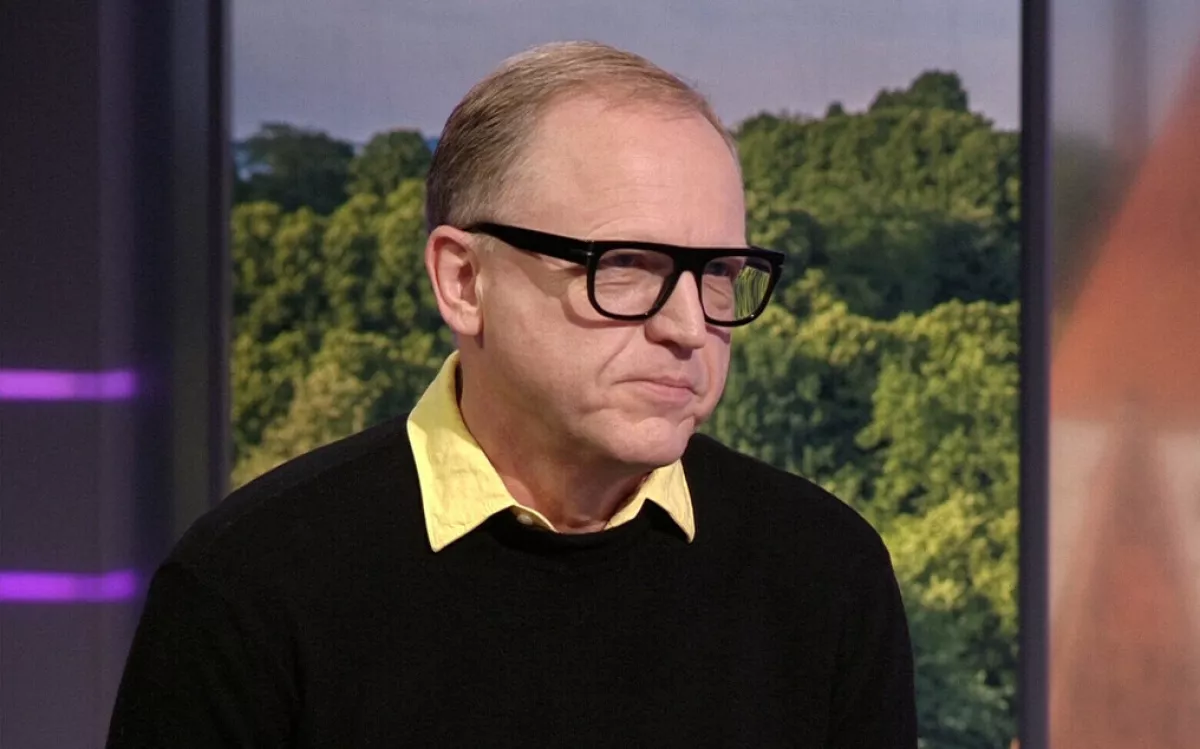
Estonian political analyst Peeter Taim admits that he would like the admiral to be proven right.
“He is probably better informed about what is happening within NATO’s structure. We, political analysts, rely in our work on news reports as well as written and oral statements from politicians. And it is from these sources available to us that the information comes, which leads us to conclude that the alliance is far from being in the best shape. I am not talking about hints, but about explicitly stated threats and conclusions.
Almost every day, we hear statements from politicians at various levels about the possible prospects of NATO’s collapse. As observers, all we can do is record this and draw the appropriate conclusions.
Take the most recent example. How can I, as a political analyst living in Estonia, be sure that our key ally—the United States—will come to our aid if the city of Narva is attacked by Russia, when the U.S. president displays a photograph with Putin in the White House?
As for a European army, I have always held the position that European Union countries need greater federalisation, and with it—a deeper integration of their armed forces,” Taim concluded.







 editor@caliber.az
 +994 55 444-88-98
 Азербайджан, Баку, ул. Низами, 203, Af Business House, 5-й этаж