










“Goodbye, CIS!”, unification with Romania, and the Transnistrian issue Inside Moldova’s shift toward Europe
Moldova is at a critical crossroads. On March 11, the government took a decisive step toward distancing itself from the Commonwealth of Independent States (CIS), citing the organisation’s diminishing relevance. At the same time, discussions about unification with Romania, EU accession timelines, and the long-standing Transnistrian issue continue to shape the country’s political landscape.
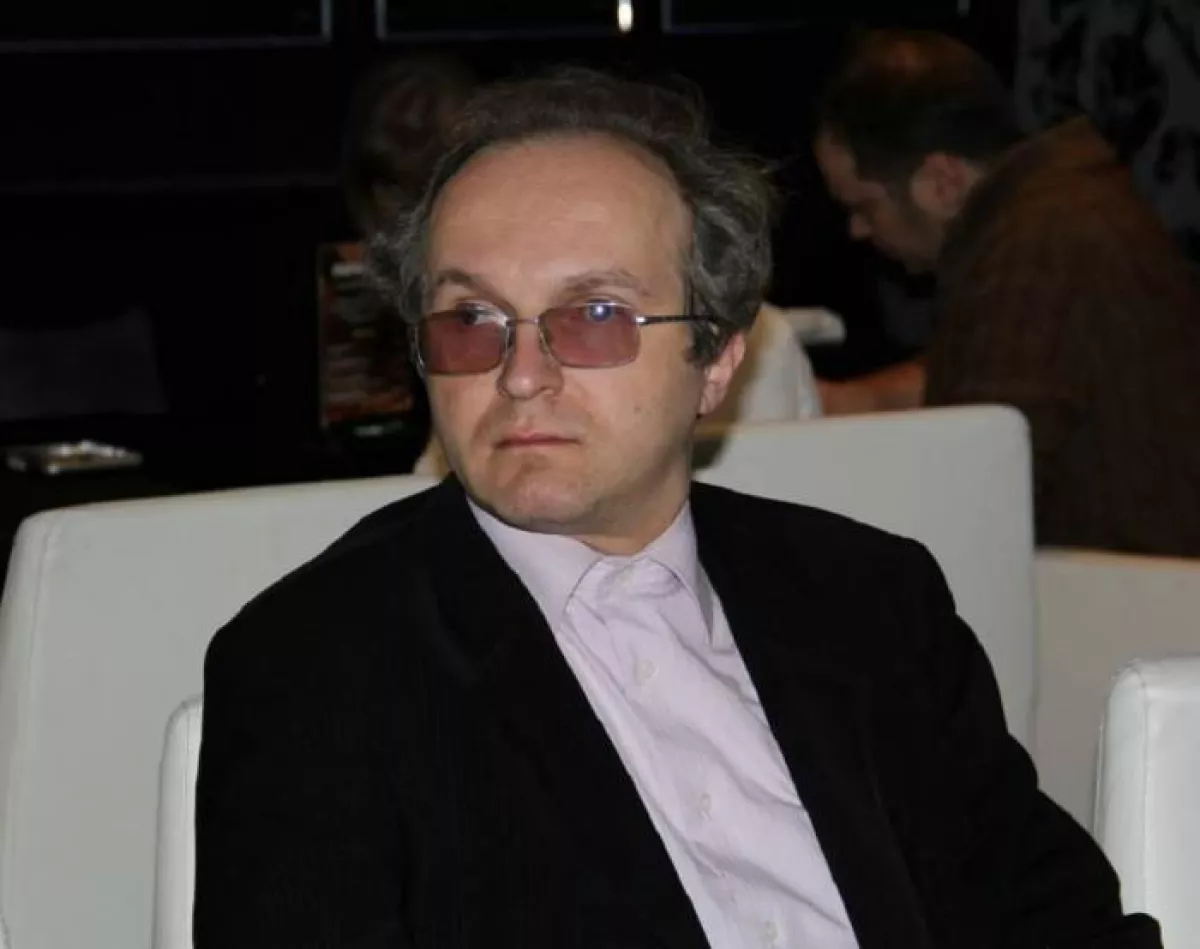
In an in-depth interview with Caliber.Az, political analyst and Doctor of History Ruslan Shevchenko unpacks the motivations behind Moldova’s recent moves, the strength of unionist sentiments, the challenges of EU integration, and the complex road to restoring territorial integrity—all against the backdrop of regional tensions and shifting alliances.
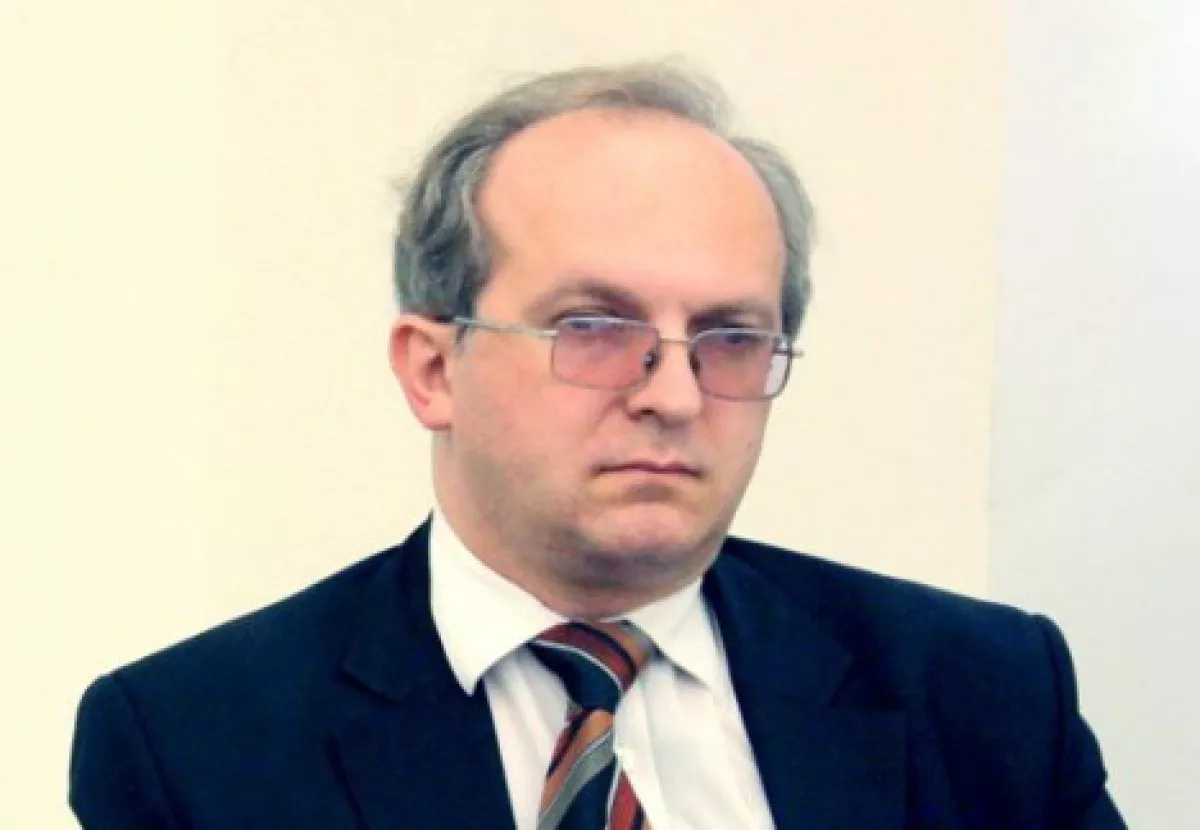
— On March 11, the Government of Moldova gave the green light for the country to withdraw from the fundamental agreements of the CIS. The decision was made following a proposal from the Moldovan Ministry of Foreign Affairs, which argued that the organisation’s basic principles no longer function. Why now?
— Indeed, a number of pro-Western parties in Moldova (the Liberal Party, the “Dignity and Truth Platform” party, and others) have repeatedly criticised the ruling PSRM for, despite its constant pledges to uphold the European choice, persistently delaying for over four years a decision on Moldova’s membership in the CIS. This issue has been relevant 5, 10, or 15 years ago as well: if we are talking about a course toward European integration, Moldova has no place in the CIS, where political and economic dominance rests with Russia. Yet all parties in power, despite repeated demands from the pro-Western segment of society and even from many European politicians, consistently avoided this issue, unwilling to make a final choice and officially announce withdrawal from the CIS. This is fairly easy to explain.
In all of Moldova’s outwardly pro-Western parties, including the current PSRM, there has always been a strong “moderate” wing—effectively pro-Russian—that urged caution, advocating against abrupt moves and promoting the idea of remaining a “bridge between East and West,” as Russia and pro-Russian figures in Moldova had proposed since the 1990s. Overcoming the resistance of this faction within the PSRM and among its supporters has only been possible now, following the ruling party’s successful parliamentary elections on September 28, 2025. Immediately afterwards, the process of gradually withdrawing Moldova from a number of CIS agreements—originally concluded between 1991 and 1994—was initiated. The Government resolution of March 11, 2026, has merely moved this process into its final stage. What remains now is to announce withdrawal from the remaining CIS agreements and formalise it through the corresponding parliamentary decision.
A second, perhaps equally important reason why the decision to leave the CIS has only been taken now is the fact that, for many years—up until the war in Ukraine—Moldova’s foreign trade with CIS countries remained quite significant. Even by 2022, imports from CIS countries accounted for more than 25% of Moldova’s total imports. But by early 2026, imports from CIS countries had fallen to just 3% of Moldova’s imports, while exports barely exceeded 6%. In other words, leaving the CIS now no longer poses a serious threat to Moldova’s economy, and the inevitable losses can be quickly and smoothly compensated for through markets and goods from other countries.
— Recently, President Sandu of Moldova stated that she would vote in favour of unification with Romania if a referendum were held. How did Moldova react to these remarks? How strong are unionist sentiments in Moldova today?
— It should be noted in this context that although Sandu holds Romanian citizenship, she is not a unionist—that is, a supporter of unification with Romania—and she has been publicly criticised on several occasions by a number of Moldovan unionist organisations, which have made unification with Romania their primary goal. This is confirmed by several facts. Her political past shows that in the 1990s, while working as a consultant in the Government, she was able to work well with pro-Russian parties in power at the time (the Agrarians and Socialists). Later, she worked just as successfully as head of a department in the Ministry of Economy during the communist regime (2005–2009), and in 2009, still under the communists, she was sent for an internship at the Kennedy School (Harvard affiliate) in the United States. Then, as Minister of Education (2012–2015), she also cooperated effectively with parties she would later criticise—the Liberal Democratic and Democratic parties. There are other examples of this in her career. Therefore, Sandu’s statement in support of unification with Romania appears to be simply one of her political survival strategies.
There is a second factor to consider. The fact is that a significant portion of the population in Romania sympathises with Sandu, and there have even been politicians urging her to run for the presidency of Romania. At the same time, however, there is a strong current in Romania that considers the division of Moldova and Romania a “historical injustice” that must be corrected. In this context, in order to maintain Romanian support—both from the public and from the ruling elite—Sandu is effectively compelled to present herself as a supporter of unification between the two states. Otherwise, she risks being misunderstood and even accused of betraying Romanian ideals, which would have serious consequences for her personal popularity and that of her party in Romania. Therefore, Sandu’s statement in favour of unification in a potential referendum should be seen primarily from a practical perspective: as a way to retain the political support of a neighbouring country that has done much to bring Moldova closer to the gates of the European Union.
The reaction in Moldova to Sandu’s statements in favour of unification with Romania (which she has made in previous years as well) was mixed. Several right-wing, unionist organisations responded with scepticism and received her words without much enthusiasm, since, as mentioned earlier, she is not considered a genuine unionist by these circles. Left-wing, pro-Russian figures, on the other hand, without examining the reasons behind Sandu’s statement, expressed strong outrage and even called for her impeachment over these remarks. However, as before, all of this amounted to little more than empty noise.
In response to the question of how strong unionist views are in Moldova, it should be noted that although there appear to be a significant number of supporters (roughly 30–35% of the population), there is one small but important nuance: unionists in the country can be divided into two main groups, which can be conventionally called “idealists” and “pragmatists.”
The “idealists” are those who want unification immediately, regardless of any obstacles or even the disagreement of the majority of the population.
The second group, the “pragmatists,” want unification for purely practical reasons—after unification, they would have European pensions, salaries, legal opportunities to work in Europe, and so on. Among them are many who have little genuine interest in Romania and may even feel hostility toward it. These people are difficult to consider true supporters of unification. Therefore, it can be concluded that the actual, ideologically committed supporters of unification with Romania number only around 15%, at most 20%. Organising unification under such conditions is an unrealistic task. The only scenario that could sharply tip the balance in favour of unification (and even then, only temporarily) would be a breakthrough of Russian occupiers toward Odesa. In that case, unification with Romania would be perceived by many as a way to escape Russian occupation. Even then, however, it is unclear whether unification would actually occur, since European and American officials, to put it mildly, remain very lukewarm toward such a prospect.
— According to some reports, Chișinău is expected to complete negotiations for EU accession by the end of 2027. How realistic is this? Could it end up like the situation with Georgia?
— The ruling PSRM has consistently used the EU accession date for electoral purposes, “bringing it closer” when parliamentary elections were imminent and “pushing it back” once the elections were over. For example, in 2024–2025, ahead of the parliamentary elections, PSRM figures and its informal leader and founder, President Maia Sandu, repeatedly stated that EU accession negotiations could realistically be completed by the end of 2027, allowing Moldova to join the EU in 2028, the year of the next presidential elections. This point was even included in the PSRM’s official election programme.
Once the parliamentary elections were over, PSRM figures—and Sandu personally—began publicly pretending that such promises had never been made, insisting that accession would happen much later. They are now citing a timeframe of roughly 2030–2031. European officials, including the EU representative in Moldova, Iwona Piórko of Poland, have stated that Moldova is still only at the very beginning of the accession process and that there is still a great deal to be done, with many significant reforms required to meet EU standards. The full list of EU requirements was recently presented to the authorities of both Moldova and Ukraine. Everything else will depend on how quickly these requirements are fulfilled—but most likely, accession will not occur in 2027, and probably not even in 2028.
Regarding the “Georgian” example, it is clearly not applicable to Moldova. Although Georgia has indeed implemented significantly more reforms than Moldova or Ukraine, its distinctly pro-Russian course in recent years has pushed the EU away (unlike Moldova and Ukraine), and the process of restoring previous relations is likely to take many more years.
— How does Chișinău view the restoration of Moldova’s territorial integrity? In light of recent events along the borders, has the population in Transnistria become more inclined toward Chișinău?
— The question of how Moldovan authorities actually envision restoring the country’s territorial integrity has recently become the subject of intense discussion in Moldova’s Russian-language press. Journalists obtained one of the draft proposals for resolving the Transnistrian issue and began analysing it in detail, concluding that Moldovan authorities primarily rely on international organisations and foreign—mainly European—mediators for its resolution. However, the Deputy Prime Minister for Transnistrian Settlement, Valeriu Chiveri, later clarified that the document obtained by the press was merely a draft sketch of one such proposal, and it would still be incorrect to speak of the existence of any concrete, comprehensive plan.
Thus, the question of how Moldova’s territorial integrity will be restored remains unresolved. There are many reasons for this. These include a significant shift in the electoral balance toward left-wing forces in any election, the unresolved issue of withdrawing Russian troops from Moldova, and the inevitable redistribution of property on the Left Bank, which was effectively taken from Moldova by Russia in the 1990s and 2000s. Even after the Transnistrian issue is resolved, Moldova will face lengthy international legal battles over these assets. Any one of these three problems is highly volatile, and no final solution has yet been found. There are also many other complex issues: how to integrate the region’s economy into Moldova’s overall economy, how to deal with the mindset of Left Bank residents, who for decades have been indoctrinated to harbour extreme hostility toward Moldova’s central authorities, and so on. These challenges are among the reasons why Moldovan authorities have yet to present a plan for resolving the Transnistrian conflict.
As for the “recent events along the borders,” meaning the Russia–Ukraine war, it has influenced the attitudes of Left Bank residents to some extent, but not decisively. The number of people who have lost faith in the future of the separatist “Transnistrian state” and are willing to compromise with Moldova’s legitimate authorities has indeed grown. However, fear of retribution for crimes committed against Moldova in the early 1990s, mistrust, animosity, and hatred toward the country on the Left Bank remain very strong. Changing this mindset is an extremely difficult and large-scale task, and it will remain one of the most serious challenges for any Moldovan government for decades to come.







 editor@caliber.az
 +994 55 444-88-98
 Азербайджан, Баку, ул. Низами, 203, Af Business House, 5-й этаж