










The shadow of Polexit over the EU Expert opinions on Caliber.Az
Polish Prime Minister Donald Tusk has stated that the risk of the country leaving the European Union is becoming a real threat. According to him, Poland could be pushed toward such a scenario by President Karol Nawrocki and right-wing opposition parties.
In a post on X, Tusk described a potential “Polexit” as a “catastrophe” and pledged to “do everything” to prevent it. The Polish prime minister also noted that forces pushing the country in this direction are simultaneously seeking to weaken the EU.
The statement followed Nawrocki’s decision to veto a bill that would have allowed Poland to access preferential EU defence loans worth up to €44 billion.
Former Minister for European Affairs Konrad Szymański also warned that Polish nationalist right-wing movements are heading down a “path to Polexit,” comparing the current situation to the political dynamics that preceded Brexit.
So, how serious is the threat to the integrity of the EU? Could Poland become the trigger that leads to the bloc’s disintegration?
Well-known Polish experts shared their views on this issue in an interview with Caliber.Az.

Political analyst and journalist at Polskie Radio, Jerzy Lichtarowicz, noted that, in his view, there are two key aspects to consider here.
“First, this is largely an internal Polish struggle between two parties. Donald Tusk represents the Civic Coalition, which is currently governing the country. Parliamentary elections are scheduled for next year, but the coalition’s position is not very stable, as it governs in alliance with other forces. Although the Civic Coalition remains the most popular party, its coalition partners are currently showing very weak results, according to opinion polls.
A situation could emerge that mirrors the reverse of the previous elections, when the Law and Justice (PiS) won but was unable to form a governing coalition due to a lack of a parliamentary majority. In the next elections, it is possible that the Civic Platform could come out on top, yet still find itself unable to form a coalition, as the popularity of far-right parties is currently higher than that of its potential coalition partners.
As a result, tensions are being deliberately heightened in society: 'Look, they could take us out of the European Union.' In reality, the majority of the Polish population would oppose such a move—according to data from recent years, around 70–80% of citizens support maintaining EU membership.
Additionally, there is the issue of European loans. The government itself decided to formalise this as a bill, even though the European Commission did not require it—each country independently determines how to channel these funds through its domestic legislation.
I believe this was done for political reasons, to put the opposition—namely Law and Justice (PiS)—in an awkward position: either your president votes ‘in favour,’ in which case the success associated with securing the funds will be credited to the government, or you vote ‘against’ out of spite.
In the latter case, we will tell the public: ‘Look how irresponsible you are. Despite the Russian invasion of Ukraine and the tense security situation, you are placing personal interests above those of the country.’
Therefore, I believe the government immediately moved to a ‘Plan B’ and demonstrated that most of these funds are already being utilised anyway—only now they will be directed exclusively toward the military, rather than other services such as the police or border guards. Previously, under the law, they could be distributed more broadly, but now they will be allocated solely for defence needs,” the radio journalist explained.
“Thus,” he continued, “to sum up briefly, I do not see ‘Polexit’ as a realistic prospect, because even Law and Justice, the main right-wing opposition force, does not advocate leaving the European Union.”
“They may be closer to a policy in the style of Robert Fico or Viktor Orbán, where not everything is accepted outright, and additional bargaining takes place. However, they will not leave the EU, because for them it would be tantamount to political death—being left one-on-one with Russia amid such uncertainty surrounding Donald Trump. Moreover, the European Union exerts enormous financial influence on the Polish economy, and most large businesses would likely oppose such a move.
As for the fact that such slogans are promoted by far-right forces like the Confederation of the Polish Crown led by Grzegorz Braun, this actually plays into PiS’s hands. Against their backdrop, Law and Justice can appear as a more ‘normal’ and moderate alternative for right-leaning voters compared to such radicals,” Lichtarowicz noted.
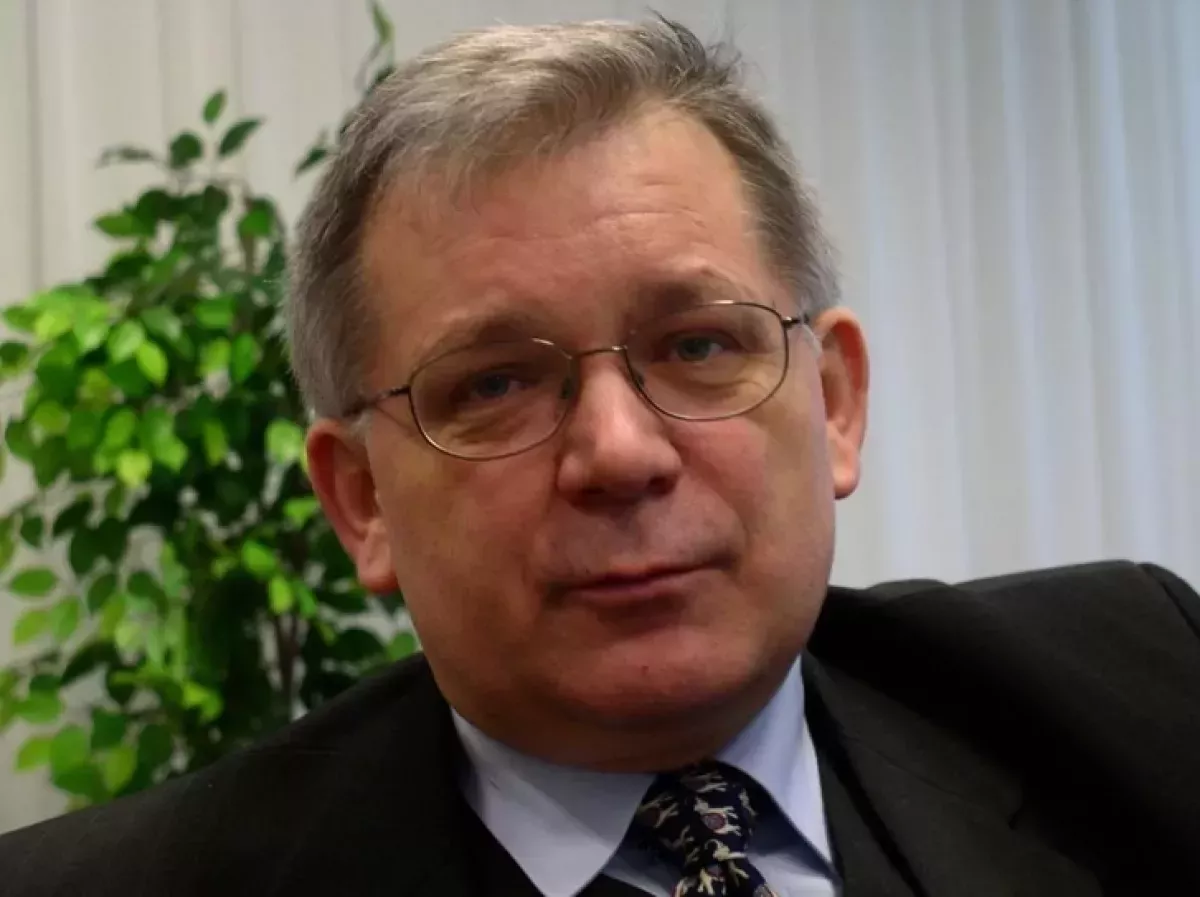
In turn, analyst and professor at the Faculty of Political Science and International Studies at Nicolaus Copernicus University, Roman Bäcker, drew attention to the fact that both Konrad Szymański, former Minister for European Affairs in the United Right government, and Donald Tusk are speaking specifically about the risk of leaving the European Union.
“They are not talking about an immediate exit. Such statements by Prime Minister Tusk are intended to mobilise supporters of continued EU membership and to persuade Eurosceptics to withdraw their support for the current president, Karol Nawrocki, and join the government camp. The overwhelming majority of Poles (82%), with varying reservations, support Poland’s continued membership in the EU. Only 14% believe that Poland should leave the EU. This is higher than in 2022 (when it stood at 5%), but it still represents a negligible minority.
Leaving the EU would mean an economic catastrophe for Poland. A significant share of Poland’s foreign trade is directed toward EU countries. Moreover, there are extensive production and logistics links, as well as relationships increasingly shaped by a common security policy.
President Nawrocki’s veto concerns the mechanism for utilising the preferential SAFE loan. However, the loan itself has already been granted to Poland. Following the president’s veto, the method and scale of its use were modified, but the funds will still be utilised by Poland,” Professor Bäcker emphasised.







 editor@caliber.az
 +994 55 444-88-98
 Азербайджан, Баку, ул. Низами, 203, Af Business House, 5-й этаж