










Trump’s ultimatum: NATO faces a “very bad future” Expert opinions on Caliber.Az
What will remain of NATO after a war with Iran? This question has now come into focus following a statement by U.S. President Donald Trump, who said that the alliance faces a “very bad future” if its allies do not help unblock the Strait of Hormuz.
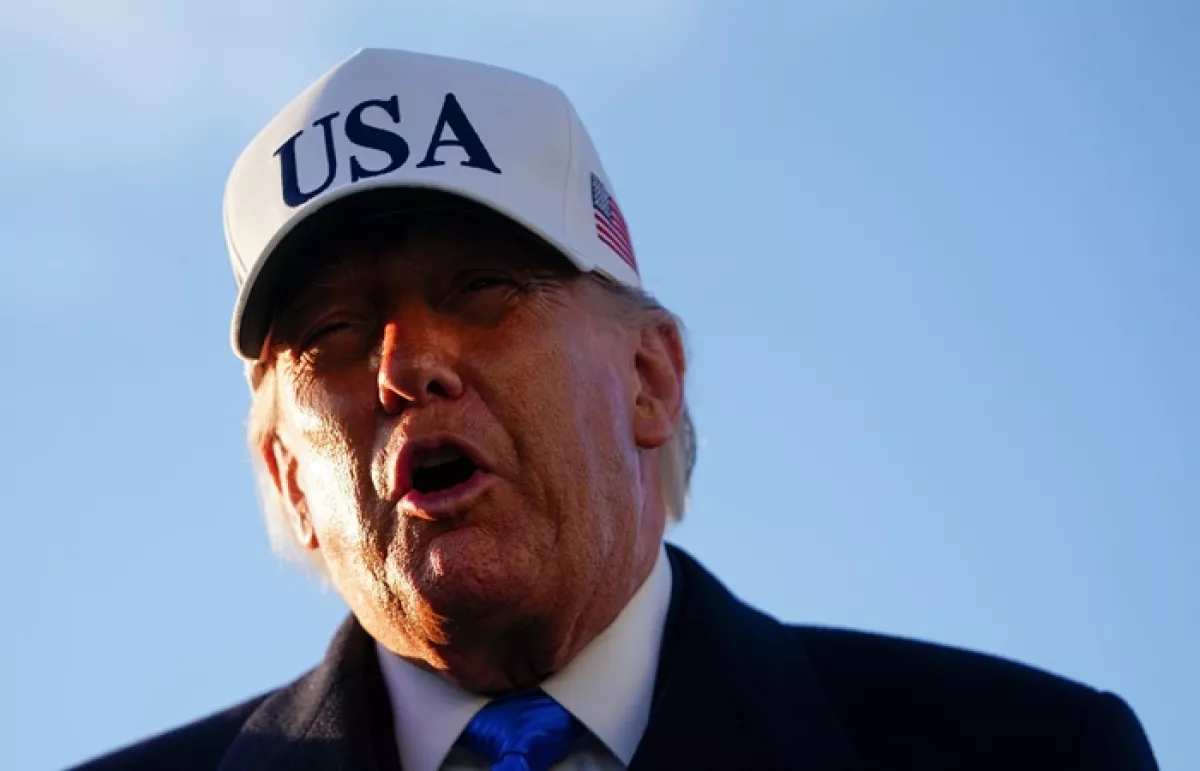
Trump emphasises that the U.S. has been very kind in assisting Europe in the context of Ukraine, and now Europeans, as the main beneficiaries of oil supplies, are obliged to support Washington in confronting Iran.
According to him, “invitations” to cooperate have already been sent to seven countries.
Meanwhile, the media reports that France and Italy have preferred behind-the-scenes talks with Tehran to secure safety guarantees for their vessels in the Strait of Hormuz rather than joining a U.S.-led coalition. Berlin has indicated that Germany does not intend to participate in combat operations, as it “is not a party to the war.”
London is also in no hurry to send ships to escort vessels. The United Kingdom is discussing options with the U.S. for unblocking the Strait of Hormuz, but is focusing on de-escalation rather than a military operation.
At the same time, Finnish President Alexander Stubb has called for taking Donald Trump’s statements about a possible “bad future” for NATO seriously, according to Bloomberg.
“We obviously have to take everything that the president of the United States says seriously,” the Finnish leader noted.
Stubb emphasised that countries willing to support the U.S. “should do that.”
Thus, Trump is effectively raising the question of revising previous unconditional agreements within NATO. In this logic, the usual “security umbrella” and the application of Article 5 come into question.
Does this mean that Washington has lost faith in the cohesion of the North Atlantic Alliance and its ability to act promptly and in a coordinated manner? How accurately do such assessments reflect reality? Can such conclusions be drawn based on current practices? Or does the potential to restore the alliance’s unity still exist?
Well-known Western analysts shared their assessment of these circumstances with Caliber.Az.

British political analyst Neil Watson noted that assumptions suggesting NATO could face an uncertain future in the context of a potential conflict with Iran reflect real tensions within the alliance.
“Nevertheless, it is premature to conclude that NATO is on the verge of collapse. The alliance was created as a collective defence system for the North Atlantic region, primarily focused on threats to the territorial security of member states, especially during the Cold War.
A conflict involving Iran, particularly in the Strait of Hormuz, goes beyond NATO’s traditional geographic and legal frameworks, creating internal ambiguity. While the U.S. may seek support from its allies, European states are not automatically obliged to provide it under Article 5 unless a member of the alliance is directly attacked.
We are observing a divergence of strategic priorities: the U.S. increasingly views security in a global, interconnected context, including energy security and freedom of navigation. At the same time, European allies are more cautious about being drawn into a broader Middle Eastern conflict, fearing escalation and negative domestic reactions.
Some countries rely on ‘quiet diplomacy’ (for example, France and Italy), while others emphasise their non-participation in combat operations (notably Germany). The United Kingdom, apparently, seeks to balance supporting its ally with a course of de-escalation,” the expert noted.
According to him, this situation is not unprecedented, as disagreements have always existed within NATO.
“The key difference today lies in the rhetoric of the American leadership, which has become more transactional and openly questions burden-sharing and allied commitments. Nevertheless, Article 5 has not lost its force and remains the legal and political cornerstone of NATO. There has been no official renunciation or amendment, and in practice it continues to underpin deterrence policy, particularly in Eastern Europe.
NATO’s resilience lies in its flexibility. The alliance has survived crises precisely because it allows for different levels of participation: its functioning does not require every member to be involved in every operation.
It is more of a stress test than a systemic decline. NATO is adapting to a more multipolar and fragmented security environment, where consensus is harder to achieve, and national interests are articulated more openly.
Confidence in NATO’s cohesion at the political level has been shaken but not critically undermined. The alliance’s unity remains recoverable; however, it is increasingly becoming a pragmatic coalition rather than the tightly unified bloc it was often portrayed as during the height of the Cold War,” Watson stated.

American analyst and professor at the University of Illinois, Richard Tempest, believes that President Donald Trump represents a unique political figure.
“One of Trump’s distinctive traits is his constant drive to fill the media space with his statements. This is not logorrhea, as his opponents claim, but a peculiar way of dominating other public voices, including those within his own administration.
As with any serious politician, Trump’s priority remains retaining and consolidating power. However, the continuous flow of presidential statements—often reflecting momentary moods or, as in the case of NATO allies, irritation—does not always translate into elements of domestic or foreign policy.
Trump entered the White House twice on the wave of his vivid, memorable rhetoric, which almost always resonates with his supporters. He is unlikely to give up this effective tool, even if the rhetorical ‘stones’ the U.S. president throws into the geopolitical pond generate only waves of commentary without producing practical consequences,” Tempest noted.
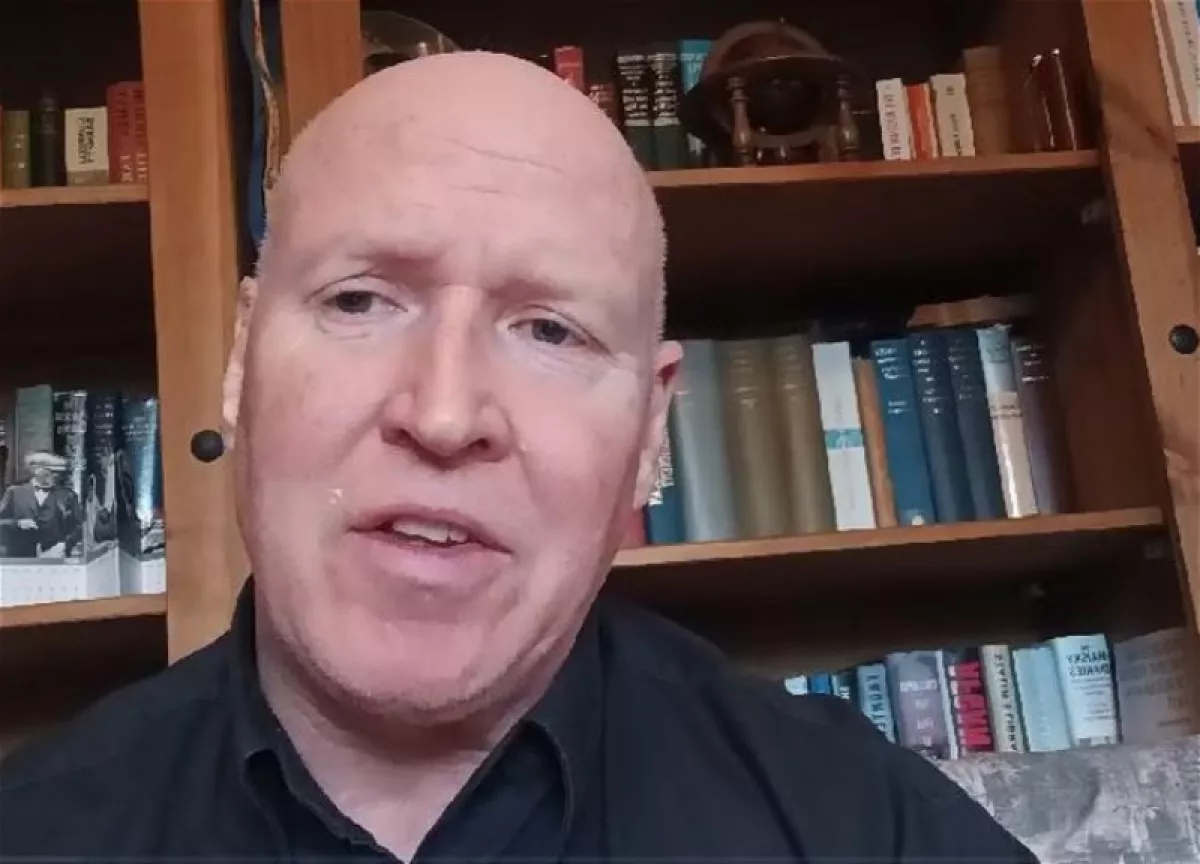
Irish political scientist and historian Patrick Walsh reminded that NATO was originally created as a defensive alliance aimed against the Soviet threat.
“In the 1990s, there were active discussions about the advisability of maintaining the organisation, since the disappearance of the Soviet threat called its future role into question. Concerns were voiced that the continued existence of NATO might eventually be perceived by Russia as a threatening signal.
Subsequently, the alliance expanded eastward in several stages, coming close to Ukraine’s borders. After the events in Ukraine in 2014, this prompted a response from Russia. Overall, Europe has traditionally viewed NATO as an anti-Russian defensive structure, rather than as a tool for conducting so-called ‘wars of choice.’
In European perception, the conflict with Iran falls precisely into the category of such ‘wars of choice’—it lacks sufficient legitimacy and is largely associated with the initiative of an ‘unpredictable’ U.S. president acting in the interests of Israel and Benjamin Netanyahu,” the historian noted.
In his view, Donald Trump has never shown respect for NATO, seeing the alliance primarily through the lens of financial gain.
“Effectively, he is attempting to use NATO as an auxiliary tool in the U.S. and Israel’s war against Iran—a conflict he considers more of a priority than the confrontation with Russia in Ukraine.
In Europe, the sense is likely growing that under Trump, NATO is losing its former role. There remains hope that the next U.S. president could restart the alliance and return it to its usual operational format. However, even this prospect is not guaranteed. It is possible that both Trump and Europe have already gone too far, and in a developing multipolar world, fundamentally new security formats and agreements will be required,” Walsh concluded.







 editor@caliber.az
 +994 55 444-88-98
 Азербайджан, Баку, ул. Низами, 203, Af Business House, 5-й этаж