










Escalation without war: what lies behind NATO countries’ nervousness? Military experts on Caliber.Az
Amid a period of global turbulence marked by military conflicts in various regions, even the slightest troop movements in border areas, military exercises, or routine combat readiness inspections can trigger heightened tensions and provoke sharp reactions from neighbouring states. One such incident occurred in early March this year, when Poland and Lithuania scrambled reconnaissance aircraft during an inspection of the Belarusian Air Force and air defence forces.
At the same time, it is important to note that the Belarusian side has repeatedly stated at the highest level that the country poses no threat to anyone, calling for an end to confrontation and a return to dialogue. This was also emphasised in a statement by the country’s representative at the OSCE Forum for Security Co-operation in Vienna: “Belarus is not engaging in a reckless arms race by drastically increasing military spending. In this matter, we proceed from the principle of reasonable sufficiency. However, when military-political tensions escalate—including in the immediate vicinity of our borders—when reliable security guarantees are lacking, and when arms control mechanisms and confidence-building measures are deteriorating, we are compelled to take additional steps to ensure national security.”
So what explains the clearly nervous reaction of NATO member states neighbouring Belarus? What objectives are these countries pursuing? These questions are addressed by Belarusian military experts for Caliber.Az.

In particular, independent military observer and leading Belarusian expert on defence and the military-industrial complex, Alexander Alesin, links what is happening to internal problems in European countries.
“I believe much can be explained by the difficult economic situation in both Poland and Lithuania, as they are part of the European Union, which is currently going through serious challenges. At the same time, the Polish ruling elites essentially lack a clear plan to neutralise negative economic trends, and therefore they are trying to shift public attention from domestic problems to external threats. In my view, this is precisely where the escalation of military hysteria comes from. The population is being led to believe that Belarus and Russia are allegedly preparing for an attack, that there are plans to seize the Suwałki Corridor, and against this backdrop, people are urged to forget internal contradictions and rally around the authorities,” he said.
The expert also pointed to domestic political competition, which further fuels such rhetoric: “It is important to understand that various groups within the Polish political and military elite are effectively competing with one another to demonstrate who is more committed to strengthening the country’s defence capabilities. This is a kind of political race in which the emphasis is placed on fear and the consolidation of society. At the same time, a second objective is being pursued—an economic one: the mobilisation of resources and their subsequent investment in the military-industrial complex, which is expected to become the engine of the economy and pull it out of stagnation.
In addition, there is a broader geopolitical calculation at play. The Polish elite is seeking a leading role in Europe, particularly against the backdrop of the weakening military potential of France and Germany. We are witnessing large-scale arms purchases—within a short period, Warsaw has taken on $18 billion in debt to acquire K2 Black Panther tanks from South Korea and Abrams tanks from the United States, as well as a number of HIMARS systems, among other equipment. This is not only about strengthening the armed forces, but also an attempt to gain additional leverage in traditional rivalries, primarily with Germany. In this way, Poland is striving to establish itself as a key military power on the European continent,” Alesin stated.
Speaking about Lithuania, the expert described the situation as more straightforward and heavily dependent on external funding: “This country has long existed on European Union subsidies, and now, as EU resources are shrinking due to support for Ukraine and the energy crisis, its financial situation has noticeably worsened. Under these conditions, the Lithuanian authorities are seeking to position themselves as NATO’s ‘frontline’—defenders of Europe against a supposedly emerging threat. This provides them with arguments to secure additional funding for defence and to maintain domestic stability.”
At the same time, the political analyst emphasised that he does not see any real plans for war at this stage, although the risk may lie in potential unintended incidents that could trigger escalation.
“I do not believe these countries have any genuine plans to go to war with Belarus and Russia. Everyone fully understands the factor of nuclear deterrence. Therefore, this is more about politics, economics, and information influence. However, the problem is that at such a level of tension, the risk of an accidental conflict increases sharply. History has seen cases where dangerous incidents occurred due to technical failures or human error—from accidental missile launches to provocative actions at the border. In an environment where the region is being flooded with weapons, any such situation could lead to uncontrolled escalation,” the military expert said.
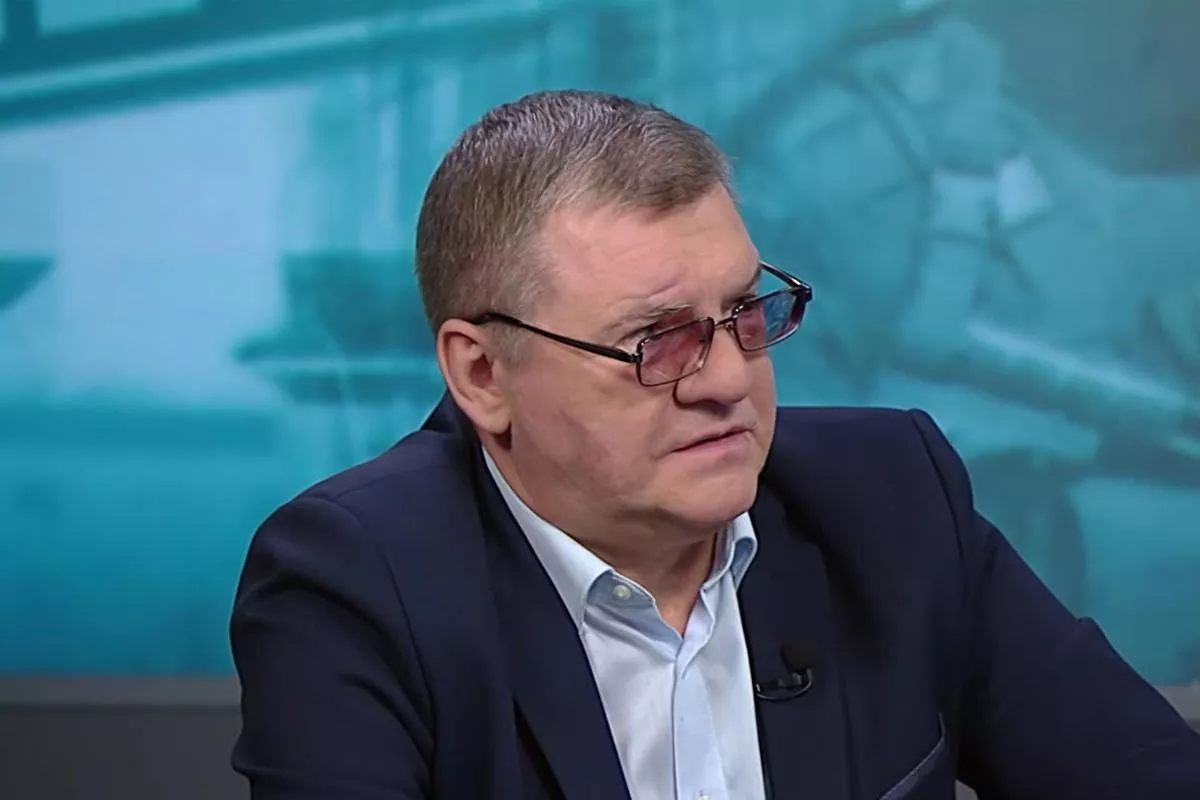
In turn, Professor at the Academy of Military Sciences of the Russian Federation and well-known Russian and Belarusian military-political analyst Alexander Tikhansky noted that one of the reasons behind the nervousness of Poland and Lithuania was Belarus’s military exercises.
“In mid-January 2026, by order of the Supreme Commander-in-Chief, President Alexander Lukashenko, a combat readiness inspection of the Belarusian army began. On March 11, the State Secretary of the Security Council of the Republic, Alexander Volfovich, clarified that the key element at this stage was the exercises of the Air Force and air defence troops focused on command and control, target tracking, and the protection of airspace. He particularly emphasised that the manoeuvres, conducted deep within the country, including in its eastern regions, posed no threat to neighbouring states and were not carried out in border areas.
However, in the defence ministries of Poland and Lithuania, these routine activities were portrayed as grounds for ‘heightened nervousness’. This narrative fits into the broader strategy of the ruling circles in the Baltic states, which seek to convince their populations that the war in Ukraine is ‘a battle for our freedom as well’, and that a Russian victory would supposedly inevitably lead to an attack on NATO states. Under this pretext, large-scale and costly defence projects are being justified,” the expert stated.
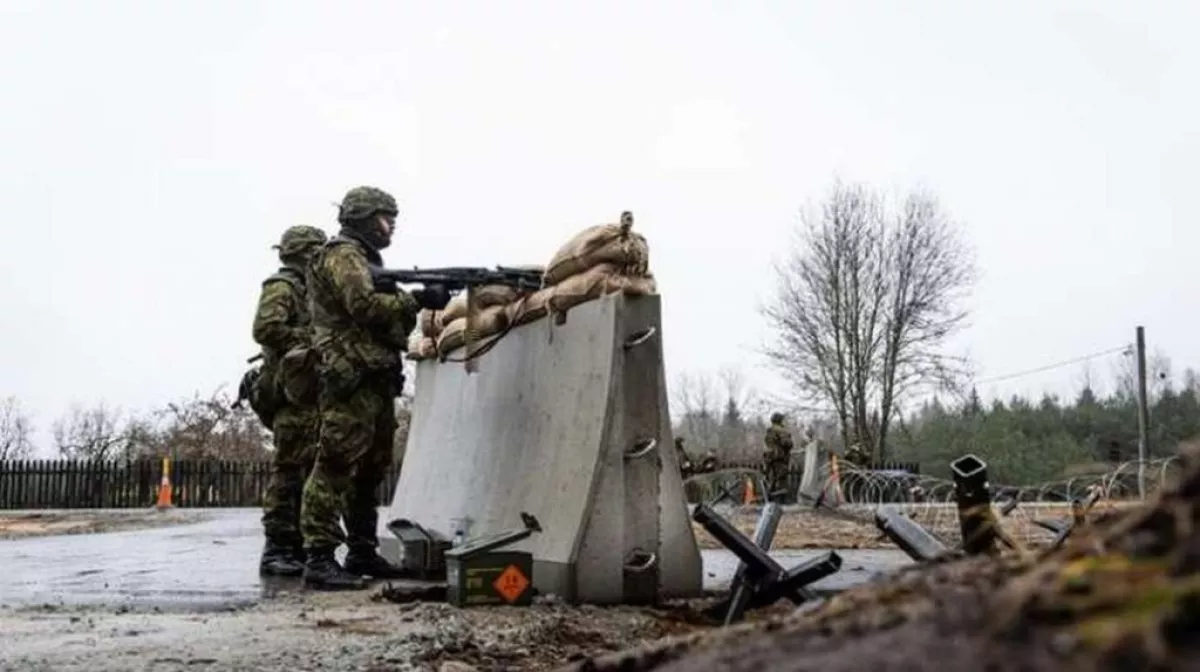
In his view, the most striking example of this is the so-called “Baltic Defence Line” being created by Estonia, Latvia, and Lithuania along their borders with Russia and Belarus.
“In essence, this is a kind of exclusion zone—or even a ‘death zone’—which includes a ‘counter-mobility’ strip with destroyed infrastructure, anti-tank obstacles and minefields, as well as around 600 bunkers to be deployed in ‘areas of key importance’. In reality, these measures—leading to the militarisation of territories and the expropriation of private property—primarily infringe on the rights and worsen the living conditions of their own populations. Belarus and Russia have repeatedly described claims about plans to attack the EU or the Baltic states as absurd, pointing to the absence of any aggressive intentions.
I believe that the true objectives of such actions lie elsewhere. Since as early as August 2025, Poland and Lithuania, in consultation with the office of the ‘exiled’ Sviatlana Tsikhanouskaya, have been considering the possibility of forming military units composed of Belarusian opposition members within their armed forces. This project pursues several key goals, including the legalisation of the use of NATO countries’ military funds and resources to prepare a combat wing of the Belarusian opposition for the 2030 elections, ensuring a steady flow of funding from Brussels under the pretext of ‘deterring threats’, and escalating tensions along the borders of the Russia–Belarus Union State as an end in itself—thereby justifying increased military budgets and the allocation of EU funds.
Thus, the reaction to Belarus’s exercises is not so much a response to a hypothetical military threat as it is an element of a broader political and economic strategy. Within this framework, an artificially sustained image of an enemy is used for internal consolidation, to exert pressure on the EU in order to secure additional funding, and to support projects aimed at destabilising the situation in neighbouring states,” Tikhansky concluded.







 editor@caliber.az
 +994 55 444-88-98
 Азербайджан, Баку, ул. Низами, 203, Af Business House, 5-й этаж