










Housing-hungry London halts new residential projects in favour of data centres
Although the city of London represents nearly a quarter of the UK’s total economy, multiple reports continue to warn that the capital has remained “stagnant” since the 2008 financial crash, recording the slowest productivity growth in the country. High housing costs and limited availability are among the main factors hampering growth. This makes a new report from an urban planning committee – revealing that some housing developments have been temporarily halted due to the surge of “energy-hungry” data centres – particularly alarming.
These findings come from the December report issued by the London Assembly Planning and Regeneration Committee, as reported by the BBC.
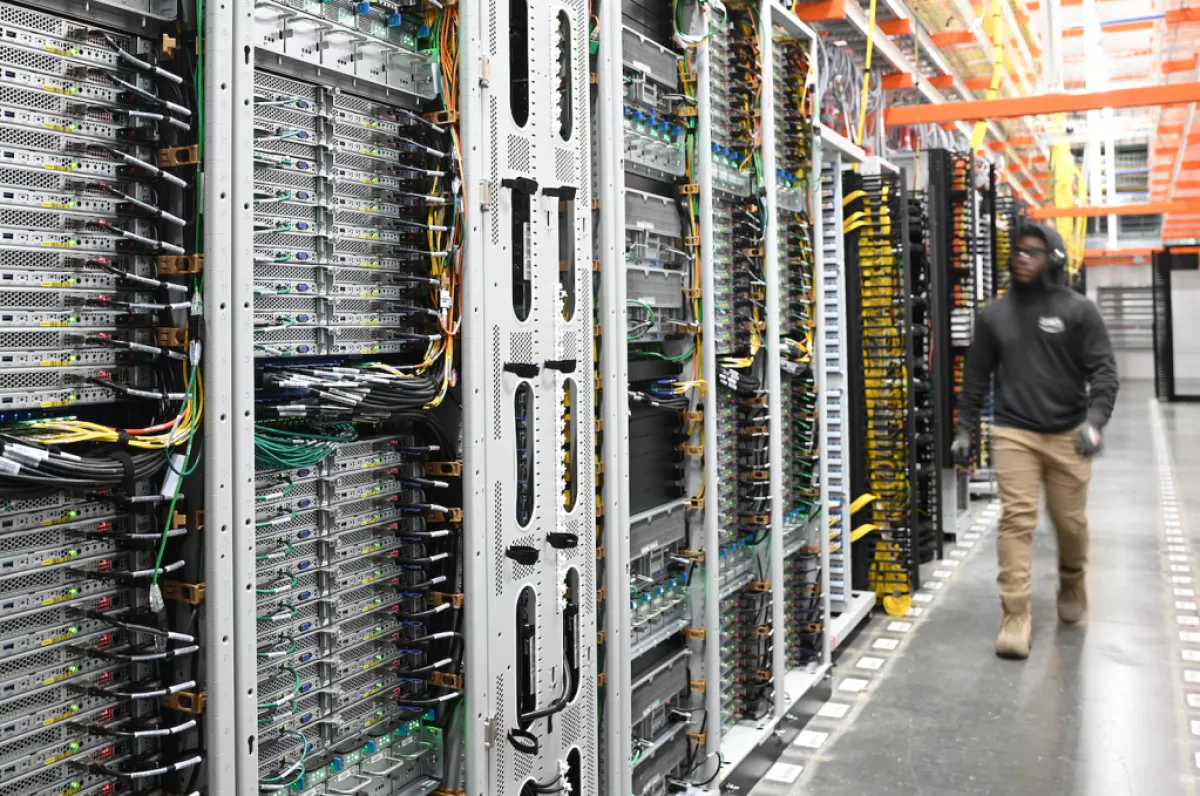
Data centres are large facilities filled with powerful computers that run digital services requiring significant amounts of energy, from streaming platforms to artificial intelligence. To illustrate this demand, it is often noted that powering a single ChatGPT query uses around 3 watt-hours of electricity — about 10 times more than a Google search.
However, these facilities require vast amounts of power from the National Grid to operate. The latest report reveals that new housing developments in west London were temporarily delayed after the region’s electricity grid reached maximum capacity.
In 2022, the Greater London Authority (GLA) began investigating delays in the boroughs of Ealing, Hillingdon and Hounslow, after receiving reports that completed projects were being told they would have to “wait until 2037” for a connection to the electricity grid.
The BBC notes that officials even feared the boroughs might have to “pause new housing altogether” until the problem was resolved.
The GLA ultimately secured short-term solutions with the National Grid and energy regulator Ofgem to prevent the “worst-case scenario” – though many developments still experienced postponements.
Even so, the strain on London’s housing development highlighted the importance of “longer term planning” for future grid capacity, the report stated.
Committee chair James Small-Edwards stressed that energy capacity had become a “real constraint” on housing and economic growth in the capital.
The report also stated that while data centres accounted for less than 10% of the UK’s electricity consumption last year, demand is projected to increase by up to 600% between 2025 and 2050.
It estimated that a single typical data centre uses roughly the same amount of power as around 100,000 households.
Figures provided to BBC News in August showed there are currently around 447 data centres in the UK, with roughly 100 more expected in the coming years. Over half of new projects are planned in and around London.
Andrew Dakers, chief executive of West London Business, told BBC News that the region is proud to host “so much digital tech and investment”, but acknowledged the challenges. “At the moment National Grid are looking to try and get 7 GW of additional power into west London by 2037,” he said. “Our ask is that needs to happen faster… 12 years is just too far. The demand is here and now”.
Planning specialists argue it is “essential” for the government to ensure “adequate investment” in power infrastructure to support future housing growth.
Among its recommendations, the committee suggested introducing a separate planning category for data centres to improve energy coordination.
The report also urged Mayor of London Sir Sadiq Khan to include a dedicated data centre policy in the next London Plan.
A representative for the mayor told BBC News they are working to include “how to best address the need for data centres in London” in the upcoming London Plan, adding that the recommendations of the report would be “carefully considered”.
By Nazrin Sadigova







 editor@caliber.az
 +994 55 444-88-98
 Азербайджан, Баку, ул. Низами, 203, Af Business House, 5-й этаж