










The unbroken thread of Albanian heritage From Gabala to Karabakh
“Azerbaijan is both part of the Turkic world and a Caucasian country. A look at the history of our country makes this abundantly clear. Ancient Caucasian Albania existed precisely in the territories of present-day Azerbaijan, and the capital of that ancient state was the city of Gabala, which remains one of the most beautiful places in our country today.” President Ilham Aliyev made the remarks at a meeting with a delegation comprising members and observers of the Council of Heads of Muslim Religious Boards of the Organization of Turkic States (OTS), co-organizers of the Yahya Bakuvi International Conference, and members of the Supreme Religious Council of Caucasian Peoples.
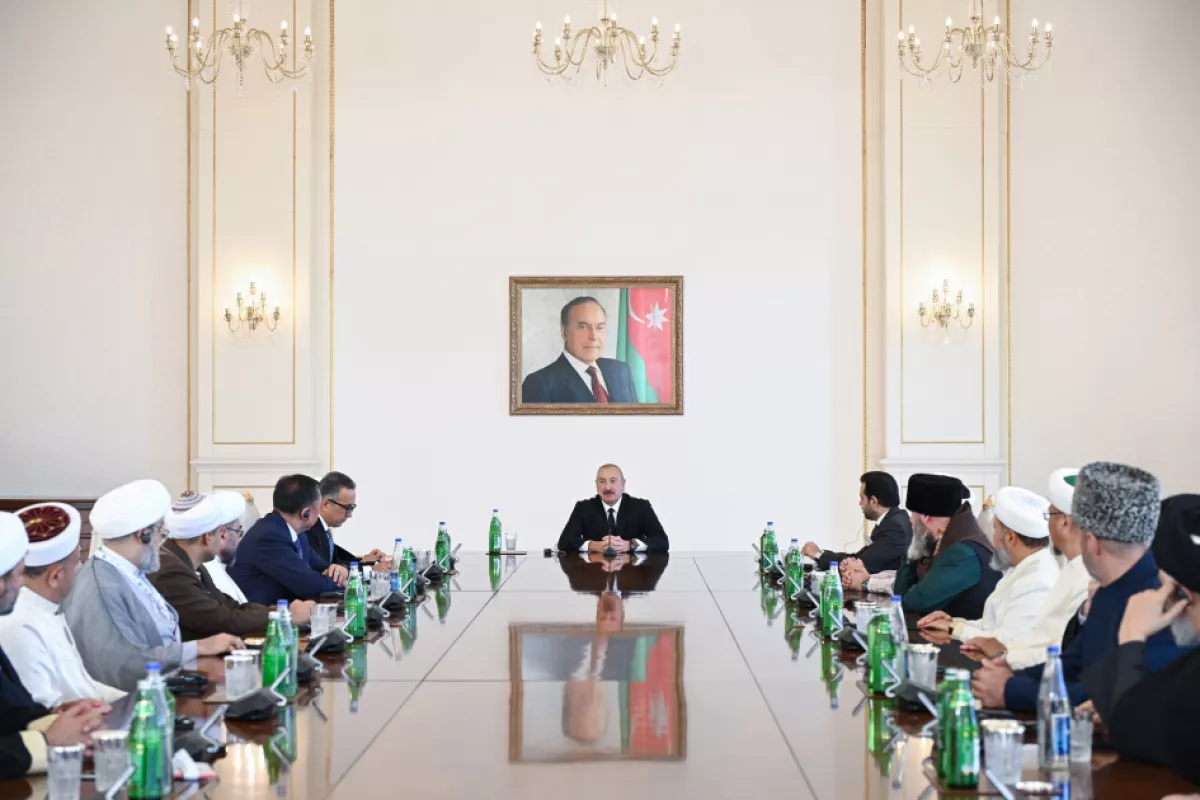
These words by the head of state precisely capture the enduring significance of Caucasian Albania, as the legacy of this state, which existed in what is now Azerbaijan in antiquity and the early Middle Ages, has become one of the most important layers of our country's history. Gabala was the capital of Albania, while Karabakh was always part of it and was one of the most important centres of the Albanian political and ecclesiastical tradition. No serious author denies Karabakh's belonging to Albania. Historical research demonstrates that the entire territory between the Kura and Araz rivers was part of the historical territory of Caucasian Albania and eventually became the main centre of the Albanian Church.
Unfortunately, this legacy was cynically and systematically subjected to “appropriation” for decades by the Armenian propaganda machine. The issue is not merely one of historical interpretation — in many cases, surviving artefacts of Albanian history were artificially labelled as Armenian.
The outrage with which Armenian society and the media are now reacting to the visit to Karabakh and East Zangezur by members of the diplomatic corps accredited to Azerbaijan, and to their visits to the Ganjasar and Khudavang monastery complexes, can likewise be regarded as a continuation of this tradition of appropriating what belongs to others. As is known, following the liberation of Azerbaijani territories from occupation, these monasteries have been visited for prayer and religious services by representatives of the Albanian-Udi Christian community and Udi clergymen. Before our eyes, a false paradigm that lays claim to the heritage of Caucasian Albania is now being dismantled.
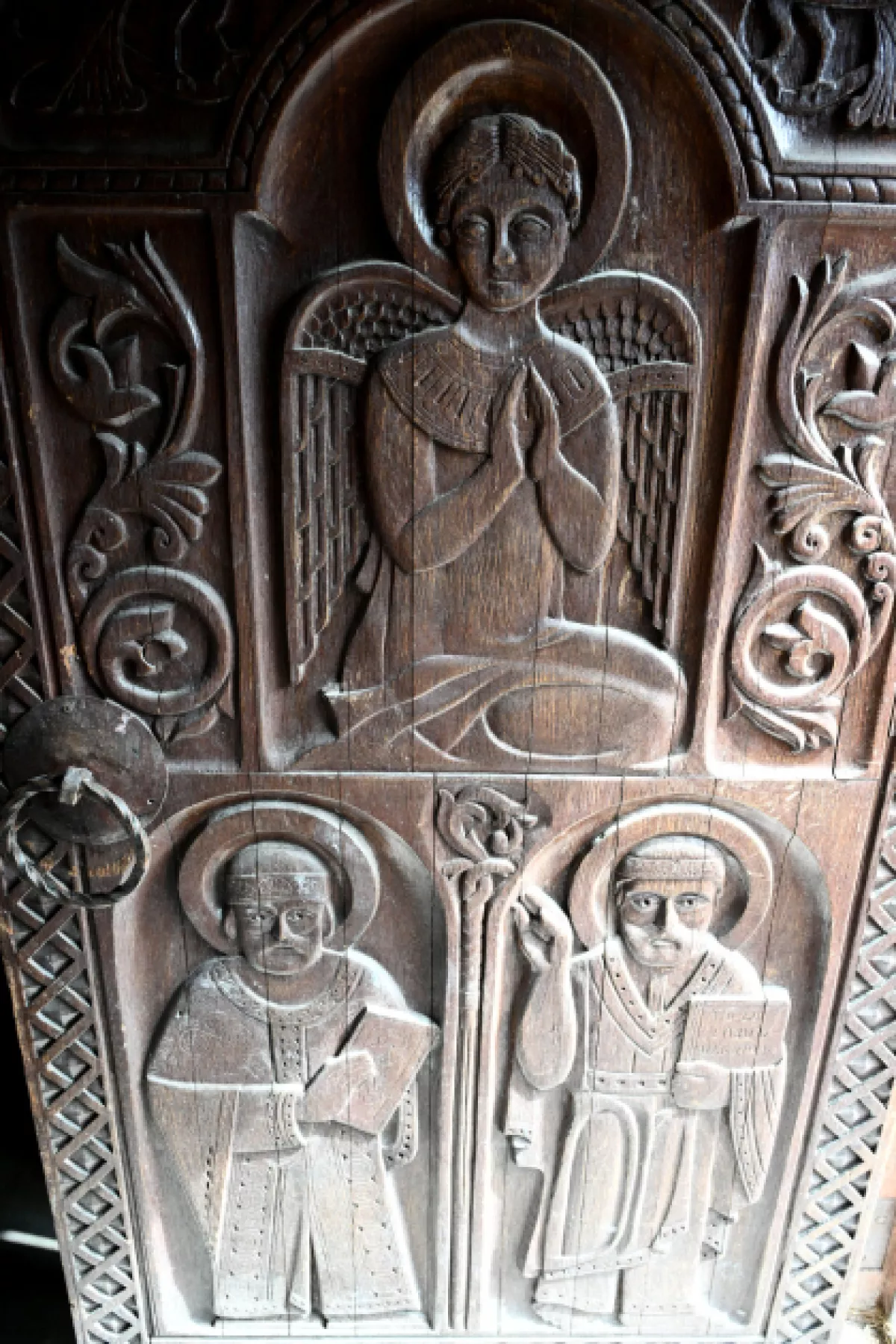
Caucasian Albania existed for almost a thousand years, maintaining political agency and independence despite being surrounded by powerful states. Albanian rulers had to navigate between Rome, Persia and Byzantium, and later the Arab Caliphate and other powers. One of the best-known kings was Javanshir, who pursued a balanced policy in an effort to preserve independence. In historical sources, he is represented as acting on behalf of Albania, rather than Armenia.
There were historically no Armenian toponyms in Albania, while the presence of various tribes, including Turkic ones, was clearly reflected in local place names. Following the arrival of the Arabs, the name “Albania” came to be used in the form “Aghvan”, while the term “Hayastan” was never used for the region. The toponym “Artsakh” is presented in historical sources as an Albanian province, while the word itself is Albanian — the name is first found in the Avesta, the sacred book of Zoroastrianism. Toponyms containing the root “Aghvan” can still be found in the region today.
Although Caucasian Albania was composed of different tribes, it possessed strong political unity, religious autonomy, its own culture and a distinctive writing system. The Albanian alphabet, created on the basis of the language of the Gargars and consisting of 52 letters, was discovered in 1938 during excavations near Mingachevir. This provides unequivocal evidence that the Albanians did not use the Armenian language or alphabet and had their own developed writing system before the arrival of the Arabs.
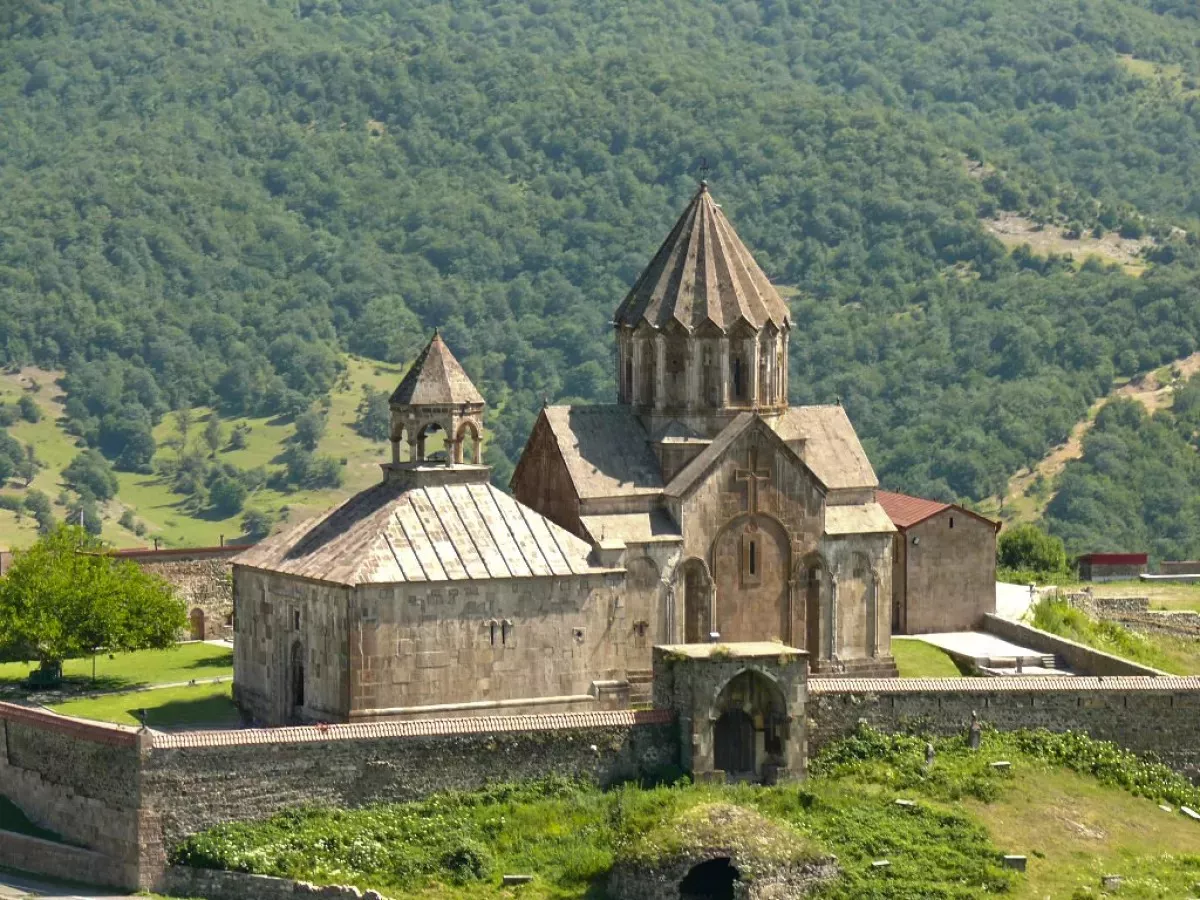
At the beginning of the eighth century, the Arab Caliphate brought an end to the independence of Caucasian Albania. However, the disappearance of a unified independent state did not mean the disappearance of the Albanian tradition. Members of the Albanian royal dynasty continued their activities and subsequently restored Albanian statehood over a smaller territory. A prominent example was the Albanian feudal state that emerged in Karabakh and was associated with the Hasan-Jalal dynasty in the 13th century. It was during this period that construction began on the Ganjasar Church, the largest monument associated with Karabakh's Albanian Christian heritage. In the surviving Ganjasar inscription, Hasan-Jalal's name is accompanied by the title “Atabeg”. It is important to emphasise that this title was borne not by Armenians, but exclusively by Azerbaijanis and Albanian princes. Ganjasar thus became an important symbol of the continuation of Albanian statehood and ecclesiastical life in Karabakh following the Arab conquest.
From the ninth to the 13th centuries, Albanian statehood, national culture and religious tradition experienced a new period of revival. It was during this period that the depth of this tradition became evident in the works of medieval authors. The historian Moses of Kalankatuyk, who gave a detailed account of the history of Albania, explicitly identified himself as an Albanian from the region of Uti, which was located in the Kura-Araz lowland, and wrote with pride about the historical past of his homeland.
Caucasian Albania, which emerged as the first state on the territory of present-day Azerbaijan, adopted Christianity as its state religion as early as 313 and actively promoted the faith among its population. The roots of the Albanian Church date back to an even earlier apostolic period. According to church tradition, Saint Eliseus, a disciple of the Apostle Thaddeus, preached in the land of Albania. Appointed as the Albanian Catholicos in Jerusalem, he founded the first church in the South Caucasus in the village of Kish, near Shaki. The Albanian Church is therefore rightly regarded as the oldest in the region. Initially, it was directly subordinate to Jerusalem: the first Catholicoi were appointed by Jerusalem, while later they began to be elected by Albanian clergy themselves.
The Albanian Church retained its autonomy for many centuries, while the Catholicosate of Albania (Aghvan) existed continuously for fifteen centuries. Following Chola and Barda, the monasteries of Ganjasar, Aghoglan and Khudavang became its centres and the residences of Albanian patriarchs during different historical periods, from the fifth to the 19th centuries.
Albanian Catholicoi also bore the title of patriarch, one of the highest spiritual titles in the Christian world. A wall inscription at Ganjasar, dated to 1240, explicitly refers to the patriarchate of “Nerses, Catholicos of the Albanians”, providing substantial evidence that at that time the Albanian Church was fully independent and retained its autocephaly. In the 15th century, Ganjasar became the permanent residence of the Albanian Catholicos, giving Karabakh particular significance in the history of the Albanian Church. Its spiritual institutions continued to be carefully preserved here even after the disappearance of secular Albanian statehood.
Evidence from the 18th century is particularly noteworthy, as Albanian identity and self-awareness remained firmly preserved among the Christians of Karabakh. In an official letter to Russian Tsar Peter I, they explicitly described themselves as Aghvans of Udi nationality. The Karabakh meliks, in their letter to Potemkin, likewise described themselves as descendants of the Albanian rulers.
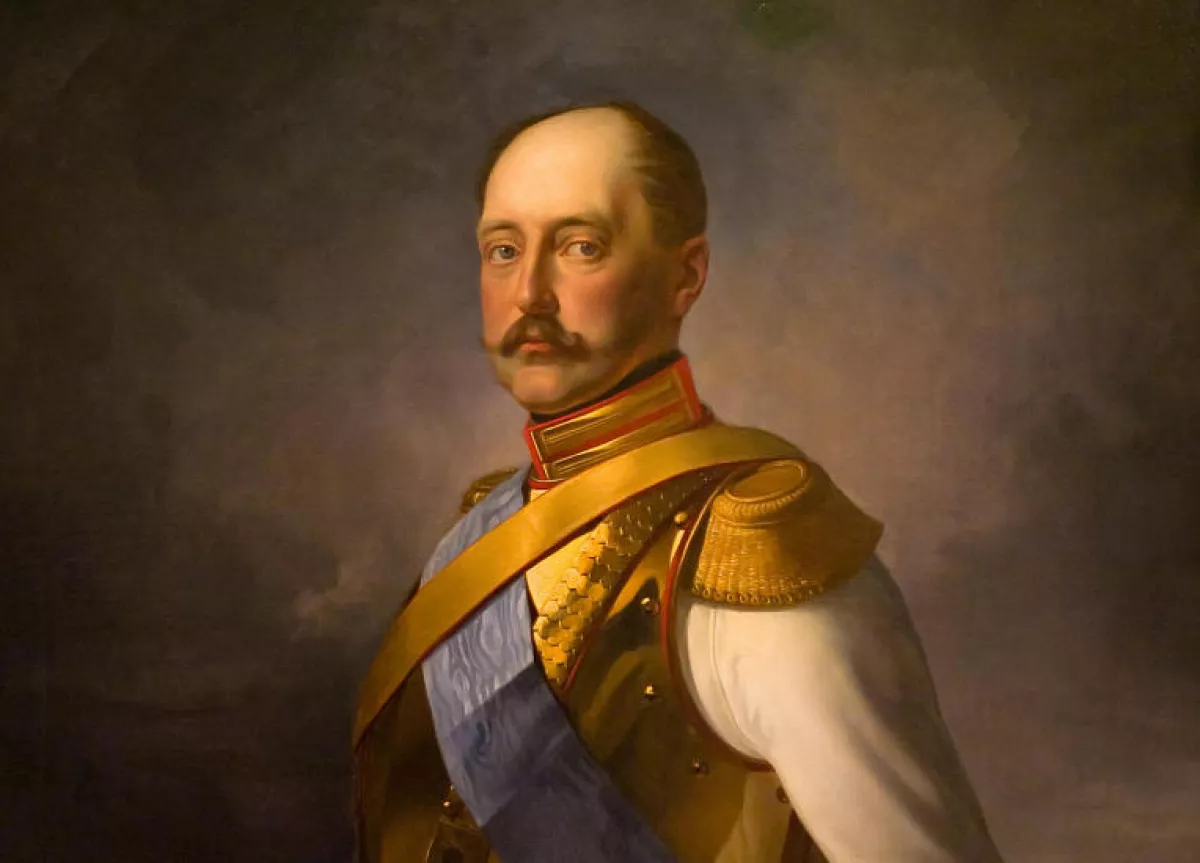
The 19th century proved tragic for the Albanian Church, as the transfer of Albanian churches under the jurisdiction of the Armenian Church was carried out through coercive administrative measures by the Russian Empire. In 1815, a tsarist decree abolished the office of the Albanian Patriarch-Catholicos. In 1836, Emperor Nicholas I signed a special “Regulation” (Regulation on the Armenian Gregorian Church), which definitively abolished the Ganjasar Patriarchate, while its ecclesiastical properties were transferred to the Armenian Church system. Attempts by the Albanian clergy to resist proved unsuccessful.
Following the loss of ecclesiastical independence, the Caucasian Albanians were officially classified as Armenians by the authorities, and an aggressive period of the “Armenisation” of Albanian heritage began. In an effort to erase traces of Albanian history, the surviving ancient archives of the Albanian Church were deliberately destroyed in 1909–1910.
To appropriate Karabakh's Albanian religious and cultural heritage, stone slabs bearing false inscriptions were added to historical monuments. At Ganjasar, the inscriptions on the church façade and the outer wall of the monastery complex were crudely altered, with later Armenian epigraphic elements added. At Khudavang Monastery, rare frescoes depicting rulers from the Hasan-Jalal dynasty were deliberately destroyed, along with symbols and ornaments attesting to the monument's Albanian origins. The final act in this process came in September 2023, when Armenian clergymen, leaving Khudavang Monastery, took with them the remains of Saint Dadi.
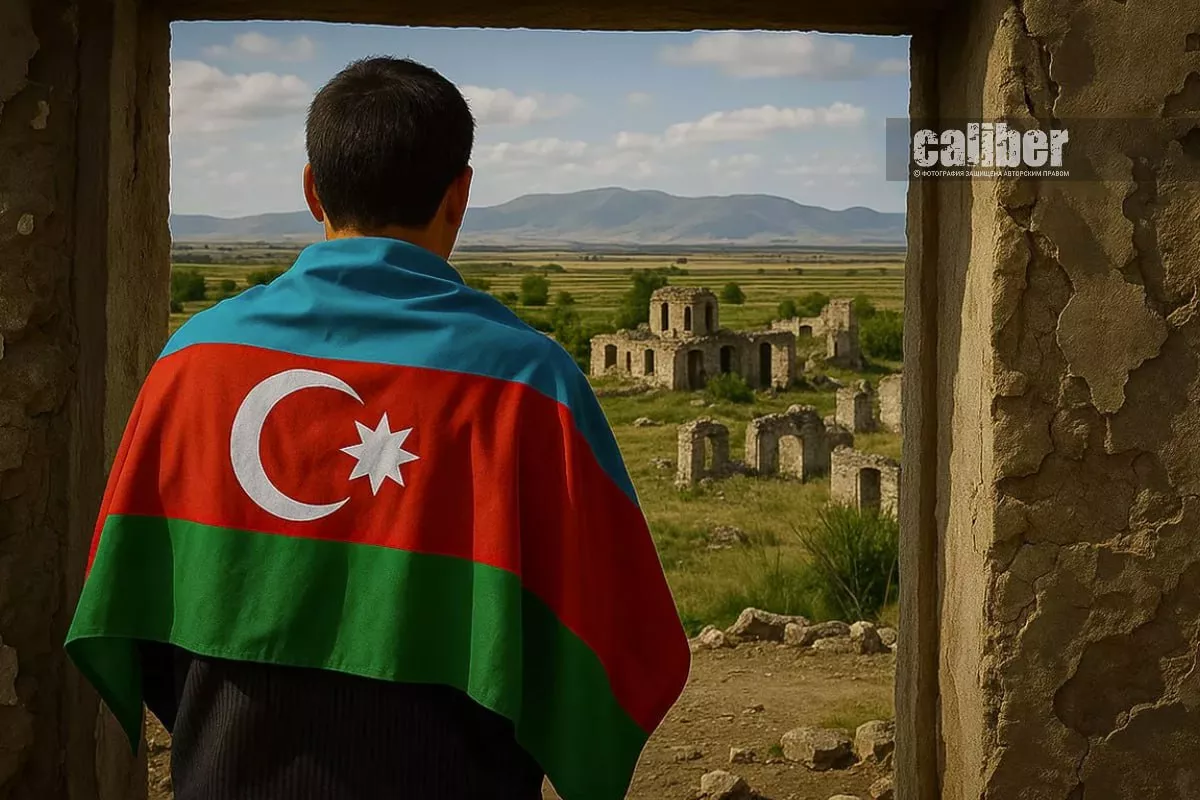
Albanian heritage plays a key role in understanding the formation of the modern Azerbaijani people. The overwhelming majority of Albanians gradually mixed with local Turkic tribes and became part of the ethnogenesis of the Azerbaijani people. Albanians are regarded as among the direct ancestors of modern Azerbaijanis, who today are the legitimate inheritors of Albanian cultural heritage.
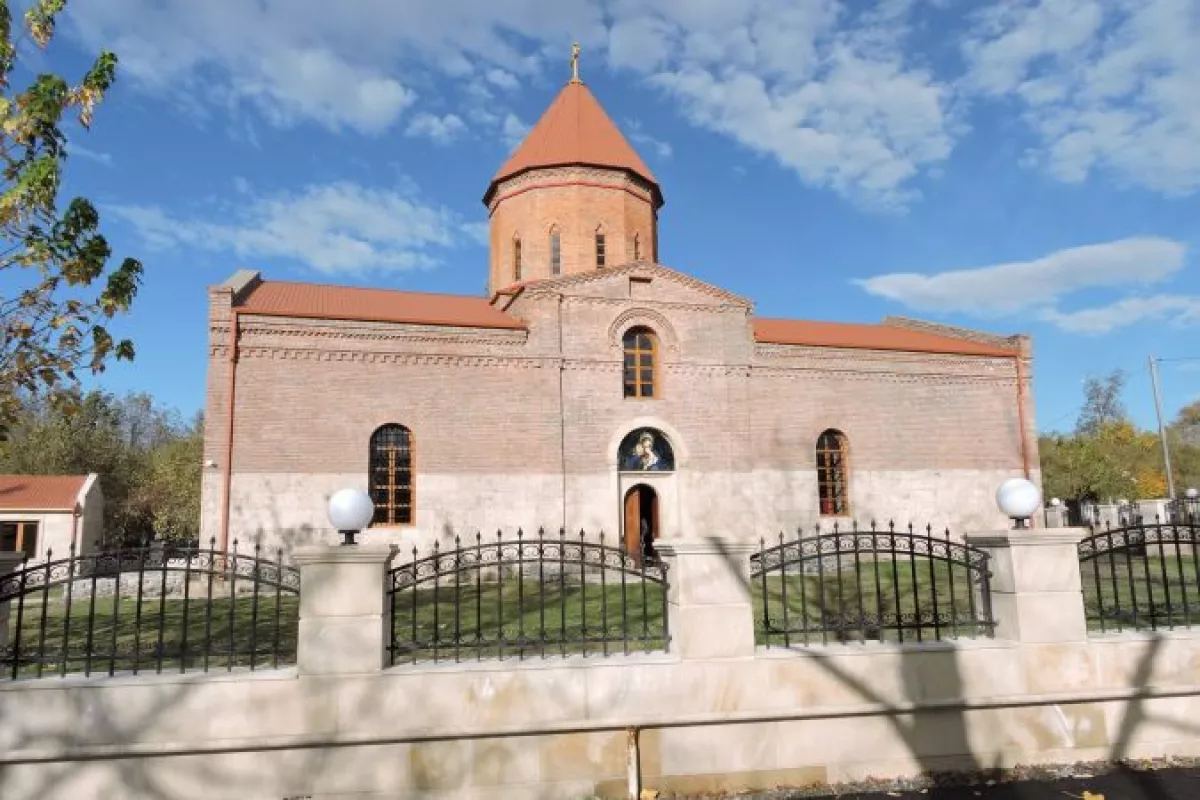
At the same time, the Udis, who have preserved the cultural and religious traditions of ancient Albania, continue to live in Azerbaijan today. In the settlement of Nij, ancient churches have been restored, religious services are held, and Udi cultural traditions are fully supported. The Udi ethnic group, having preserved its identity, is an integral part of the broader Azerbaijani people.
Thus, for Azerbaijan, Caucasian Albania is not an abstract ancient civilisation that existed somewhere in the distant past. It is the history of the territory on which Azerbaijan stands today and one of the principal sources of its cultural heritage. Gabala, Kish, Ganjasar, Khudavang and other monuments form a tangible link between the modern Azerbaijani state and the ancient Christian tradition of the Caucasus.
“Welcome to Gabala, the ancient city of Azerbaijan. Gabala served as the capital of Caucasian Albania, spanning a vast geographical area, which was established in the 4th century BC and thrived until the 8th century AD,” President Ilham Aliyev told guests at the 2nd Summit of the Council of Heads of State of the Organisation of Turkic States in autumn 2025, underscoring the enduring value of Albanian heritage for modern Azerbaijan.
Azerbaijani culture and statehood bring together several historical layers. Restoring Albanian history to its rightful place means, for our country, restoring justice with regard to one of the most important chapters of its own past.







 editor@caliber.az
 +994 55 444-88-98
 Азербайджан, Баку, ул. Низами, 203, Af Business House, 5-й этаж