










Violence against Ebola responders grows amid rampant spread of false rumours
A wave of misinformation emerging throughout the latest Ebola outbreak has fuelled attacks on health workers and treatment facilities in the Democratic Republic of Congo (DRC), hampering efforts to contain a disease that has already claimed more than 600 lives in the country since May.
The DRC, together with neighbouring Uganda, is battling yet another Ebola outbreak. Health officials warn that false claims circulating in affected communities are undermining the response and discouraging people from seeking treatment. As an investigative BBC article into this unfortunate trend notes, rumours include allegations that Ebola does not exist, that health workers are deliberately infecting people or harvesting their organs, and that the outbreak response is a money-making scheme.
The BBC's Verify team identified 12 incidents of community resistance to Ebola control measures, seven of which were verified through social media footage. The documented incidents include attacks on treatment centres, assaults on health workers, and repeated attempts to prevent safe burials of people who died from the virus. The actual number of incidents is likely to be higher, as violence in remote areas may go unreported.
The latest attack occurred on 1 July, when residents set fire to an Ebola treatment centre in Bafwabango, Ituri province, the epicentre of the outbreak. Local media reported that a police officer was killed during clashes over the body of a person suspected to have died from Ebola.
Ebola spreads through direct contact with infected bodily fluids, and the bodies of victims remain highly infectious after death. Health authorities therefore conduct safe and dignified burials to prevent transmission, limiting practices such as washing or touching the deceased that have contributed to the spread of Ebola during previous outbreaks.
However, the British network points to these measures having repeatedly faced resistance from communities influenced by misinformation denying the existence of the disease.
In late May, rioters burned equipment and two isolation tents at an Ebola treatment centre in Rwampara after relatives of a young man believed to have died from the virus were prevented from taking his body for burial.
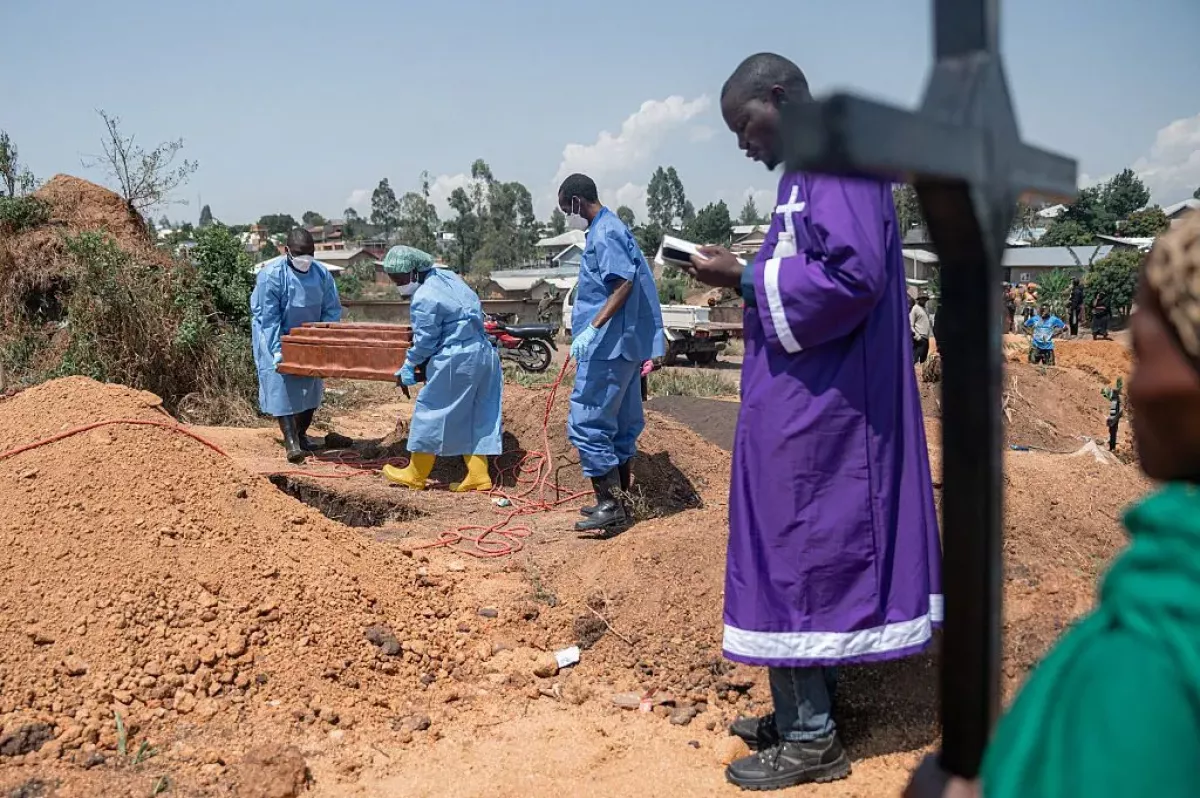
Funeral ceremonies in the DRC often last several days and carry deep cultural, social and spiritual significance, making restrictions on traditional burial practices particularly sensitive.
"Women are dressed in a wedding dress with make-up… They sing, they celebrate that person, because it's a journey, it's not the end of the life," Julienne Anoko, an anthropologist working with the WHO as a community engagement officer, told the BBC last month.
Health workers in Ituri say widespread misconceptions about Ebola and fears surrounding treatment centres have also delayed patients from seeking medical care until it is too late.
Dr Aimé Mbonda Noula of the International Federation of Red Cross and Red Crescent Societies (IFRC) said some families had abandoned the bodies of relatives who died from Ebola rather than alerting authorities because they feared quarantine measures.
"Most of the people in [these] communities think that these treatment centres are places where, when you go, you die," he said. "So, you usually run away from these places and run away from the health workers".
Others have resisted changes to traditional funeral practices.
"They don't believe that safe, dignified burials could really help," says Dr Babou Rukengeza from the charity Save The Children. "They say: 'this is my family member, I need to honour him… this is the last time that I can touch him'."
A recent assessment by the charity ActionAid in Ituri found that around one-third of respondents did not believe Ebola was a real disease, instead attributing illness to spiritual forces or sorcery.
Health officials warn that unless misinformation is addressed and communities are engaged more effectively, violence against responders and resistance to public health measures could continue to undermine efforts to bring the outbreak under control.
By Nazrin Sadigova







 editor@caliber.az
 +994 55 444-88-98
 Азербайджан, Баку, ул. Низами, 203, Af Business House, 5-й этаж