










Why the Kosovo model fails Ukraine Peace by postponement
Foreign Policy’s exploration of Edward P. Joseph’s Kosovo-inspired proposal for Ukraine reflects a growing desperation in Western policymaking circles: if victory is unattainable and surrender unacceptable, perhaps ambiguity can buy peace. The idea—rooted in U.N. Security Council Resolution 1244—seeks to freeze the war by deferring the sovereignty question over occupied territories. Yet what worked, however imperfectly, in the Balkans risks becoming a strategic trap in Ukraine.
At the heart of the debate lies the chasm between two irreconcilable positions. Russia’s earlier 28-point plan amounted to a capitulation demand, requiring Ukraine and the international community to recognise Moscow’s territorial seizures outright. The subsequent 20-point counterproposal backed by Kyiv and Western partners rejects such legalisation of conquest, instead proposing a cease-fire along current lines without recognition of Russian gains. Joseph’s intervention attempts to bridge this void by shelving sovereignty altogether—an approach that, on paper, promises de-escalation without formal defeat.
The Kosovo analogy, however, is deeply flawed. Resolution 1244 was imposed after Serbia lost effective military control and under conditions where NATO dominance and international enforcement mechanisms were unquestioned. Russia today is not Serbia in 1999. It retains significant military capacity, sits as a permanent member of the U.N. Security Council, and has repeatedly demonstrated contempt for agreements it finds inconvenient. Any international administration or peacekeeping mission in eastern Ukraine would operate under the constant shadow of Russian veto power and coercion.
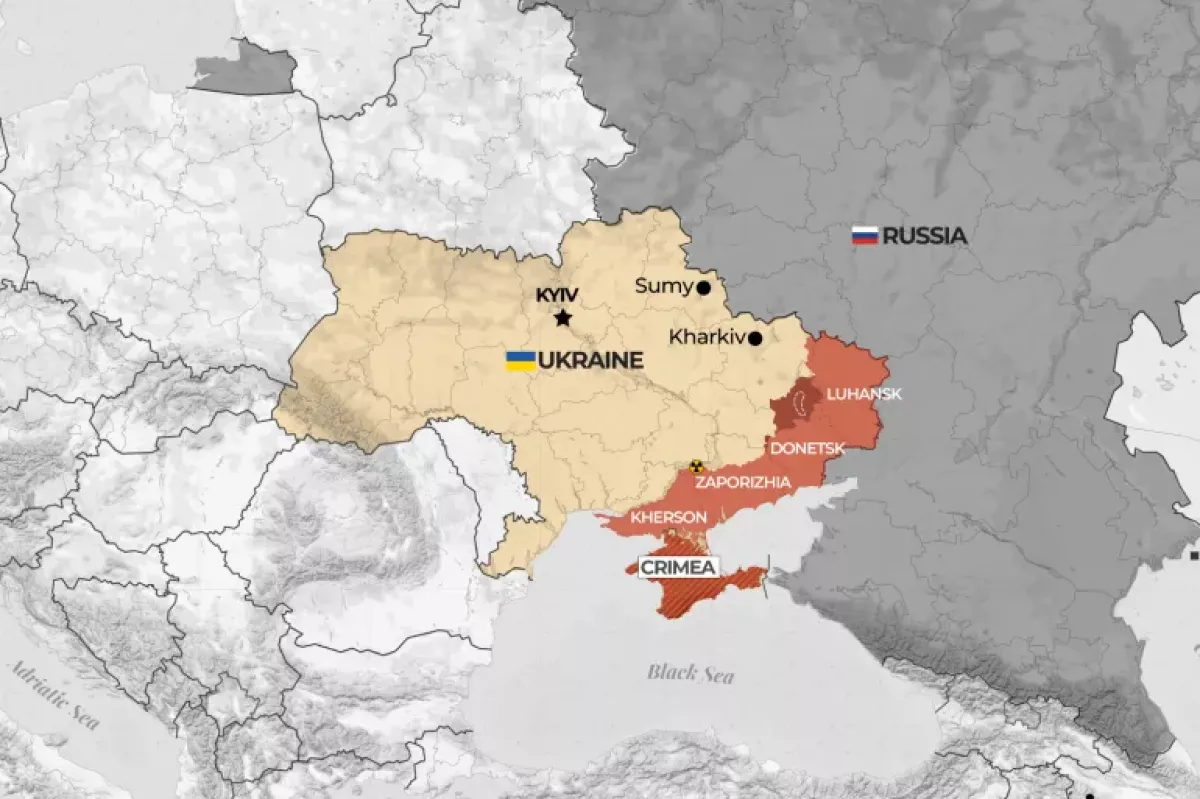
Russia controls about 20 per cent of Ukraine’s territory
Moreover, the conflict in Kosovo emerged from an internal ethnic struggle within a disintegrating federation; Ukraine faces an external war of conquest aimed at erasing its sovereignty altogether. As Ukrainian analysts cited by Foreign Policy rightly argue, Moscow’s objective is not territorial adjustment but national subjugation. In this context, deferring sovereignty does not neutralise the conflict—it merely institutionalises Russia’s leverage.
The proposal’s most contentious element—future referendums—further undermines its viability. Under conditions of mass displacement, demographic manipulation, and military occupation, any plebiscite would lack legitimacy. For Ukraine, even agreeing to such a process would concede that its internationally recognised borders are negotiable, validating aggression retroactively. This is why Kyiv has consistently rejected “land swaps” and similar euphemisms: a frozen injustice remains an injustice.
Supporters of Joseph’s plan argue that it could offer Ukraine a respite, international security guarantees, and a chance to rebuild. But this assumes good faith from a Kremlin that has violated cease-fires, guarantees, and treaties for over a decade. As several experts quoted by Foreign Policy note, without a credible deterrent force—one that the West appears unwilling to deploy—such an arrangement would be fragile at best and dangerous at worst.
Ultimately, the article exposes a harsh reality: creative diplomacy cannot substitute for strategic clarity. Any deal that grants Russia de facto legitimacy while postponing accountability weakens international law and incentivises future aggression. Ukraine’s dilemma is tragic, but ambiguity is not neutrality—it is a concession. The Kosovo model did not resolve sovereignty; it froze it under Western dominance. In Ukraine, the balance of power is far less forgiving.
If peace comes through postponement, it will be on Russia’s terms. And that is precisely why Kyiv and its allies remain right to be sceptical.
By Vugar Khalilov







 editor@caliber.az
 +994 55 444-88-98
 Азербайджан, Баку, ул. Низами, 203, Af Business House, 5-й этаж