










A strategy of peace and strength On Ilham Aliyev’s New Year address
Five years is a short span in historical terms, yet it is long enough for a nation to feel the breath of a new era. In his New Year address, President Ilham Aliyev once again turned to the defining milestone of modern Azerbaijan—the historic Victory in the Patriotic War, which became a symbol of national revival, the restoration of dignity and territorial integrity, and the strengthening of the country’s international standing.
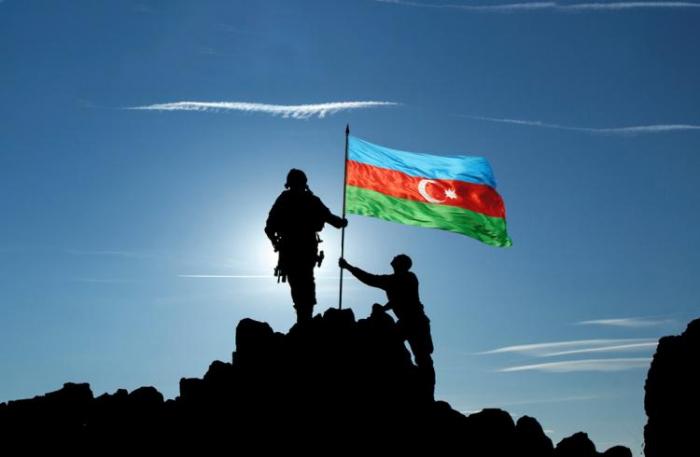
Noting the significant qualitative and quantitative growth of the Armed Forces of Azerbaijan, Aliyev emphasised: “We are not preparing for a new war. For us, wars are a thing of the past.” These words reflect the maturity of a state that has endured a severe trial and emerged with a deep sense of responsibility for peace.
At the same time, as the President observed, peace in the 21st century remains fragile: the norms of international law often fail to function, and “the principle of ‘might is right’ has been embraced by many countries.” This plain statement of reality offers a clear and comprehensive answer to the question of why a state must continually strengthen its defence capabilities.
As he did a week earlier in Aghdam, Ilham Aliyev once again pointed to the termination of the OSCE Minsk Group’s activities as a landmark event—one that signals the triumph of Azerbaijani statehood and the international recognition of both Azerbaijan’s just cause and its strength.
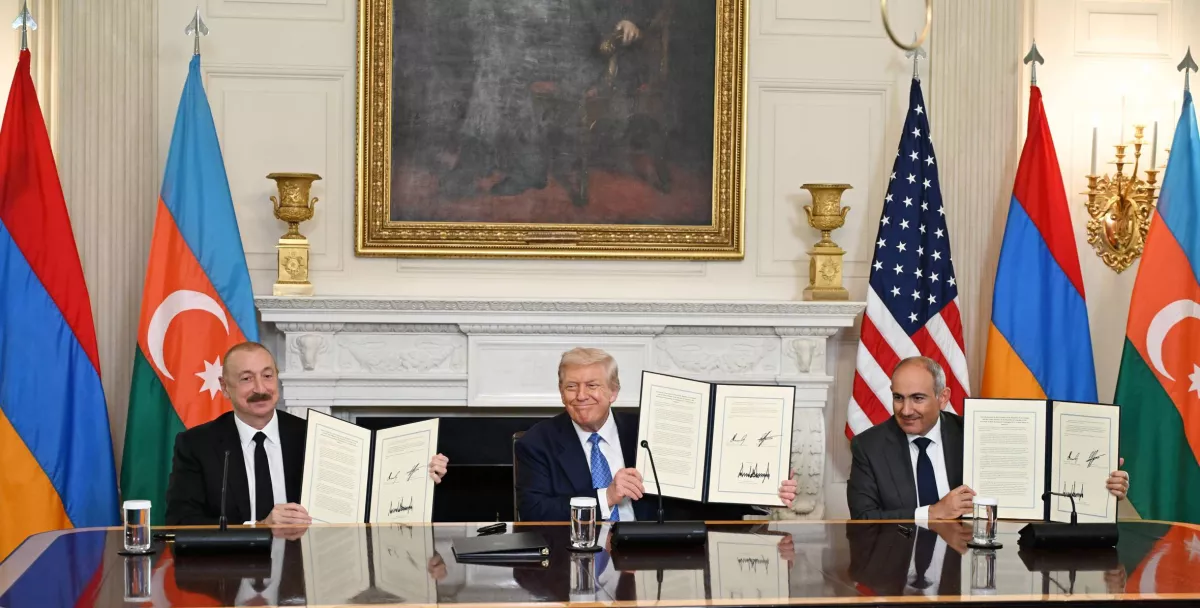
The President stated with confidence: “The whole world now recognizes our Victory and clearly sees that we are in the right.” Expanding on this point, he recalled that the Victory won at the cost of blood was formally sealed “at the most authoritative stage in the world—the White House in the United States—with the participation of the U.S. President.”
Speaking about Azerbaijan’s international standing, the Head of State noted that today it is a country that “is now treated with great respect around the world,” and emphasised the multi-vector nature of Baku’s foreign policy. As an example, he pointed to Azerbaijan’s accession in 2025 to the D-8 organisation—a club of eight major Muslim countries—highlighting that Azerbaijan became the first new member of this grouping in nearly three decades of its existence.
Ilham Aliyev then recalled that Azerbaijan was unanimously elected a full member of the Consultative Council of Central Asian States—a step the President himself described as a “historic achievement.” Indeed, while geographically located in the South Caucasus, Azerbaijan, by virtue of its strategic importance to global transport corridors, has become a natural part of the Central Asian space.
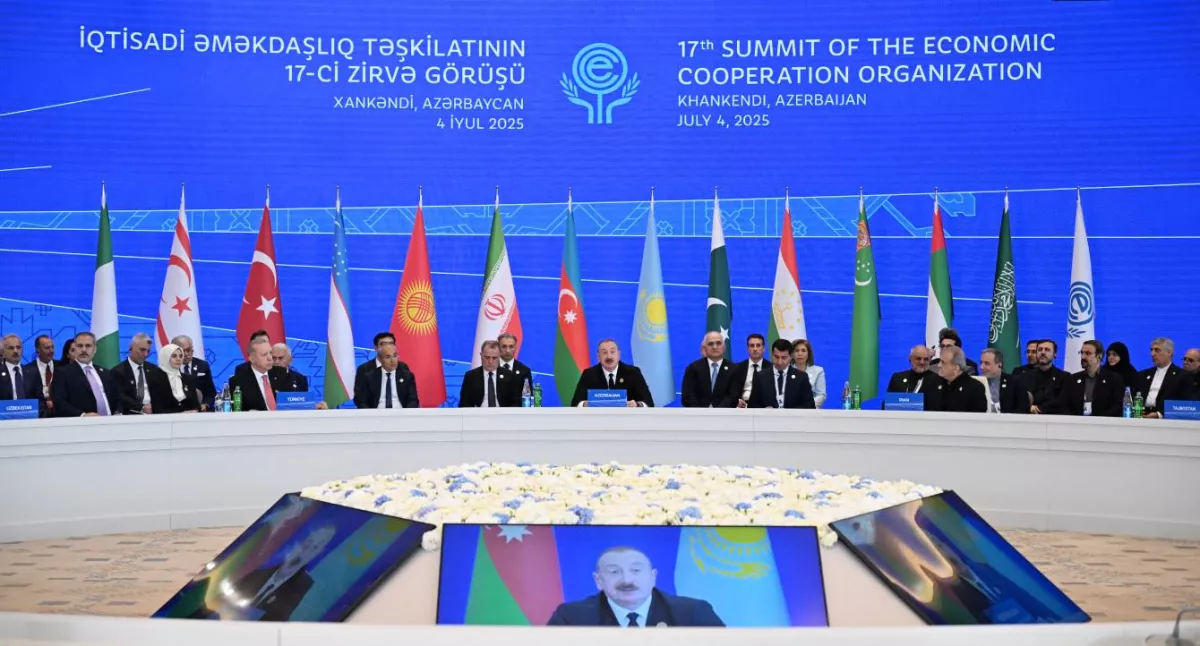
The President also noted that the outgoing year was marked by a series of international events that further enhanced the country’s political weight. A summit of the Economic Cooperation Organization was held in the liberated city of Khankendi, while the ancient city of Gabala hosted a summit of the Organization of Turkic States—an event that, in the President’s words, became “another important step toward strengthening the unity of the Turkic world.” These meetings are deeply symbolic and confirm that Azerbaijan is an active hub of regional dynamics.
A special place in Aliyev’s address was devoted to the core principles of the country’s foreign policy—equality, independence, and mutual respect.
“We have never allowed anyone to interfere in our internal affairs, dictate their will to us, or look down on us,” the President stated. This stance serves as a kind of steel framework of state will upon which the entirety of modern Azerbaijani diplomacy rests.
Today, according to the Head of State, attempts to exert pressure or interfere in Azerbaijan’s sovereign affairs have become significantly fewer—and this is no coincidence. Behind Azerbaijan stand economic potential, a strong army, a well-considered energy policy, developed transport capabilities, and the unity of the people and the government.
Thus, the New Year address conveyed not only pride in the past but also a clear vision for the future.
The Victory now belongs to history, yet its light continues to illuminate the path of a country that has proven that true strength lies not only in arms, but also in the ability to preserve peace without bowing to anyone.







 editor@caliber.az
 +994 55 444-88-98
 Азербайджан, Баку, ул. Низами, 203, Af Business House, 5-й этаж