










Armenia’s elections as a test for Moscow: the future of the region at stake Article by Townhall
The American website Townhall has published an article on Armenia’s upcoming parliamentary elections. Caliber.Az reprints the article with minor adaptations.
2026 is shaping up to be one of the most politically consequential years in recent memory, featuring numerous elections with geopolitical stakes far beyond their national borders.
Americans are focused on the upcoming midterm congressional elections and what they will mean for President Donald Trump’s second administration. Meanwhile, Europe is struggling to find its way forward amidst the ongoing Russia/Ukraine War and the weakening of NATO. Across Eurasia, political struggles are unfolding that are critical for the balance of power between the U.S., Russia, China, and Iran.
In April 2026, Péter Magyar and the center-right Tisza Party secured a landslide victory, ending Viktor Orbán’s 16-year rule in Hungary. Meanwhile, Bulgaria saw pro-Russian ex-President Rumen Radev become prime minister and limit the stay of American military aircraft in Bulgarian air bases to the end of June.
Further east, in Eurasia, Kazakhstan is navigating constitutional reforms that will deeply affect its future, and on June 7, Armenians will vote in an election that could determine whether the strategic South Caucasus continues to evolve toward the West or falls back under Russian domination. The outcome will shape energy markets, Iranian influence at NATO’s periphery, and the future of peace between Armenia and Azerbaijan. It will also test whether Moscow still possesses the ability to manipulate elections in its backyard. The Kremlin has certainly been trying.
Russian election interference campaigns have surfaced repeatedly. In 2024, allegations of Russian-backed influence operations led the Romanian Supreme Court to cancel the country’s presidential election. Moldova has struggled against disinformation campaigns aimed at destabilizing its pro-Western government.
Russia’s modern information warfare doctrine is centered on eroding trust itself. Moscow benefits when democratic societies lose faith in institutions, elections, media, and even the objective truth. A divided and cynical West becomes less capable of sustaining alliances, funding military commitments, and projecting confidence abroad.
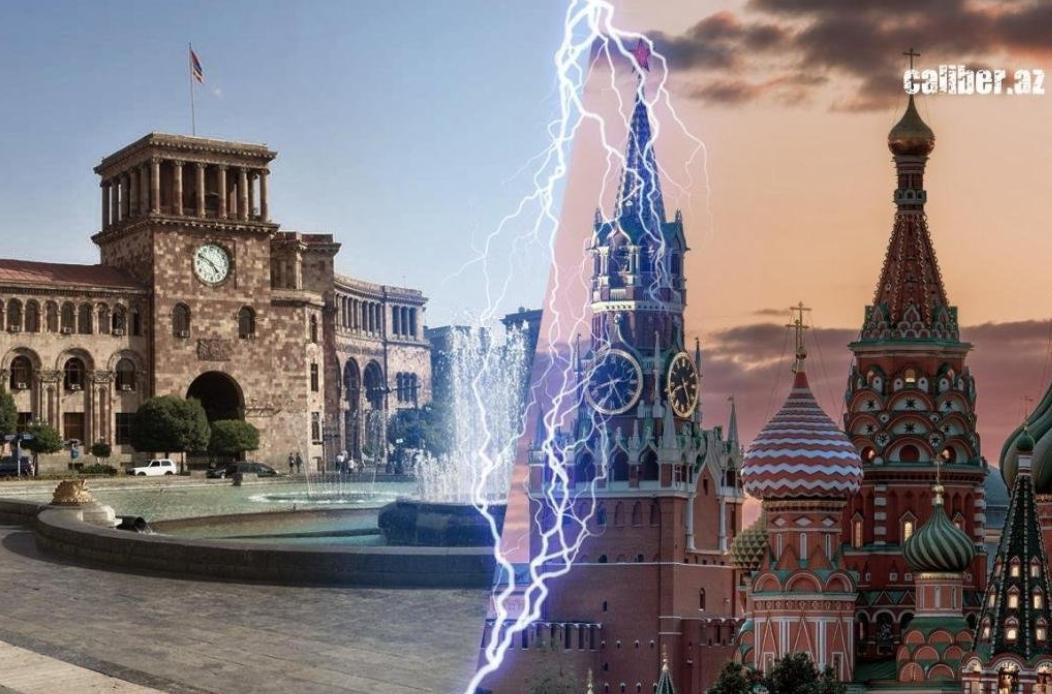
Yet the Kremlin clearly favors governments that are friendly to or less hostile toward Russian geopolitical interests. Countries seeking closer ties to the U.S., NATO, or Western institutions frequently become targets.
Armenia is another recent example of this strategy. For over a hundred years, the country of 3 million depended on Russia for security and economic support. That relationship began deteriorating after Moscow failed to meaningfully protect Armenia during its conflicts with Azerbaijan over Karabakh. Prime Minister Nikol Pashinyan responded by pursuing closer ties with the West while seeking to normalize relations with former foes Azerbaijan and Turkey. This culminated in the signing of a peace agreement at the White House, followed by visits by Vice President JD Vance and Secretary of State Marco Rubio, the signing of several key agreements with Armenia, and the emergence of the Trump Route for International Peace and Prosperity, a strategic transportation corridor.
For Moscow, this shift is intolerable.
Recent investigations and leaked documents suggest that Russian-linked actors have conducted an extensive campaign to undermine Pashinyan. Their methods allegedly include coordinated disinformation operations, mobilization of the Armenian diaspora, covert influence networks, and support for pro-Russian actors and oligarchs in Armenia. Reports have also highlighted attempts to shape narratives through elite Western figures who, knowingly or otherwise, amplify messaging favorable to Moscow.
Reports also allege a campaign to oust Pashinyan by Luis Ocampo, a former controversial International Criminal Court prosecutor, and his son, Tomas. According to these leaks, Ocampo and his associates in the EU bureaucracy discussed removing Pashinyan while influencing European institutions to pressure Azerbaijan. In one leaked video, Tomas Ocampo allegedly concludes, “…what we have to achieve is to remove Pashinyan, the Prime Minister.” According to Oleh Posternak, head of the Kyiv-based Center for Political Intelligence, Ocampo’s activities are in Russia’s interests and are conducted in cooperation with the U.S. Armenian lobby.
Armenia matters because Russia’s interests are clearly geostrategic. A durable Armenia/Azerbaijan peace settlement would neutralize Moscow’s favored instrument of regional leverage: frozen conflict. If Armenia normalizes relations with Azerbaijan and Turkey while deepening cooperation with the West, the Kremlin’s position will weaken.
This prospect has direct implications for the United States.
Stable transport and energy corridors across the South Caucasus can help reduce Europe’s dependence on Russian energy and limit Iran’s strategic reach.
Americans should closely watch Armenia because it illustrates how Russian interference campaigns are evolving globally. The Kremlin has refined its playbook through decades of experience across Europe, Africa, and the former Soviet Union.
The United States cannot afford complacency. Russia exploits open societies. Armenia’s election is not simply a faraway political contest. It is a warning about the future of warfare in the 21st century.
Editor’s note: Ivan Sascha Sheehan is the interim dean of the College of Public Affairs at the University of Baltimore, where he is a professor of public and international affairs.







 editor@caliber.az
 +994 55 444-88-98
 Азербайджан, Баку, ул. Низами, 203, Af Business House, 5-й этаж