










Iranian singer Parastoo Ahmadi’s 74-lash sentence upheld on appeal PHOTO
An appeals court in Iran has upheld a sentence of 74 lashes against prominent singer Parastoo Ahmadi for performing without the mandatory hijab, her lawyers said.
Ahmadi, 29, sang in a sleeveless dress during a concert that was livestreamed on her YouTube channel in December 2024. Iranian law prohibits women from performing publicly and requires them to wear headscarves and modest clothing.
The judiciary launched proceedings against Ahmadi after the video went viral and received millions of views, saying the performance was “in violation of the country's legal and cultural regulations.”
In June, a criminal court in Qom reportedly found Ahmadi and eight members of her band and production team guilty of charges including “offending public decency” through the publication of “obscene and indecent material.”
In addition to the 74 lashes, the defendants were banned from engaging in audiovisual activities and from leaving the country for two years.
The defendants appealed the ruling, but their appeal was “rejected” by a higher court on Friday without a hearing, according to their lawyers.
“In our view, holding the concert was not a crime at all,” one of the lawyers told the BBC. “The trial court imposed one of the harshest punishments for these charges, although fines and less severe penalties were also available.”
“The Court of Appeal, despite having the option of holding a hearing, did not hold a hearing and upheld the judgment. It appears that the main reason for issuing this judgment was to deter the recurrence of similar events.”

The original sentence prompted widespread reaction among Iranians on social media.
“May these dark days come to an end, and may women regain the freedom to choose how they live and dress, and may artistic expression once again flourish in our precious homeland,” exiled Iranian singer Googoosh wrote on Instagram at the time.
Musician Hossein Alizadeh, meanwhile, said he was “willing to take 70 lashes in Parastoo Ahmadi's place”.
Human rights activists also condemned the sentence. Amnesty International warned that “flogging constitutes cruel, inhuman and degrading punishment, and violates the absolute prohibition on torture and other ill treatment”.
The case has drawn comparisons with that of Kurdish-Iranian activist Roya Heshmati, who was flogged 74 times in January 2024 after being convicted of “violating public morals” over a social media photograph showing her without a hijab.
Heshmati said a female officer forcibly placed a scarf over her head at a prosecutor’s office in Tehran before a male officer whipped her shoulders, back, hips and legs, according to Kurdish rights group Hengaw.
Under Iranian law, which is based on the country’s interpretation of Sharia, women and girls above the age of puberty must cover their hair with a hijab and wear long, loose-fitting clothing intended to conceal their figures.
Enforcement of the dress code became a major source of public dissent following the death in custody of Mahsa Amini, a 22-year-old Kurdish woman who was detained by morality police in Tehran in September 2022 for allegedly wearing her hijab “improperly”.
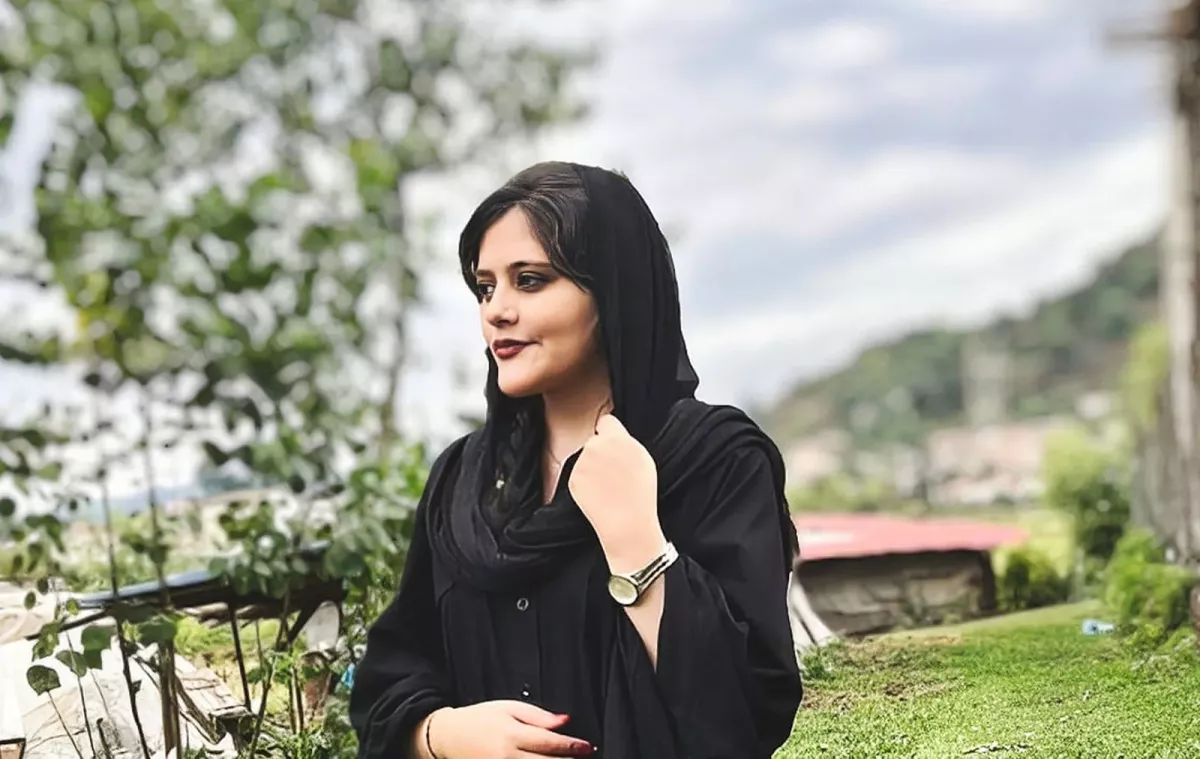
Mahsa Amini
Nationwide protests swept across Iran after Amini’s death. Women burned their headscarves or waved them in the air during demonstrations against the clerical establishment, prompting a security crackdown in which hundreds of people were killed.
Since then, many women and girls have stopped covering their hair in public altogether, openly defying the dress code. Authorities have responded with periodic waves of arrests and warnings, as well as business closures and other measures targeting violations of the rules.
Earlier this month, conservative politician and Expediency Council member Gholamali Haddad-Adel, who is also the father-in-law of Supreme Leader Mojtaba Khamenei, addressed the issue of enforcing the hijab rules. He said that Iran’s war with the United States and Israel meant authorities “cannot engage on this front as much as we should for the time being”.
The war began at the end of February, only weeks after Iranian security forces had violently suppressed another wave of mass protests triggered by the country’s economic crisis, killing thousands of people.
By Tamilla Hasanova







 editor@caliber.az
 +994 55 444-88-98
 Азербайджан, Баку, ул. Низами, 203, Af Business House, 5-й этаж