










Baku’s rogue construction problem Half a million homes await registration
Illegal residential construction on land plots not designated for such purposes is a long-standing problem in Baku. The roots of this phenomenon go back to the early 20th century, during the peak of Azerbaijan’s first oil and industrial boom. Unfortunately, no optimal solution to this pressing social issue has been found during the years of independence. The high market demand for low-rise housing in the capital and its suburbs, combined with gross violations in the functioning of certain municipalities, created conditions for the persistence of this phenomenon. The current situation regarding private residential construction without proper documentation was discussed on January 29 during a presentation on the activities of the public legal entity “State Cadastre and Real Estate Registry.”
Among the most pressing problems caused by hyper-urbanisation and overpopulation in major cities worldwide, UN experts point to the shortage of affordable housing with access to basic utilities. A negative consequence of overpopulated megacities, particularly in developing countries, has been the proliferation of illegal residential construction. These phenomena are most common in Africa, Asia, and Latin America: shantytowns, slums, and makeshift settlements built from cardboard, tin, and other unsuitable or unsafe materials are typical in the suburbs of many megacities.
Unregistered stone and brick developments on illegally appropriated land also exist in many post-Soviet countries. However, such settlements tend to be comparatively more organised, often with electricity connections and access to certain public services.
The presence of settlements with legally unregistered residential properties is also quite common in the Greater Baku region. In recent years, due to the rapid rise in real estate prices in the capital, there has been a shortage of affordable vacant plots—not only in central areas but also on the outskirts. This situation continues to force many market participants to purchase relatively inexpensive illegal housing, even while being fully aware of the associated risks.
“In Azerbaijan, there are approximately 400,000–500,000 buildings without documentation, or buildings for which legal registration is fundamentally impossible,” said Nigar Alimova, Chairperson of the public legal entity “State Cadastre and Real Estate Registry,” on January 29 during a presentation of the agency’s work for 2025. “Since we cannot provide complete statistics on such buildings, it is absolutely necessary to carry out a large-scale inventory.”
The Chairperson of the State Cadastre suggested that, today, the number of private residential houses built without proper legal documentation in Azerbaijan is at least ten times higher than that of similar non-residential structures. She emphasised that systematic registration and inventory would enable the determination of the legal status of such properties and ensure a more accurate and transparent property registration system.
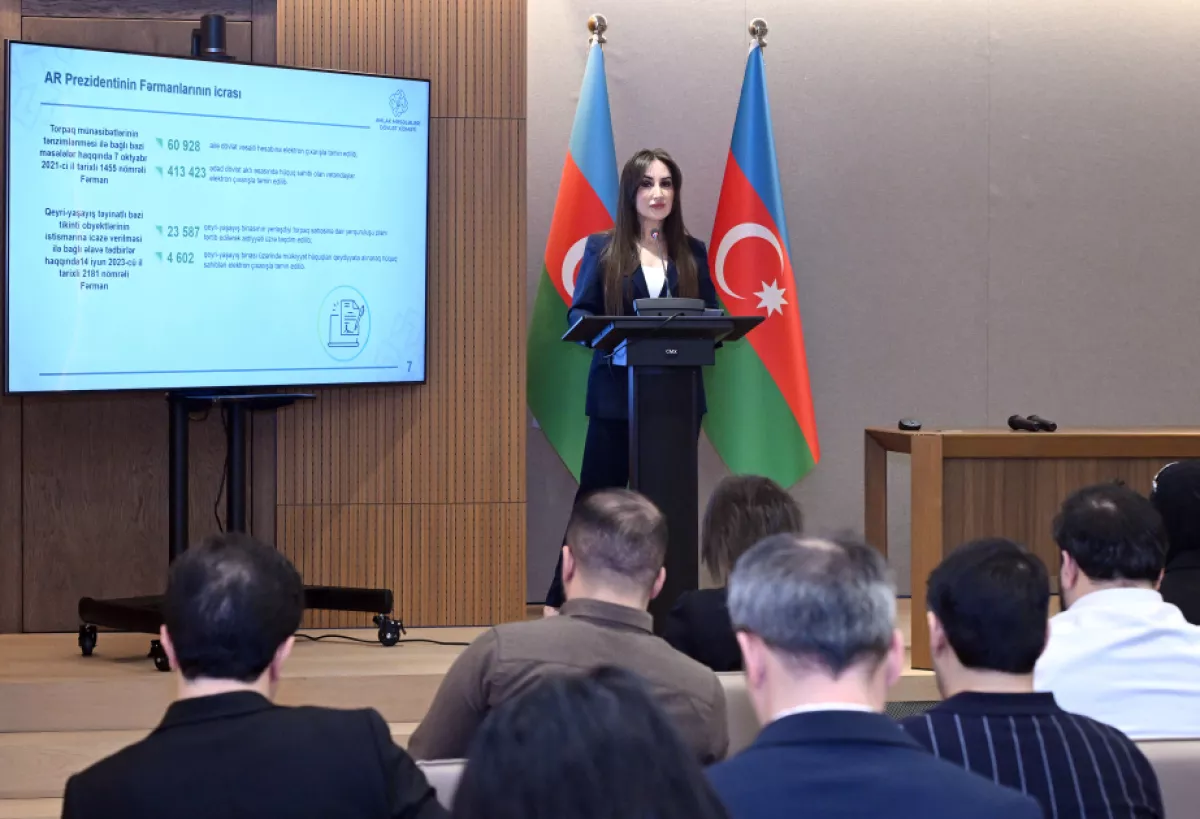
The situation in this area has been further complicated by the expiration of the Azerbaijani president’s decree on granting permits for the use of certain non-residential properties, with the acceptance of new applications now halted. Under the 2023 decree, entrepreneurs and citizens were temporarily allowed to formalise permits and property rights.
Under the presidential decree “On Additional Measures for Issuing Permits for the Commissioning of Certain Non-Residential Objects,” land management plans were prepared and submitted for 23,587 non-residential buildings. Ownership rights have been registered for 4,602 of these buildings, and their owners have received official electronic certificates from the State Cadastre confirming their property rights.
Last year, procedures for registering private residential houses in Baku and the Absheron settlements were simplified for plots where Finnish-style houses had previously been located. Naturally, this applied only if citizens possessed a decree from the executive authority and an approved plan—prior to August 2004—for the demolition of the Finnish-style house and construction of a private residential building in its place.
At the same time, following amendments made in 2024 by the Milli Majlis (parliament) to the “Land Code,” a flexible mechanism was introduced for changing the designated use of agricultural land. In particular, this now allows the construction of residential buildings intended for temporary accommodation of workers.
The future of undocumented, illegal residential buildings is expected to be revisited in the coming years, once the State Cadastre and Real Estate Registry completes its large-scale inventory work. This process will provide a comprehensive picture of the issue and support informed decision-making. However, it is already clear that some unregistered residential buildings will not be eligible for legalisation under any circumstances. This primarily applies to buildings located in protected zones—near power lines, major gas and oil pipelines, and other strategically important facilities. The chances of legalising houses built on land illegally occupied from the state or municipal authorities are also very low.
The issue of illegal residential buildings is particularly acute in protected zones.
“Illegal constructions within railway protection zones pose a serious threat to the safety of passengers and the residents living in these houses,” said Arif Aghayev, Deputy Chairman of CJSC “Azerbaijan Railways” (ADY), during a roundtable held on January 29 on the implementation of the State Programme for the Improvement of Transport Infrastructure in Baku and Adjacent Territories for 2025–2030. “The width of the protection zone along the railway ranges from 24 to 50 metres, and in some areas exceeds 100 metres. In emergencies, dense construction hinders access for emergency services, even though these zones were originally intended to ensure safety.”
According to the ADY representative, illegal buildings also complicate technical maintenance and repair work, resulting in longer repair times and train delays. Moreover, due to the dense construction, trains are forced to reduce speed, negatively affecting service quality.
The most challenging situation regarding illegal residential construction in protection zones is along the Absheron Circular Railway, particularly on the Narimanov–Boyukshor section and in the settlements of Keshla and Bilajari. In these areas, sudden appearances of people and animals on the tracks, as well as vehicles entering the railway, are not uncommon, sometimes leading to tragic incidents.
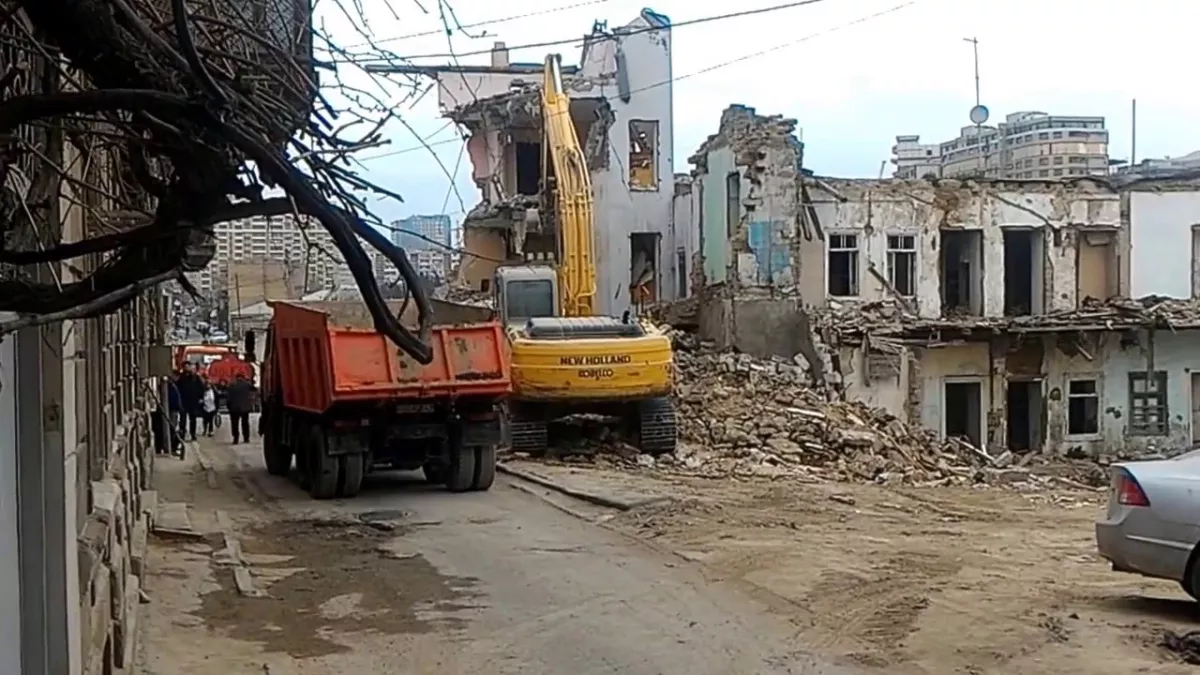
Overall, the issue of illegal residential construction remains highly relevant, especially given that, according to Baku’s Master Plan, many low-rise residential areas across the capital are scheduled for demolition by 2040, including illegal settlements.
However, there are numerous “hidden challenges” in this process, which were discussed during the scientific-practical conference “New Expectations in the Development of Baku’s Existing Housing Stock,” organised in May last year by the Centre for Social Research (CSR).
“The lack of legal regulation regarding compensation and replacement in demolition processes leads to the growth of illegal constructions and artificial discontent,” noted Ramiz Isayev, Chairperson of the Azerbaijan Association of Construction Material Producers, during the conference. According to him, Azerbaijan still lacks a sufficiently defined legal and regulatory framework for compensation or replacement for properties subject to demolition that have not been officially registered. As a result, the legal distinctions between individuals who carried out illegal construction and citizens with legitimate property rights are often blurred when it comes to compensation, generating understandable grievances.
At the same time, in areas slated for demolition, there are frequent cases of illegal additions or extensions to properties, often intended to secure higher compensation. These practices slow the demolition process and create additional obstacles for developers.
Some experts, in turn, believe that due to the coronavirus pandemic and subsequent negative developments in the real estate market, the inventory of illegal constructions was not completed in a timely manner. Therefore, there is now a pressing need to accelerate monitoring in this area, to identify illegal properties in each settlement within a unified cadastral system, and to finalise standards for determining the legal status of such buildings. This effort will be indirectly supported by the planned launch, by the end of 2026, of Azerbaijan’s “Electronic Registry and Real Estate Cadastre” information system.
Some experts believe that, due to the coronavirus pandemic and subsequent downturns in the real estate market, the survey of illegal constructions was not completed on time. As a result, there is now an urgent need to accelerate monitoring, identify illegal properties in every settlement through a unified cadastral system, and finalise standards for determining their legal status. This effort will be further supported by the planned launch, by the end of 2026, of Azerbaijan’s “Electronic Registry and Real Estate Cadastre” information system.







 editor@caliber.az
 +994 55 444-88-98
 Азербайджан, Баку, ул. Низами, 203, Af Business House, 5-й этаж