










Brussels under the shadow of Monte Melkonyan Is the EU supporting the glorification of terrorists?
There is no shortage of elation on the Armenian political stage. Yet this joy has nothing to do with Armenia suddenly becoming a genuinely independent state or ceasing to be an object of global politics. It is caused solely by reports that a memorandum is expected to be signed granting the Monte Melkonyan Military-Sports Lyceum membership status in the European Union Military Secondary Schools Forum. This, they claim, will allow students “to learn from advanced European experience, exchange educational programmes, organise joint courses, and conduct student exchanges.”
Well, if our geographical neighbours are happy about this, so be it. This is, so to speak, their internal affair. If they enjoy honouring terrorists, what can one do?
What is different, however, is the question that arises in light of this publicly circulated information. Did the relevant structures in Brussels really fail to look into whose name this Armenian lyceum carries—the very institution they intend to include in this European association? It would be one thing if they simply neglected to do so. But perhaps the opposite is true: they do know, and that is precisely why they are taking this decision?
Hypothetically, let us assume that the directorate (or whatever they are called) of the Forum is unaware of Monte Melkonyan’s terrorist activities—of the individual whose name Armenia’s military-sports lyceum bears—activities he conducted in Karabakh in the early 1990s against the peaceful Azerbaijani population, for which he was later awarded the title of “National Hero of Armenia.” But surely they must at least be familiar with the notorious terrorist organisation known as the Armenian Secret Army for the Liberation of Armenia (ASALA), which, according to former head of Romanian intelligence Ion Mihai Pacepa, was inspired by the KGB in 1975 and went on to carry out “numerous terrorist attacks against the United States in Western Europe,” including inhuman, deadly assaults targeting Turkish diplomats.
And Monte Melkonyan was not just affiliated with ASALA—he was one of its significant members, arrested in France in 1985 for carrying out a terrorist act. It was only after his release that he ended up in Karabakh.
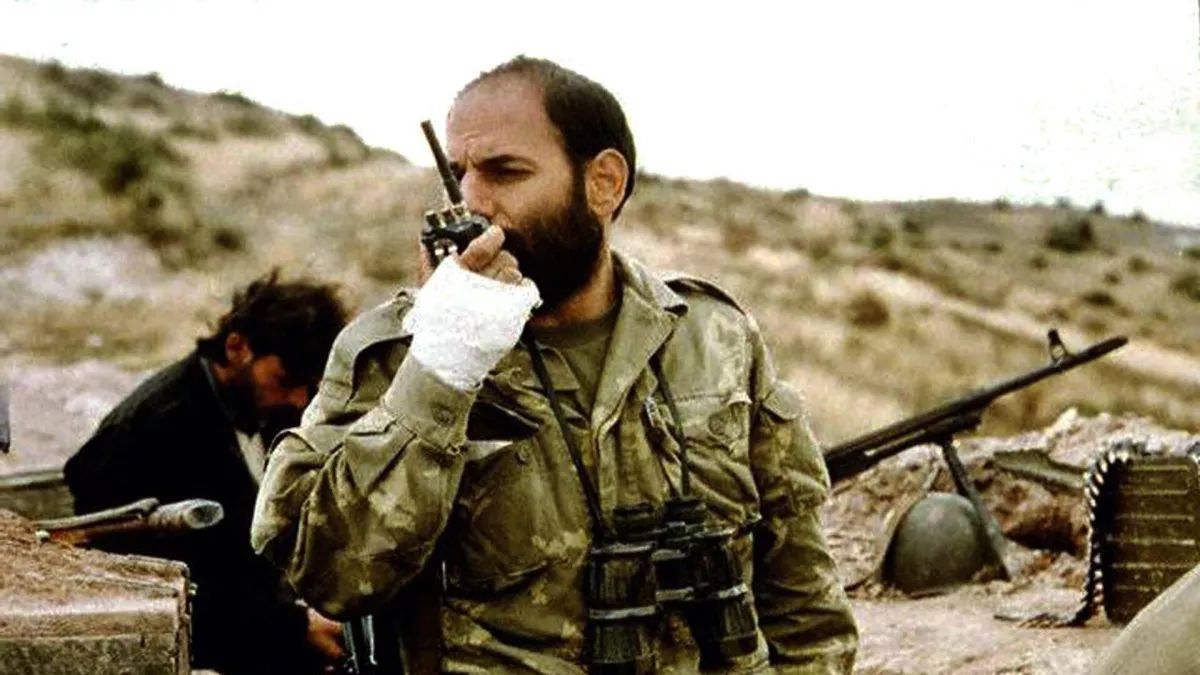
Let us go further and consider to what extent the leadership of the European Union Military Secondary Schools Forum—and indeed the European Union as a whole—would agree to have the name of a terrorist who fought against unarmed Turks and Azerbaijanis associated with a reputable institution. Then again, perhaps Brussels will once more demonstrate its adherence not even to double or triple standards, but to the complete absence of any standards at all.
We raise these questions for a reason: they stem from the content of several European documents. Take, for instance, PACE Resolution No. 1344 from 2003, which, having affirmed the Assembly’s conviction that states must not create conditions under which extremism can be perceived as “normal,” underscored the importance of neutralising its influence by employing “appropriate political and administrative measures in order to preserve the rule of law based on respect for democratic principles and human rights.”
It is worth noting that this document refers specifically to extremism, meaning that the standards for dealing with terrorism should be even stricter and more demanding, should they not?
As we can see, Brussels understands this perfectly well. To confirm that, one need only look back to 2016, when the European Commission presented its Action Plan to strengthen the fight against the financing of terrorism. And although the document addressed the issue of sponsoring terrorists, is ideological promotion of terrorism not also a threat to Europeans?
And what about the loud declaration made a year ago by the Council of the European Union on reinforcing joint efforts to combat terrorism, including the use of common tools to ensure the safety of citizens, from information-sharing and border security to disrupting terrorist financing and preventing radicalisation? Moreover, the communiqué clearly stated that “terrorism and violent extremism continue to pose a significant threat to the EU and its member states.”
It is quite telling that around the same time (December 2024), Hazel Çağan Elbir, an expert at Ankara’s Center for Eurasian Studies (AVİM), underscored the need for Armenia to abandon its policy—rooted in distorted history and the glorification of terrorism—towards neighbouring countries, and to replace it with a course aimed at peace and regional cooperation. “If a state values a terrorist [Melkonyan] to the extent that it names military lyceums after him,” Elbir concluded, “this constitutes a direct threat to the countries of the region.”
So, do the relevant European organisations require any further evidence to understand that the presence of the terrorist Monte Melkonyan’s name in connection with the European Union Military Secondary Schools Forum is entirely unacceptable?
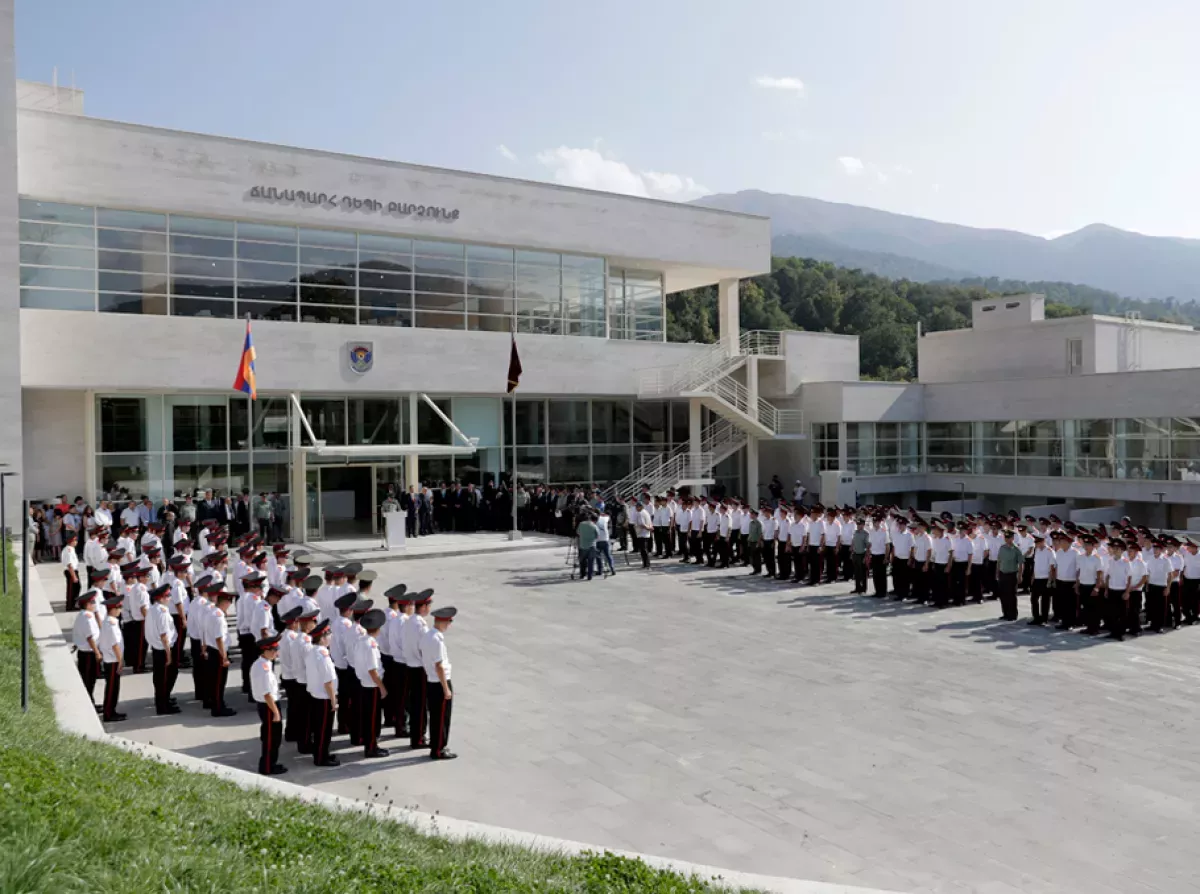
While Brussels deliberates, one cannot help recalling a quotation from Melkonyan that many Armenian portals cite with great enthusiasm: “We have no right to lose; we must understand that this war must end only with our victory—there can be no other option.” And then what? Did those “options” fail to materialise? Surely Brussels is well aware—beyond any doubt—of how the 2020 Patriotic War of the Azerbaijani people concluded.
This means that the EU, even if not publicly, is perfectly conscious of the fact that Azerbaijan did not violate a single principle of international law. Moreover, the country, consistently adhering to these norms, combats terrorism in all its forms.
We therefore hope to see the same approach from Brussels—particularly concerning the planned admission to the European Union Military Secondary Schools Forum of an Armenian military-sports lyceum that bears the name of a terrorist by the name of Melkonyan.
In conclusion, it should be noted that representatives of Azerbaijani civil society organisations have already sent an appeal to the High Representative of the European Union for Foreign Affairs and Security Policy and Vice-President of the European Commission, Kaja Kallas; the EU Special Representative for the South Caucasus, Magdalena Grono; and the Head of the EU Delegation to Azerbaijan, Marijana Kujundžić. The appeal emphasised that the news regarding the admission of the Armenian Military-Sports Lyceum named after the Armenian terrorist Monte Melkonyan to the EU Association of Military Secondary Schools has caused widespread bewilderment and discontent among the Azerbaijani public.
The appeal also expressed regret over the continued glorification of individuals involved in Armenia’s armed occupation of Azerbaijani territories and accused of grave war crimes, including Monte Melkonyan, as well as the EU’s inconsistent approach toward Azerbaijan—particularly on matters of territorial integrity and state sovereignty.
“Particularly, the families of Azerbaijan’s missing persons ask how an institution named after Monte Melkonyan can be promoted on an EU-supported platform, when his legacy is associated with atrocities. We urge the European Union to reconsider this disrespectful action and annul the agreement with an institution named after a terrorist,” the appeal stated.







 editor@caliber.az
 +994 55 444-88-98
 Азербайджан, Баку, ул. Низами, 203, Af Business House, 5-й этаж