










Dawn: PM Shehbaz pledges Kazakhstan full access to Pakistan’s transit network
On February 4, Prime Minister Shehbaz Sharif assured Kazakhstan President Kassym-Jomart Tokayev that Pakistan will offer his country “full access to Pakistan’s transit infrastructure and seaport facilities,” underscoring Islamabad’s commitment to enhancing regional trade and connectivity.
The statement came during a joint press conference following the first high-level visit by a Kazakh president to Pakistan in 23 years, Caliber.Az reports via Dawn.
President Tokayev is on a two-day official visit aimed at strengthening bilateral relations and exploring new avenues of economic cooperation.
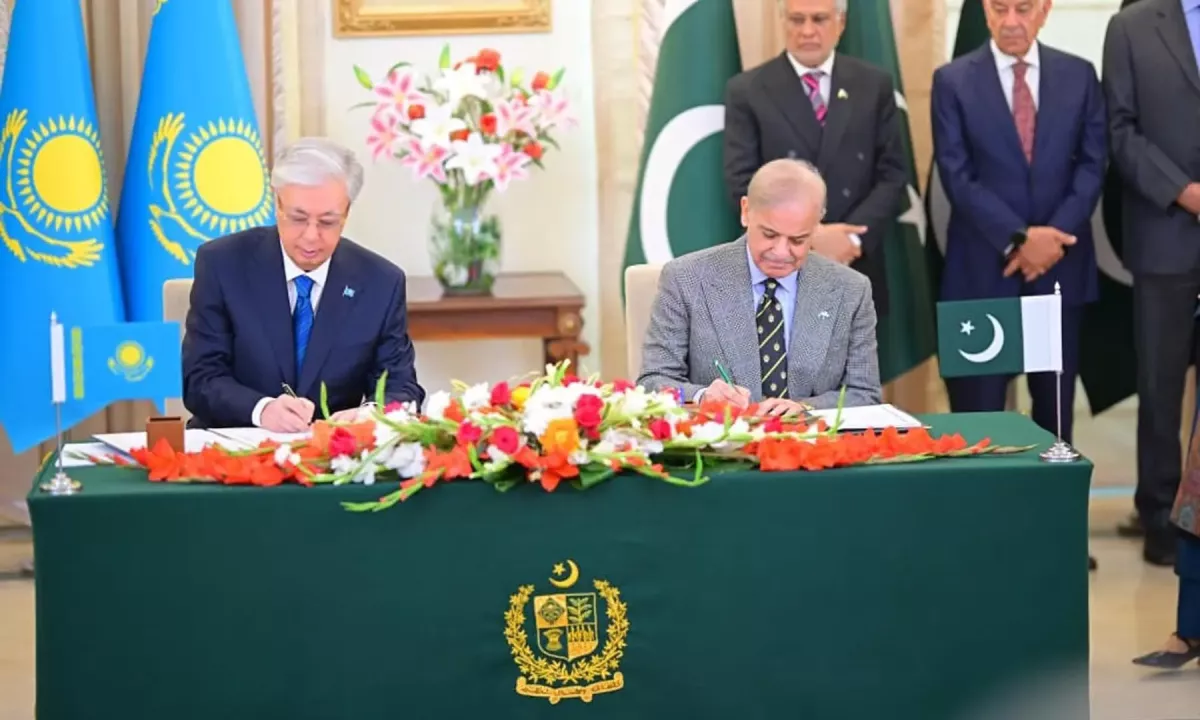
PM Shehbaz highlighted that Pakistan and Kazakhstan had agreed on the development of a transport corridor linking Belarus, Russia, Kazakhstan, Uzbekistan, Afghanistan, and Pakistan to boost regional trade. “This partnership will not only enhance connectivity but also optimise our respective transit potential,” he said.
The two leaders oversaw the signing of 27 agreements and Memorandums of Understanding (MoUs) across sectors, including petroleum, mining, agriculture, maritime affairs, and energy. The prime minister expressed hope that the MoUs would swiftly move into implementation, adding that their execution could take Pakistan-Kazakhstan trade from $250 million last year to $1 billion in the near future.
PM Shehbaz called on both business communities to invest in joint ventures, noting the “negligible” level of current investment despite immense potential. He described President Tokayev as a “serious-minded politician and accomplished diplomat” and lauded his contributions to strengthening the close ties between the two countries, including the award of Nishan-i-Pakistan to the Kazakh leader.
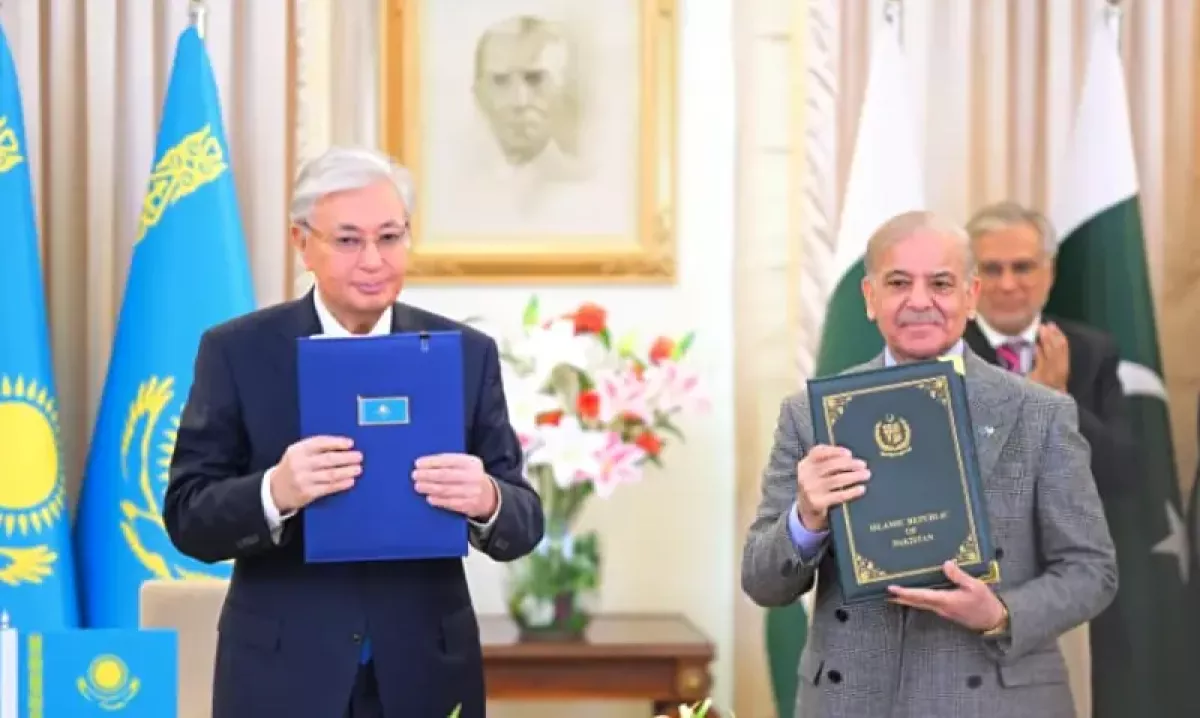
President Tokayev, in turn, called Pakistan a “reliable and important partner in South Asia and beyond,” citing centuries-old ties rooted in the Silk Road and shared cultural and spiritual values. He underscored the significance of a joint declaration signed during his visit, establishing a strategic partnership between the two nations and opening “immense opportunities” across the full spectrum of bilateral and multilateral engagement.
The Kazakh president welcomed Pakistan’s growing regional and global standing, highlighting its strong industrial capacity, transit capabilities, and dynamic defence industry. He noted that bilateral trade had doubled in the previous year and emphasised both leaders’ commitment to reaching the ambitious $1 billion trade target.
Energy, logistics, and infrastructure were central topics of discussion. Both sides explored collaboration on the Turkmenistan-Afghanistan-Pakistan-India (TAPI) gas pipeline, Trans-Caspian Transport Corridor, and the development of rail and road links connecting Central and South Asia via Gwadar and Karachi ports. The leaders also agreed to explore resuming direct air connections and further cooperation in AI, digital technologies, and education, with over 1,000 Pakistani students currently studying in Kazakhstan.
Later, during the Pakistan-Kazakhstan Business Forum, PM Shehbaz described the event as a “wonderful opportunity” to convert a longstanding friendship into concrete business relations. He stressed that the National Logistics Corporation was fully geared to facilitate trade between Central Asia and Pakistan’s ports, calling the project a “game-changer” for the regional economy.
President Tokayev expressed confidence that the visit and the agreements signed would unlock untapped potential in trade, investment, and industrial cooperation, particularly inviting Pakistani companies to establish production facilities in Kazakhstan. He also highlighted plans for over 250 companies from both countries to formalise commercial agreements at the forum.
The visit, which includes meetings with President Asif Ali Zardari and other high-ranking officials, reflects both nations’ desire to bolster regional connectivity, economic collaboration, and people-to-people ties, as well as to position Pakistan as a critical land bridge linking Central and South Asia.
By Aghakazim Guliyev







 editor@caliber.az
 +994 55 444-88-98
 Азербайджан, Баку, ул. Низами, 203, Af Business House, 5-й этаж