










Ukraine as a geopolitical bargaining chip Why the war keeps dragging on
For almost four years now, a Russian-Ukrainian war has been raging in the heart of Europe, and despite various measures being taken, there is still no end in sight. At times, it creates a persistent feeling that it may never end—not because of the will of the conflicting parties, but due solely to other factors and in the name of someone else’s, let’s not shy away from the term, selfish interests.
To understand this issue, consider the following information widely reported by the media. According to an analysis by Germany’s Federal Intelligence Service (BND), Russia in 2025 spent up to half of its state budget on military expenditures, while actual defence spending exceeded official figures by 66%, reaching around €250 billion—approximately 10% of GDP. The BND report specifically emphasises: “These figures clearly demonstrate the growing threat to Europe posed by Russia.” This speaks volumes, as does NATO Secretary-General Mark Rutte’s statement that Russia could be ready to use military force against alliance countries within five years.
Against the backdrop of these concerns, 16 former high-ranking German and NATO officials, parliamentarians, and security experts simulated a Russian attack on Lithuania in October 2026. According to the scenario, Moscow captured the Lithuanian city of Marijampolė, a key transport hub, while the United States refused to invoke Article 5 of the North Atlantic Treaty. Germany hesitated, Poland mobilised but did not deploy troops, and the German brigade in Lithuania did not intervene because the roads were mined.
As a result, Russia was able, in just a few days, to “undermine trust” in the Alliance and establish control over the Baltic states, deploying around 15,000 troops—that is, achieving victory. As one participant in this “reconstruction” noted, the decisive factor was not strength, but Moscow’s confidence in the indecisiveness of its allies. And this naturally raises the question: “Do Lithuania, Poland, and Germany really want the war in Ukraine to end quickly?” The answer, it seems, is obvious.
It is no coincidence that the EU Council approved the legal framework for a €90 billion loan to Ukraine, of which €30 billion will be allocated as macroeconomic support, and €60 billion will go toward investments in defence-industrial capabilities and military equipment procurement. In other words, the EU is ready to pay with money and weapons, simply to delay—or avoid—its own military confrontation with Russia.
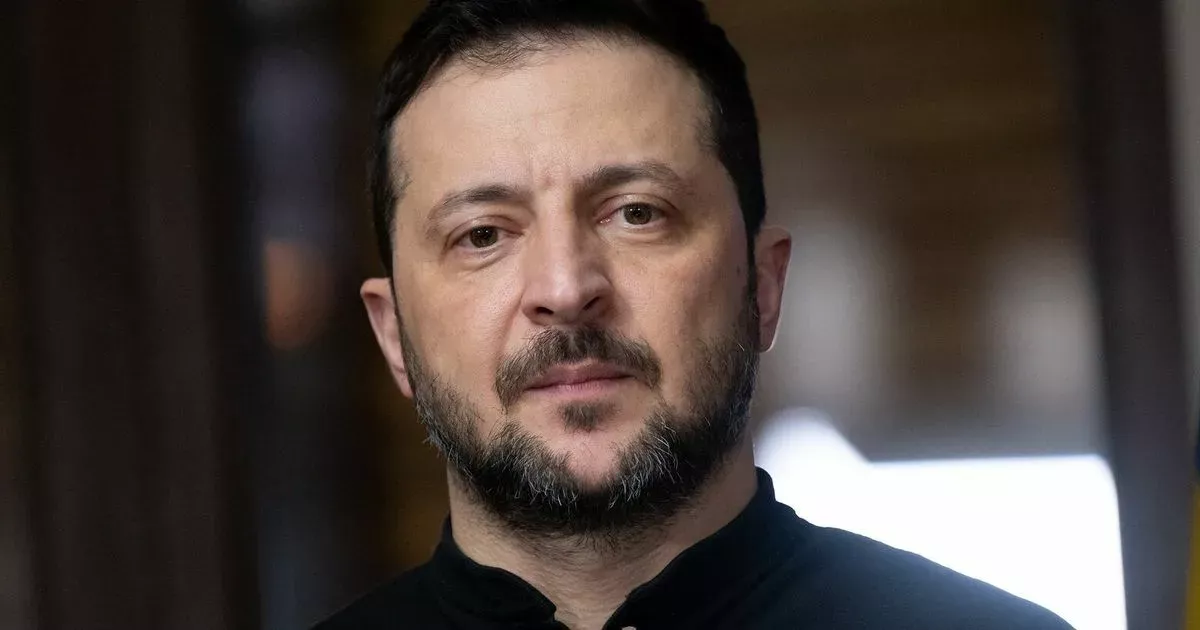
In this context, we believe it is appropriate to cite the Ukrainian losses recently mentioned by Volodymyr Zelenskyy in an interview with France 2: “Since the beginning of the full-scale war, 55,000 Ukrainian soldiers—both mobilised and professional—have officially died on the battlefield, plus a large number of people who went missing.”
Earlier, in February 2025, the Ukrainian president had stated that the country’s losses amounted to more than 46,000 killed soldiers and roughly 380,000 wounded, with tens of thousands more missing or held in captivity. According to these figures, Ukraine would have lost 9,000 soldiers in the past year alone—a claim that is extremely difficult to take at face value.
To avoid being purely speculative, let us conduct a brief comparative analysis. Immediately following the Patriotic War in autumn 2020, Azerbaijan’s Ministry of Defence officially reported that 2,783 Azerbaijani servicemen had died. Later, the ministry published the names of 2,906 fallen personnel on its website. What does this suggest? In an entire year of bloody war—spanning a much wider front and involving far greater use of drones and missiles—just over three times as many Ukrainian servicemen allegedly died as Azerbaijani soldiers and officers did in the 44 days of the Second Karabakh War. Surely any military expert would ridicule such a claim.
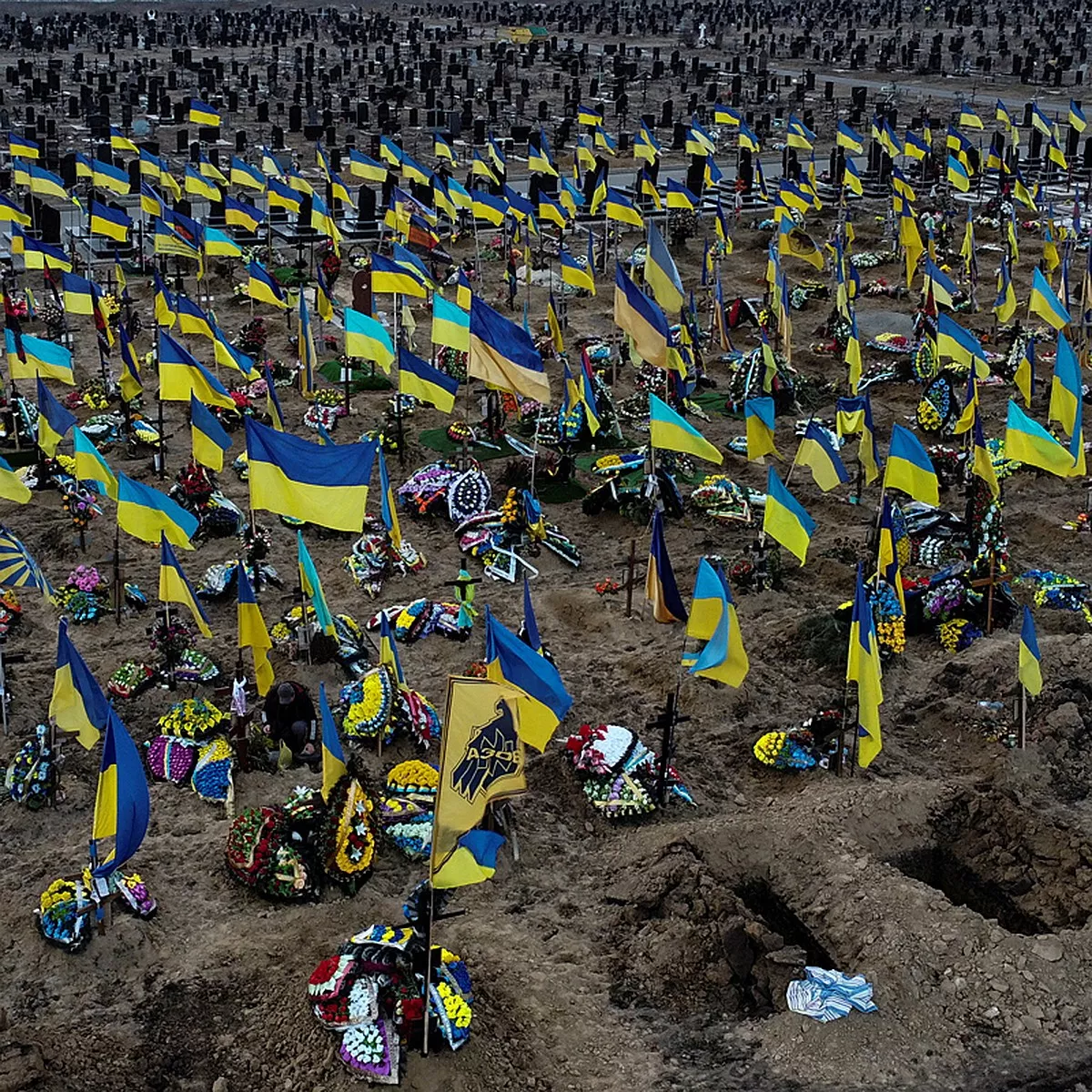
On the other hand, the Center for Strategic and International Studies (CSIS) in Washington published a study on January 27 stating that nearly 1.2 million Russian and around 600,000 Ukrainian military personnel have been killed, wounded, or gone missing. This figure sounds more plausible, but with one important caveat: it is highly unlikely that, out of 600,000 total casualties, only 55,000 Ukrainians were killed. A simple visit to cemeteries in Ukraine shows they are overcrowded. It is therefore likely that many of the deceased Ukrainian soldiers are being recorded as “missing in action.” And as morally questionable as it may sound, there could be an economic motive behind this.
The fact is that the family of a deceased soldier is entitled to a one-time compensation of 15,000,000 hryvnias (approximately $345,000), of which 3,000,000 hryvnias ($69,000) is paid immediately after approval, and the remaining 12,000,000 hryvnias ($276,000) is distributed in monthly instalments or according to a set schedule over several years. It is easy to calculate that by excluding just one thousand soldiers from the death toll, about $345 million could be “saved,” and if the same were done with tens of thousands, the “savings” would be simply astronomical.
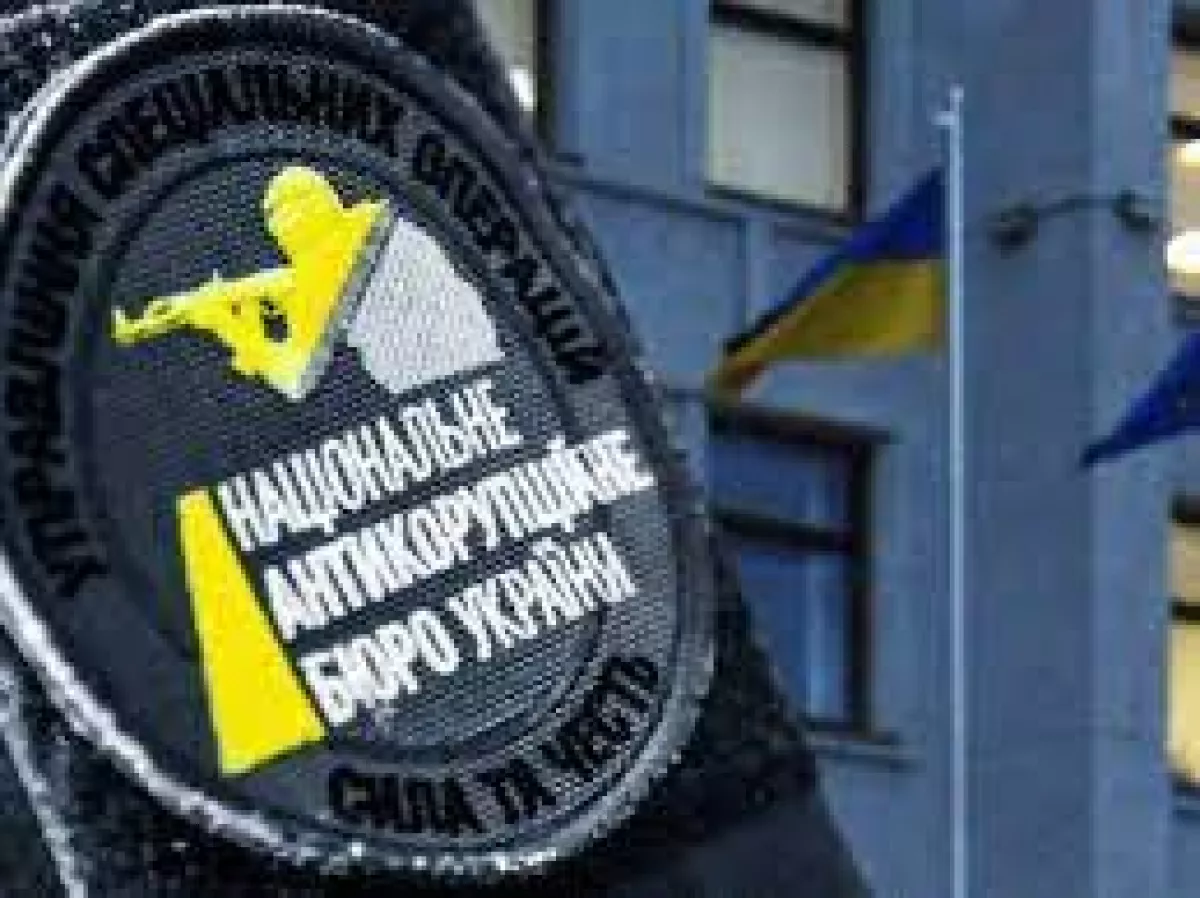
We are able to make such, to put it mildly, unflattering observations because of the overwhelming amount of shocking data on the scale of corruption in Ukraine’s defence, energy, and many other sectors, including the management of humanitarian aid. Given this context, it is entirely plausible that the figures on Ukrainian military casualties have also been manipulated.
This circumstance could also help explain why the country’s leadership may have little interest in a swift end to the war. After all, we are talking about the “earning” of truly colossal sums of money, including by regional officials. There are numerous examples of inflated budgets for the construction of fortifications. And what about the vast funds allocated for the reconstruction of cities and other settlements, including those near the theatre of military operations? Who could later verify what was actually built after successive destructions caused by Russian strikes?
Thus, a swift end to the war serves neither the interests of Ukraine’s corrupt officials nor those of the many Ukrainian men of conscription age who have fled to various European countries. Many risk losing their refugee status, having comfortably settled abroad while a bloodied Ukraine continues to confront a vast nuclear power.
The sad reality is this: too many actors have little incentive to bring this horrific war to a close. In this deeply cynical and brutal scenario, Ukrainians have been reduced to a “geopolitical bargaining chip,” used to contain Russia and weaken it both militarily and economically.







 editor@caliber.az
 +994 55 444-88-98
 Азербайджан, Баку, ул. Низами, 203, Af Business House, 5-й этаж