










US Congress approves new lifeline for “Top Gun” fighter jets
US lawmakers are moving to preserve several retired Grumman F-14 Tomcat fighter jets — made famous by the 1986 film Top Gun starring Tom Cruise — that were scrapped by the US Navy two decades ago.
Although the two-seat, variable-sweep-wing aircraft are not expected to return to military service, analysts say there remains a slim possibility that at least one could eventually fly again, as reported by the Flying magazine.
The proposed legislation, known as the Maverick Act — named after Cruise’s character in the movie — was approved by the US Senate on April 28 and will now move to the House of Representatives for consideration.
The bill would authorize the US Navy to transfer three mothballed F-14s to the US Space & Rocket Center, a museum operated by the state of Alabama.
Located in Huntsville, the center sits near major US aerospace and defense facilities, including US Space Command.
Only six F-14s remain in storage at the US military aircraft “Boneyard” in Arizona, out of the more than 630 aircraft that once served with the US Navy before the Tomcat’s retirement in 2006.
According to records maintained by the 309th Aerospace Maintenance and Regeneration Group, the surviving fleet includes two F-14As, two F-14Bs and two F-14Ds.
Preservation over combat
Abraham Hamadeh, who co-sponsored the bill in the House, said the goal is to preserve several remaining Tomcats for public education, aviation history and military recruitment purposes.
“The Maverick Act allows three of the world’s final Tomcats to be demilitarised and transferred for public display and education under strict national security safeguards,” Hamadeh said in an April 17 statement announcing the legislative effort. “It does not restore combat capability or reopen foreign transfer.”
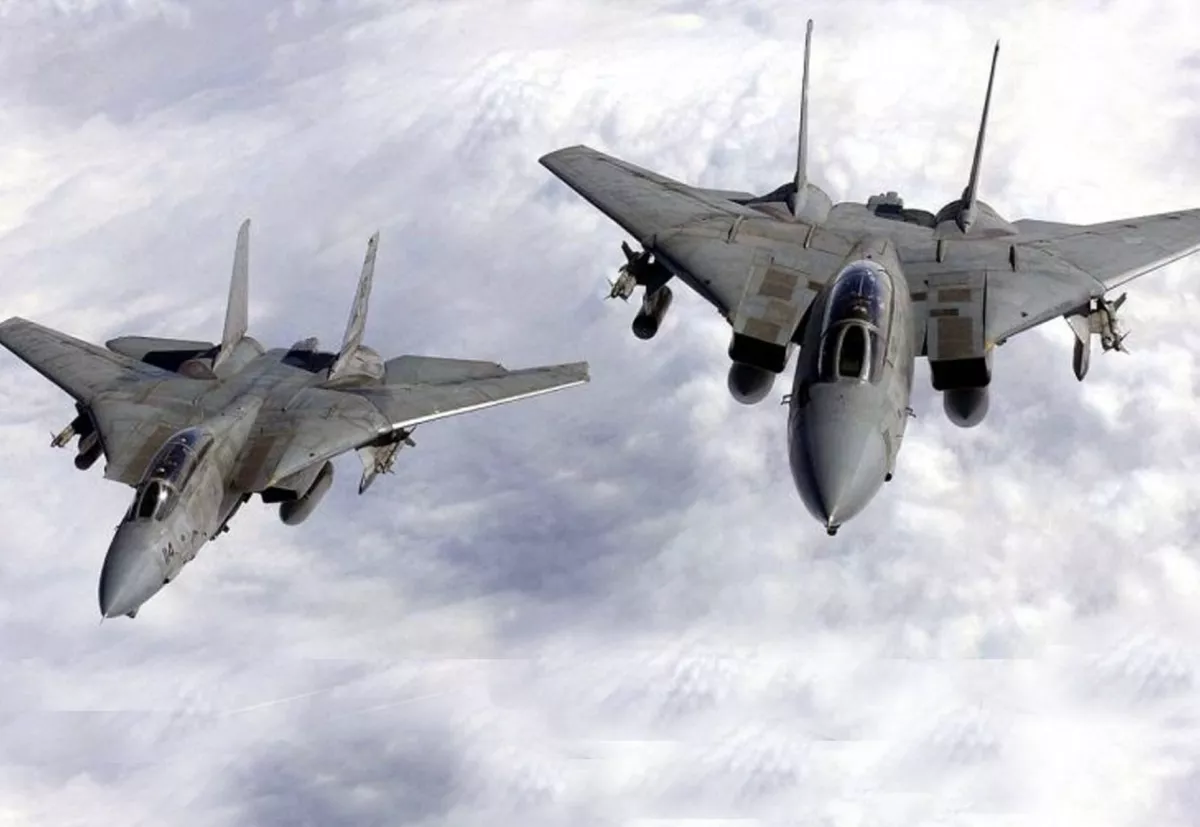
Under the legislation, none of the aircraft could retain “any capability for use as a platform for launching or releasing munitions or any other combat capability that it was designed to have”.
However, the Senate-approved version of the bill leaves open the possibility that one aircraft could eventually be restored to flying condition for civilian use.
While the legislation does not allocate funding for such an effort, it would direct the Navy to transfer maintenance manuals and operational documentation. It also states that the Navy “may provide excess spare parts to make one of the F-14D aircraft flyable or able to complete a static display”.
At the same time, the Navy would not be permitted to procure new parts or equipment to make the aircraft flightworthy again.
A difficult and expensive restoration
Restoring one of the retired Tomcats to operational condition would likely be an extremely costly project.
Production of new F-14Ds ended in the early 1990s after the Pentagon canceled the program. Northrop Grumman later shut down the production line entirely after completing contracts to upgrade older F-14As to the newer D-standard.
Those upgrades included replacing the aircraft’s original Pratt & Whitney TF30 engines with more powerful GE Aerospace F110 engines, alongside radar, avionics and ejection seat improvements.
Although retired US military aircraft are typically stored carefully for potential future use, the F-14 fleet was treated differently.
Tehran had acquired 80 F-14As before the 1979 Iranian Revolution that overthrew Shah Mohammad Reza Pahlavi.
Iran remains the only country still believed to operate the F-14, although reports suggest Tehran’s last remaining Tomcat may have been destroyed on the ground during Israeli air strikes earlier this year.
Much of the Tomcat inventory was deliberately destroyed by the US after retirement to prevent Iran from obtaining spare parts.
By Nazrin Sadigova







 editor@caliber.az
 +994 55 444-88-98
 Азербайджан, Баку, ул. Низами, 203, Af Business House, 5-й этаж