










Von der Leyen in Baku and the Kremlin facing a choice Caliber.Az weekly review
The Caliber.Az editorial team presents a new edition of the “Events” programme, hosted by Murad Abiyev, in an analytical review of the key developments of the week.
Azerbaijan – Armenia
The President of the European Commission, Ursula von der Leyen, paid a working visit to Baku. The main outcome of her talks with the President of Azerbaijan, Ilham Aliyev, was the announcement of the EU initiative “Peace through Connectivity” for the South Caucasus. Under this framework, the European Union will provide up to €200 million in grant funding, which is expected to leverage up to €2 billion in public and private investment for the development of transport, energy, and digital infrastructure in the region. It will also launch a new EU–Azerbaijan Connectivity Partnership. The funds will be directed, among other things, towards the expansion of the Baku port and the modernisation of railway networks to strengthen the Middle Corridor.
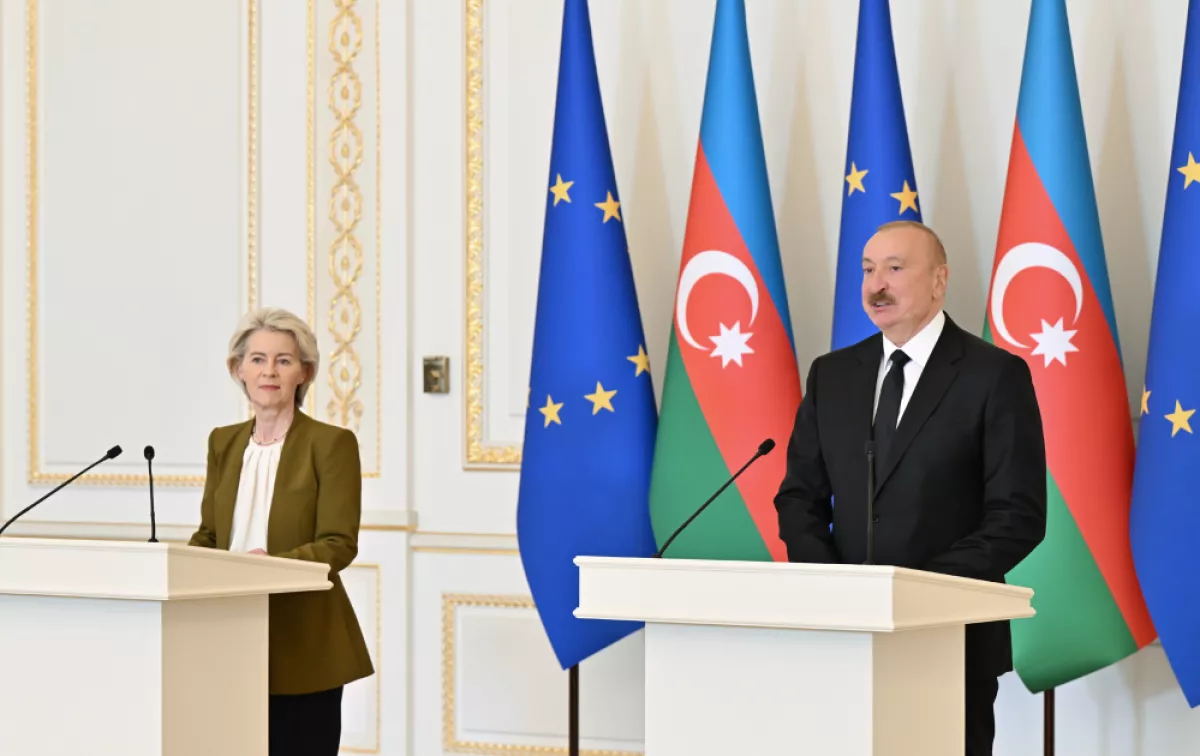
Notably, the head of the European Commission did not address at all the artificially raised issues promoted by the European Parliament, such as the so-called “Armenian prisoners of war” and other initiatives that call into question Azerbaijan’s sovereignty. In this way, the EU’s executive branch drew a clear dividing line between itself and the legislative body of the European Union in its relations with our country.
The “Peace through Connectivity” programme is the first instance in which the European Union has announced large-scale financing for regional infrastructure in which Azerbaijan is regarded as one of the key participants and beneficiaries. In this context, this development can only be welcomed. It remains to be seen how these initiatives will be implemented.
After her visit to Baku, von der Leyen travelled to Yerevan. The main outcomes of the visit included promises of additional financial support and improved access for Armenian products to the EU market through the removal of tariffs on nearly 80% of export goods. Ursula von der Leyen also indicated that the EU is ready to serve as an alternative economic partner for Armenia if the Russian market continues to restrict access for Armenian goods.
Formally, the announced measures do not yet conflict with Armenia’s obligations within the Eurasian Economic Union (EAEU). For now, they take the form of temporary autonomous EU measures rather than a bilateral free trade agreement. However, in a geopolitical context, these steps signal another significant move by Yerevan towards distancing itself from Moscow, to which Russia will most likely have to respond in some form.
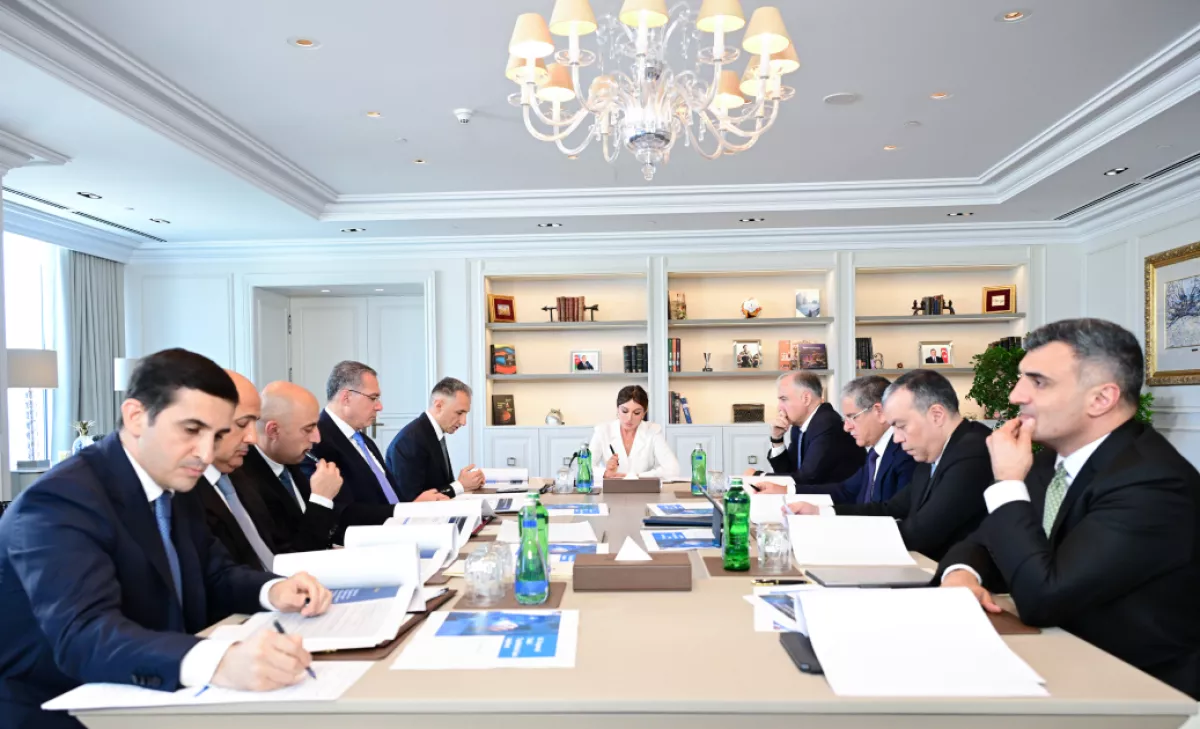
On June 29, under the chairmanship of First Vice President of Azerbaijan Mehriban Aliyeva, the first meeting of the Digital Development Council was held, where priorities for implementing the 2026–2028 Action Plan were defined. The focus of the meeting was the country’s large-scale digital transformation programme. Among the key initiatives are the creation of a unified myGov platform with a transition to proactive public services, where many services — such as pension and benefit allocation — will be provided automatically. The agenda also includes the formation of a National Data Center and strengthening of the cybersecurity system.
A strong emphasis is placed on the development of artificial intelligence: the plan includes the introduction of AI solutions in public administration, the launch of a virtual assistant for citizens, and the creation of national computing infrastructure. Clearly, the programme requires the mobilisation of diverse resources, ranging from financing to the training of qualified personnel. However, it can be stated that the first cornerstone of this project has already been laid.
Russia – Ukraine
The systematic tactic of the Ukrainian Armed Forces (AFU) targeting Russian oil refineries appears to be beginning to yield results. This is not merely about a fuel shortage — such a development would not cause widespread concern if there were confidence among the Russian population that it is temporary. Rather, the growing fuel crisis is creating uncertainty not only among ordinary citizens but also within segments of the elite, who are increasingly openly voicing the need to end the war.
Thus, the head of Sberbank, German Gref, stated at the annual general shareholders’ meeting that the earliest possible end to military actions is the main expectation of Russians. Even some radical patriotic figures within the elite are now expressing ideas of freezing the conflict along the line of contact. Public opinion polls also indicate growing war fatigue among the population and a desire to bring it to an end. In this context, both society and parts of the elite appear to be awaiting a decision from President Vladimir Putin.
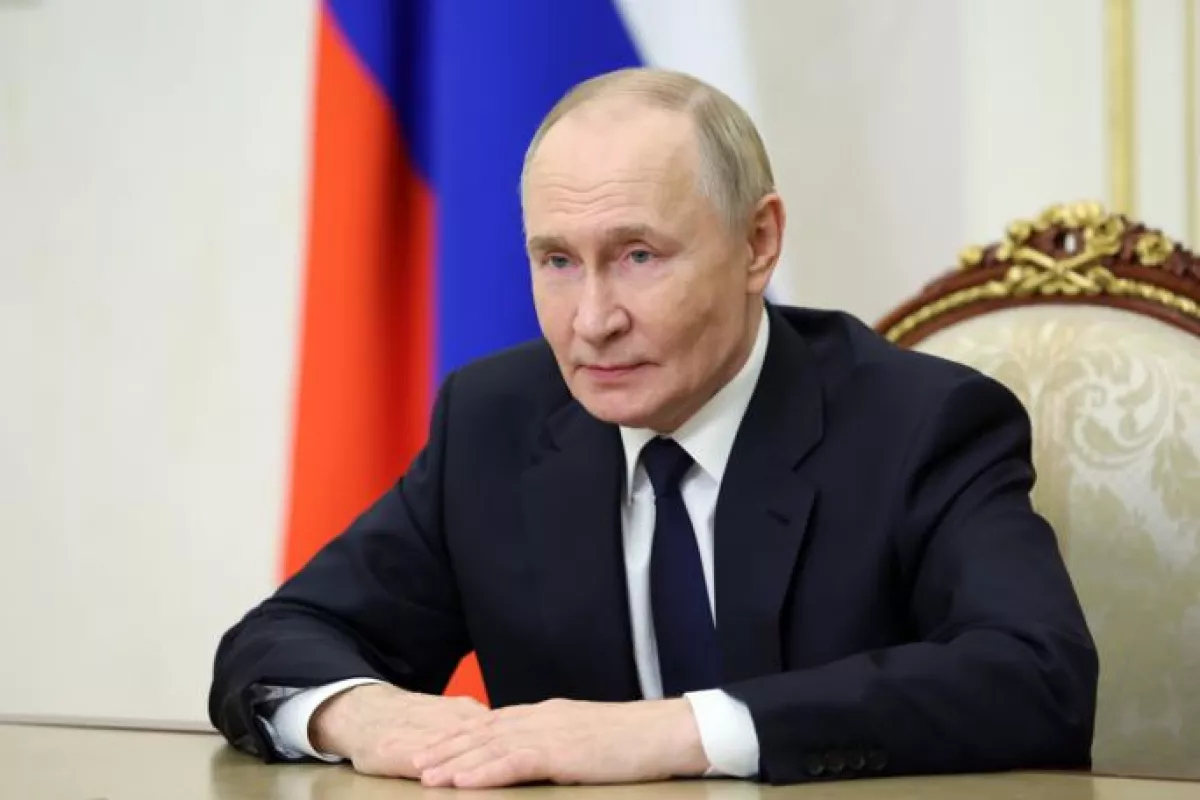
However, the response could also take a harsher form, namely escalation of military actions, not only against Ukraine. A number of pro-government Russian commentators have intensified rhetoric calling for the use of tactical nuclear weapons against European countries.
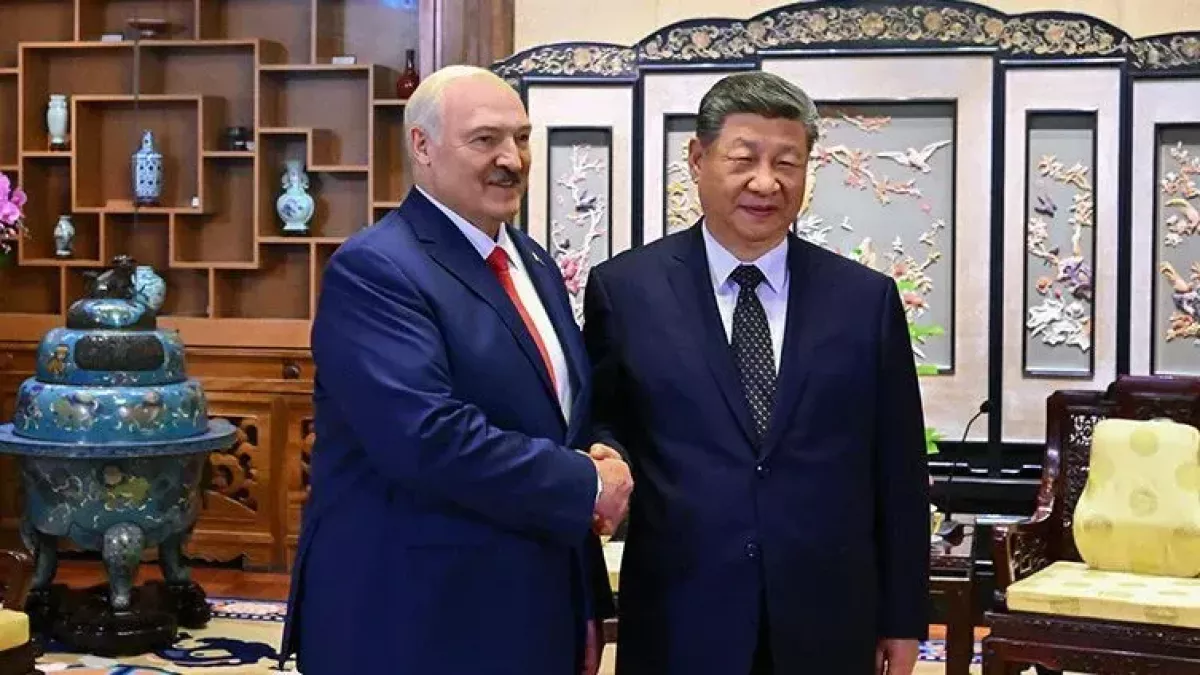
It is also likely that discussions are taking place — as suggested in Kyiv — regarding plans for an attack on northern regions of Ukraine, which would imply the use of Belarusian territory. In this context, the actions of Alexander Lukashenko are particularly noteworthy. During the week, he first visited Vladimir Putin’s residence in Valdai, where, judging by the tone of the meeting, the conversation was reportedly extremely tense. Immediately afterwards, Lukashenko travelled to Beijing, where he met with Xi Jinping. Most importantly — and clearly the key objective of the visit — the Chinese leader publicly affirmed support for Belarus’s sovereignty.
Thus, the Kremlin is left with very limited room for manoeuvre. The use of nuclear weapons appears unlikely, as it is viewed very negatively in Beijing, among other capitals.
There is, however, another option that the Kremlin may be leaning towards — maintaining the status quo while attempting to significantly enhance the effectiveness of air defence systems around strategic facilities. Yet something suggests that efforts to modernise air defence will continuously lag behind the growing pressure from the Ukrainian Armed Forces.
There is a possibility that Vladimir Putin could agree to a ceasefire without Ukraine meeting Russian demands regarding the surrender of the unannexed parts of Donbas. Appropriate political narratives could be crafted to justify such a step domestically.
However, this raises a new question: whether Kyiv and European capitals, sensing Moscow’s weakening position, will push not merely for a ceasefire, but for a full peace agreement that includes Russia’s withdrawal from all annexed territories. Given that the Kremlin is unlikely to agree to such terms, the war risks continuing indefinitely, threatening internal destabilisation within Russia.
It is noteworthy that even proponents of nuclear weapons present them not as a means of winning the war, but as a way of ending it. “The war is now being waged in order to exhaust Russia and eventually destabilise it internally. Therefore, it must be stopped,” said Sergey Karaganov, one of the main advocates of nuclear deterrence policy.
All of this suggests that Ukraine has, from the outset, become a vast trap for Russia — one that was not easy to enter, and from which it is even more difficult to exit.







 editor@caliber.az
 +994 55 444-88-98
 Азербайджан, Баку, ул. Низами, 203, Af Business House, 5-й этаж