










Wales’ richest man raises alarm over antisemitism in UK Seeks German passport
Cardiff-born billionaire investor Michael Moritz has described Britain as “an uncomfortable place for Jews today,” arguing that the country has grown “far more hostile than the US” toward its Jewish community.
Speaking to BBC News, Moritz cited the deadly attack on Manchester’s Heaton Park synagogue during Yom Kippur in October 2025 as emblematic of rising insecurity. He noted that relatives of his live less than half a mile from the synagogue and personally knew members of the congregation affected by the attack. He also pointed to reports that some children in north-west London have stopped wearing school blazers, identifying them as pupils of Jewish schools out of fear.
“Antisemitism is always in the air,” he said, drawing parallels between contemporary hostility and the persecution faced by his family under the Nazis.
Moritz, 71, who holds both British and US citizenship, said he is applying for a German passport. He described the move as an “insurance policy” that would allow him to leave either the US or the UK if necessary—an option some of his ancestors did not have when fleeing Nazi Germany. He said Germany’s sustained reckoning with its past, embedded in its education system, offers him “some mild form of reassurance,” though he acknowledged it cannot guarantee future safety.
In his memoir Ausländer, Moritz documents his family’s suffering during the Holocaust. His paternal grandparents, Max and Minnie Moritz, were among the relatives killed, and archival records show that his great-uncle Oskar Moritz and cousin Mira Marx were photographed by the Gestapo before being transported to their deaths.
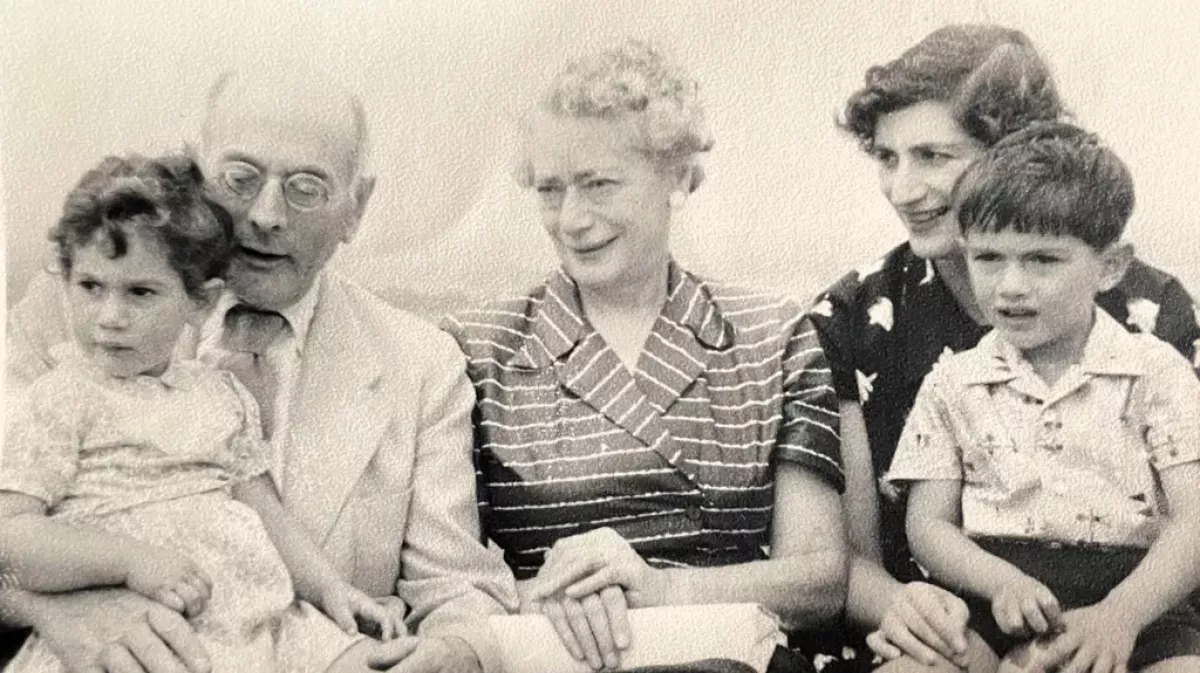
Born in Cardiff after his parents escaped Germany, Moritz recalled growing up with a sense of being an outsider. He described scanning the “M” section of the local phone directory as a teenager and finding only one listing for Moritz. “There was no shortage of Evans’ and Thomas’, but we were the only Moritz,” he said, adding that it felt as though the word “Jew” was written beside the name.
He also recounted a 2001 meeting with then Welsh First Minister Rhodri Morgan during a trade trip to Silicon Valley. Morgan opened the conversation by asking, “So Michael, what’s a nice Jewish boy like you doing in Silicon Valley?” Moritz said the remark revived childhood feelings of not fully belonging. While he did not view the comment as malicious, he said it reflected a broader pattern of subtle othering.
Beyond social concerns, Moritz argued that the UK is less attractive for business than the US or China, citing the absence of a unified market comparable to those economies. He also criticized some UK corporate boards for lacking the technological expertise seen in Silicon Valley.
On artificial intelligence, he warned of significant disruption for lower-skilled white-collar workers. While AI could be “fantastically liberating” for creative professionals able to harness new tools, he said many office-based roles would face “a very disruptive, dislocating experience,” with companies likely to operate with far fewer staff in the future.
Despite frequently being listed as Wales’ richest person—having built his fortune through early investments in companies such as Yahoo and Google during the dot-com boom—Moritz downplayed personal wealth. He recalled that his “very parsimonious” mother, Doris, was uncomfortable with public attention and joked that she might have assumed any knock at the door from a police officer was related to him.
By Tamilla Hasanova







 editor@caliber.az
 +994 55 444-88-98
 Азербайджан, Баку, ул. Низами, 203, Af Business House, 5-й этаж