










Why Trump Route needs Azerbaijan to reach Central Asian energy Article by The National Interest
An article published by The National Interest argues that the emerging Trump Route for International Peace and Prosperity (TRIPP) could gain a crucial extension through Azerbaijan to Central Asia, with trans-Caspian pipelines providing the missing energy link between the region’s vast resources and European markets. Caliber.Az presents an excerpt from the article for its readers.
“The Caspian region is rich in hydrocarbons but cannot deliver them directly to markets. Kazakhstan produces oil at a world-class scale, but four out of every five barrels still travel westward through Russia to a terminal on the Black Sea. Turkmenistan sits on one of Eurasia’s largest gas reserves, but nearly 80 percent of its exports flow east via a monopolistic arrangement with China.
Azerbaijan is not the bottleneck—it is the opportunity. Its main Caspian port, Baku, is ready to receive additional volumes, as is the infrastructure stretching west through the South Caucasus. Both are significantly underutilized. The Baku-Tbilisi-Ceyhan pipeline operates well below capacity, and Baku-Supsa is largely dormant. In other words, the infrastructure beyond the Caspian already exists. The missing link spans the Caspian itself.
The problem is not scarcity but route design and the political will to build it.
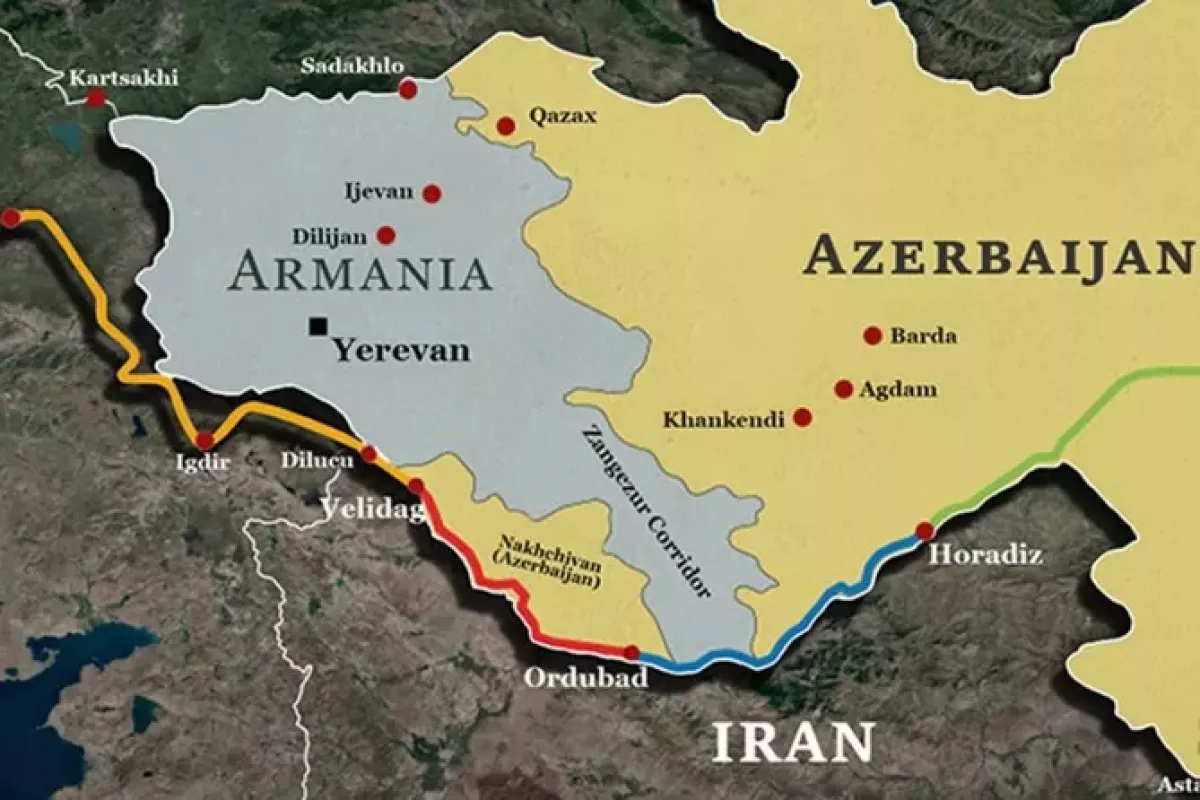
Europe has laid the foundations. It has created the market, built the regulatory architecture, and mobilized the financing needed to modernize regional infrastructure. The next step is strategic execution. Here is where Washington’s unique assets come into play. These include American investment in Kazakhstan’s energy sector, the presence of US majors in Tengiz, EXIM financing tools, and enduring security relationships across the South Caucasus. Europe can provide the needed demand and the institutional framework, but the United States must provide the strategic catalyst. Together, they can transform the heretofore neglected Caspian-Black Sea corridor into a cornerstone of the West’s long-term energy security.
Today the BTC pipeline carries shipborne Kazakh, Turkmen, and local Azerbaijani barrels. Yet it still runs only half of its 60 million-ton annual capacity. Why? Because it lacks a connection with the Caspian’s eastern shore. The need is not to invent this strategic corridor but to build it.
When Hamlet pondered 'to be or not to be, he considered both sides of the issue, not just one. But with the two absent trans-Caspian pipelines, Washington and Brussels have considered only the upside benefits they might bring, not the downside costs if they are not built," the article states.
The piece also outlines several potential consequences of failing to establish trans-Caspian energy links, including greater reliance on existing export routes through Russia and China, weaker efforts to deepen economic connectivity between Central Asia and the South Caucasus, and possible implications for US relations with regional partners. It further maintains that opening the trans-Caspian transit of Kazakh oil and Turkmen gas would strengthen the broader connectivity envisioned under the Trump Route.







 editor@caliber.az
 +994 55 444-88-98
 Азербайджан, Баку, ул. Низами, 203, Af Business House, 5-й этаж