










Dagestan discovery may offer first evidence of dilophosaurids in Russia
Animal footprints believed to be around 170 million years old have been discovered in rock formations in Russia’s Dagestan region, with scientists suggesting that some of the tracks may have been left by predatory dinosaurs.
If confirmed, the finding would provide the first evidence that dilophosaurids inhabited what is now Russia, local media reports.
The unusual imprints were first noticed by local photographer Murad Magomedov, who photographed the site and posted the images online. Palaeontologist Maxim Fonkin later saw the photographs and travelled to Dagestan to examine the location.
Fonkin’s preliminary assessment suggests that the tracks may date back around 170 million years. At the time, the landscape of what is now the Caucasus was vastly different from today. The region consisted of an archipelago of islands, while the rocks containing the footprints were likely formed along an ancient marine coastline.
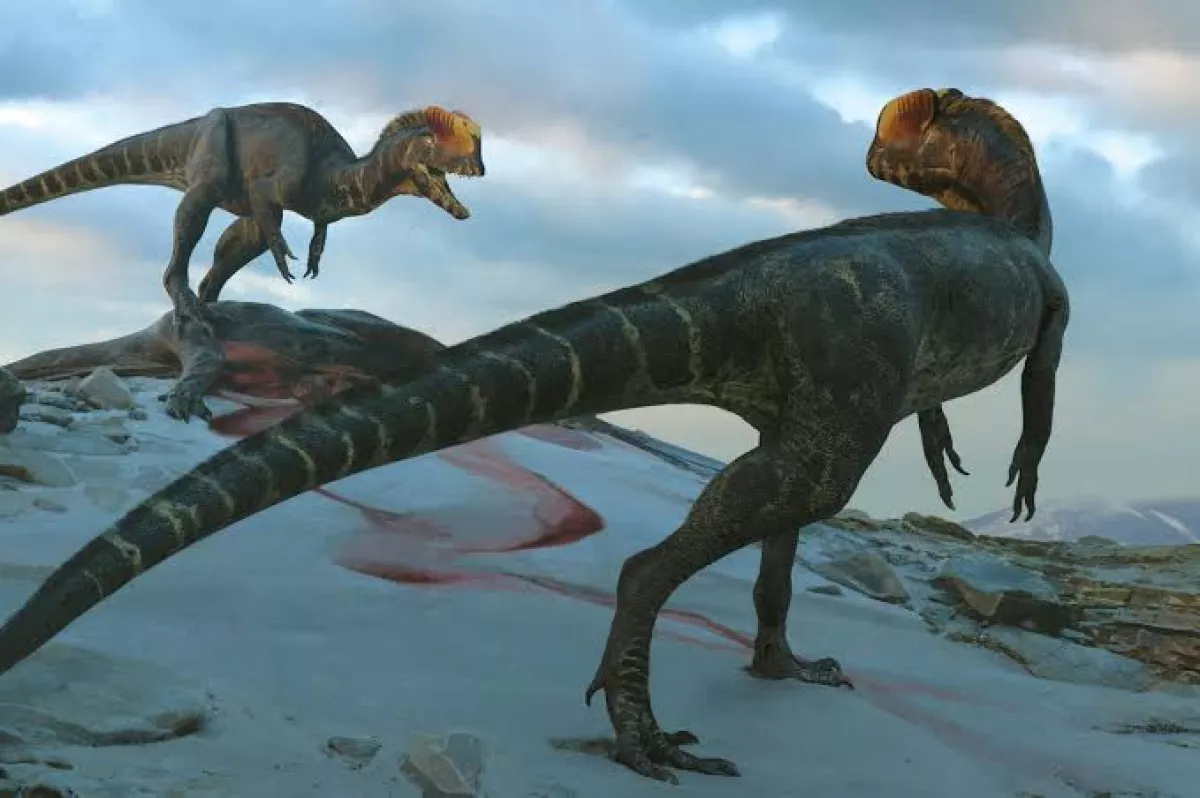
“This was a beach in the Mesozoic era. The Caucasus was an archipelago, several islands. Different animals, including dinosaurs, walked along the beach. There may also be traces of a crocodilomorph here,” Fonkin said.
Ammonites — fossils of ancient marine molluscs — found near the site are expected to help establish the precise age of the footprints. Studying the fossils could allow scientists to determine more accurately when the surrounding rocks formed and compare that date with the estimated age of the tracks.
Scientists are particularly interested in possible traces of dilophosaurids, predatory dinosaurs that lived during the Jurassic Period. However, their attribution to these animals remains only a hypothesis and will require further study.
The discovery comes amid extensive paleontological research in Dagestan. In late summer 2026, a joint expedition involving the National Museum of the Republic, the Paleontological Institute of the Russian Academy of Sciences and the Nizhne-Chuglinsk Paleontological Museum conducted fieldwork in the region.
During the expedition, researchers found the remains of an ancient whale, bones of a dolphin and a seal, as well as shark teeth.
Dagestan is regarded as a promising region for the study of fossilised remains of ancient animals. During the Mesozoic era, the area lay within the Tethys Ocean basin, while its surviving rock formations provide an opportunity to reconstruct the ancient marine and coastal ecosystems that once existed there.
By Tamilla Hasanova







 editor@caliber.az
 +994 55 444-88-98
 Азербайджан, Баку, ул. Низами, 203, Af Business House, 5-й этаж