










Disaster expert explains why partygoers filmed flames instead of escaping Swiss bar New Year’s Eve fire in Crans-Montana
In the wake of news about the deadly nightclub fire in the upscale Swiss ski resort of Crans-Montana, which claimed the lives of 40 people, videos circulating on social media have shown the moments just before the catastrophe unfolded. The footage captures young partygoers noticing the basement club’s ceiling on fire. Instead of reacting with immediate alarm and fleeing, some continued dancing, cheering and filming the flames, which caused confusion and bewilderment in many viewers at the seemingly reckless behaviour.
Why did some guests not try to escape right away when the fire broke out? A disaster researcher in an interview with the German Süddeutsche Zeitung outlined why such behaviour is typical in extreme situations and how people can mentally prepare for emergencies.
In the videos, flames can be seen eating through foam insulation in the ceiling as smoke spreads across the room. The reaction of the crowd appears surreal: partygoers lift their smartphones, record the scene, celebrate and watch. The images, which have circulated for days, have raised troubling questions following the deaths of dozens of people, among them many teenagers and youngsters, in the blaze at the “Le Constellation” bar in Crans-Montana.
Martin Voss, a sociologist and disaster researcher at Berlin’s Free University, specialises in human behaviour during extreme events. He says the scenes, while shocking, are sadly not unusual.
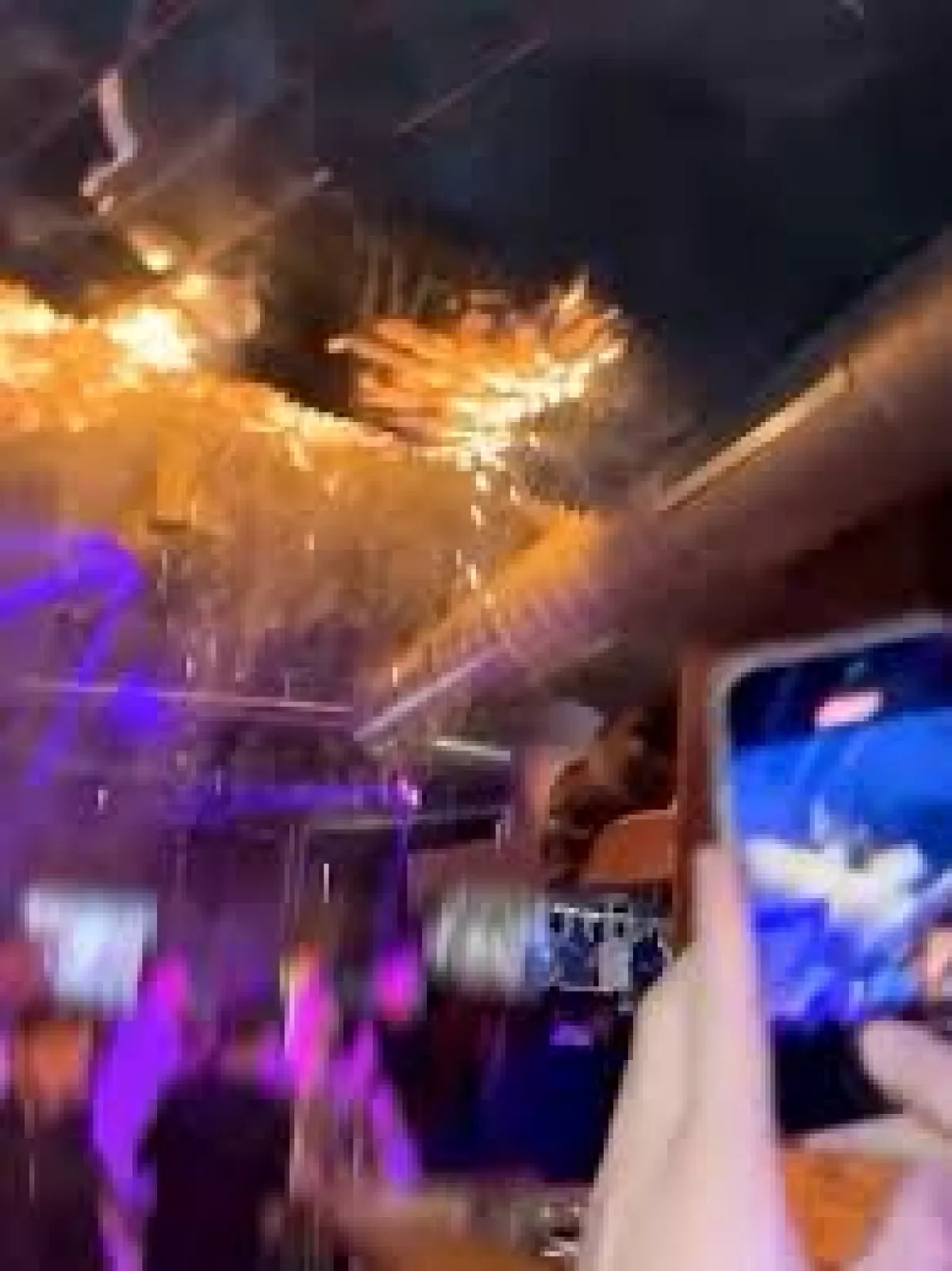
Some viewers of the viral videos have suggested that the survival instinct of young people in the smartphone age has weakened, arguing that the constant urge to document and share on social media overrides common sense. Voss rejects that view, noting that similar reactions were observed long before mobile phones existed.
According to the expert, people often fail to behave as expected in emergencies, such as immediately following a flight instinct. He attributes this to three main factors. First, individuals may not immediately recognize that what they are seeing is abnormal or dangerous, because the situation cannot be clearly interpreted. In Crans-Montana, for example, people may have assumed the fire on the ceiling would be quickly extinguished.
Second comes denial, sometimes described as “social freezing.” People remain standing, watching, because everyone else is doing the same and the party appears to continue. Humans are social beings, even in moments of danger, and tend to take cues from those around them.
The third factor, Voss explains, is social pressure. As long as others stay put, individuals may hesitate to run for the exits, fearing embarrassment or not wanting to stand out as the first to flee.
Voss adds that rational thinking is often impaired in the initial moments of a perceived threat, because people lack sufficient information to make clear decisions. Stress alters cognitive performance, and when someone has never experienced a situation like this before, uncertainty dominates. In mass events especially, people instinctively observe how others react before acting themselves.
Asked whether people can prepare for such emergencies, Voss says it is possible to develop a mental framework by thinking through extreme scenarios in advance. “It’s not without reason that fire services advise people to know where emergency exits are, whether in a hotel or a club. Thinking through a potential emergency in advance reduces mistakes later,” he says.
The expert also notes that the specific setting played a significant role in the reaction to the emergency. The New Year’s Eve atmosphere and alcohol consumption among mostly young guests were significant factors. Older individuals might have reacted differently, although that does not necessarily mean fewer—or more—people would have been harmed.
By Nazrin Sadigova







 editor@caliber.az
 +994 55 444-88-98
 Азербайджан, Баку, ул. Низами, 203, Af Business House, 5-й этаж