










Highly publicised court dispute puts politics, abortion, parental rights at odds
An extraordinary legal dispute between a California couple and the woman they chose as their gestational surrogate has attracted widespread attention and could now be heading to the country's highest court, bringing together contentious questions surrounding abortion, surrogacy and parental rights.
McKenna West, a nurse from Alaska, filed an emergency appeal with the Supreme Court this week as the dispute continues to gain political support from Republican officials and anti-abortion groups, as American media outlets report.
West travelled to Dallas in August to give birth to the baby she was carrying as a surrogate after deciding against an abortion that was requested by the biological parents, despite a provision in her surrogacy agreement requiring her to terminate the pregnancy under certain circumstances. Most abortions are banned in Texas as it has adopted strict regulations in recent years that vastly limit the circumstances under which the medical procedure can be performed.
Omar Ahmed and Nausheen Gilkar, a married couple from California, had arranged the pregnancy through a fertility agency, which selected West as their gestational carrier. At the time, West was living in Alaska, although she met the couple on several occasions when they travelled to see her to attend her medical appointments.
The dispute began earlier this year after a 20-week ultrasound revealed that the foetus had hypoplastic left heart syndrome, a serious congenital defect affecting the left side of the heart. According to court filings, the couple then asked West to have an abortion, as provided for under the terms of their surrogacy contract.
West refused. Instead, she travelled to Texas without informing the couple, according to Ahmed and Gilkar, and gave birth there. The couple also allege that she prevented them from accessing information about the pregnancy and medical care.
The Alaskan nurse has subsequently sought custody of the baby, who was born in August with hypoplastic left heart syndrome. The condition prevents the left side of the heart from effectively pumping oxygen-rich blood to the body. Without treatment, it can be fatal within days or weeks, while surgical procedures can improve the condition but do not necessarily constitute a permanent cure. Children may require additional operations or, in some cases, a heart transplant, according to the US Centres for Disease Control and Prevention. Children with the condition generally require a second operation at between four and six months of age, followed by a third procedure between 18 months and four years.
After West travelled to Texas, Republican state Attorney General Ken Paxton intervened in the dispute and secured an emergency court order requiring the baby to receive medical treatment in the state.
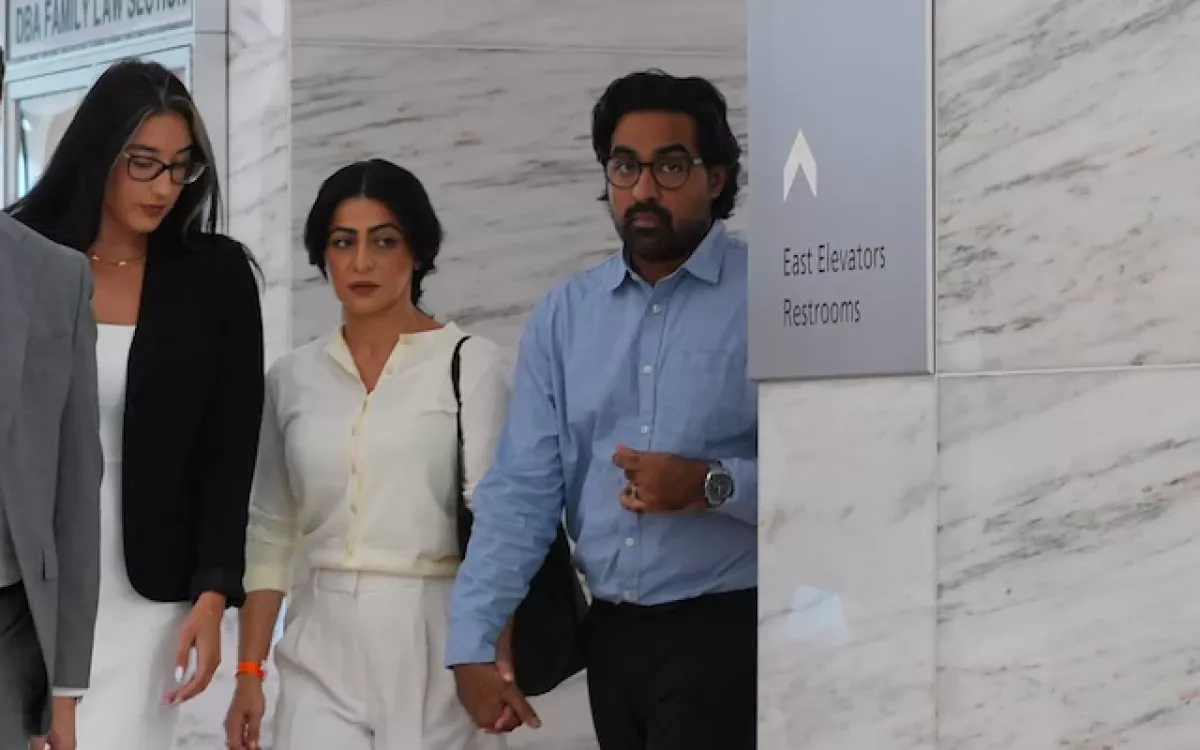
The newborn underwent surgery shortly after birth. The couple's attorney, Lee Budner, said in August that the baby remained in critical condition and appeared to be "suffering from potential complications."
In her filing with the Supreme Court, West said she rejected the couple's requests for an abortion after learning that treatment options were available and deciding that she wanted to keep "this precious baby".
She has argued that Ahmed and Gilkar should not receive custody because she fears they may fail to provide the child with the medical care he needs, given that they initially sought an abortion after learning about his potentially life-threatening condition.

The couple, however, has maintained that West breached the surrogacy agreement. They previously obtained a restraining order from a Texas court barring her from seeing or holding the child. The same court ruled that Ahmed and Gilkar, rather than West, have authority over the baby's medical decisions.
Surrogacy is not governed by a single federal law in the US, leaving individual states to establish their own rules and creating significant differences in how such agreements are interpreted and enforced. Although West has asked the Supreme Court to intervene, the justices are not required to take up the case.
Snapshot of political divisions
The dispute has emerged at the intersection of two of the most divisive issues in US politics: abortion and surrogacy. Anti-abortion activists have embraced West's case as an argument for fetal personhood and as evidence of what they see as ethical problems surrounding surrogacy, while also contributing to a small but increasingly visible movement opposed to the practice.
The case is unfolding against the backdrop of a radically changed legal landscape for abortion. In 2024, the Supreme Court overturned its longstanding constitutional precedent protecting abortion rights, leaving individual states with the authority to regulate or prohibit the procedure. Since then, state lawmakers have adopted sharply different approaches, with abortion banned or heavily restricted in some states while remaining legally protected in others.
Surrogacy itself has long generated ethical and political controversy in the US. The practice involves a woman carrying a pregnancy on behalf of another person or couple, who are intended to become the child's legal parents. Critics have raised questions about the rights of unborn children, the ethics of reproductive technologies and the creation and selection of embryos, while supporters argue that surrogacy provides an important route to parenthood for people who cannot carry a pregnancy themselves.
As the newborn recovers from surgery, the legal fight over who should make decisions for him — and ultimately who should have custody — remains unresolved. The dispute has become a particularly striking example of how America's battles over abortion, reproductive technology and parental rights can collide in a single case.
By Nazrin Sadigova







 editor@caliber.az
 +994 55 444-88-98
 Азербайджан, Баку, ул. Низами, 203, Af Business House, 5-й этаж