










Lufthansa’s Nazi-era past resurfaces ahead of centennial
Lufthansa has long emphasised its nearly century-old aviation heritage, frequently drawing on imagery from the 1920s and 1930s — including aircraft such as the Junkers Ju 52 — to highlight what it describes as a pioneering legacy. However, according to recent analysis by Deutsche Welle, the airline’s historical links to Nazi Germany, including its role in wartime operations and the use of forced labour, have remained far less prominent in its public narrative.
According to journalist David de Jong, Lufthansa is one of many major German companies that cooperated with the Nazi regime and continues to “hide in plain sight.” In his 2022 book Nazi Billionaires: The Dark History of Germany's Wealthiest Dynasties, de Jong examines how numerous business leaders who supported Adolf Hitler were never held accountable, unlike senior political and military figures prosecuted during the Nuremberg Trials.
The book highlights figures such as Günther Quandt and his son Herbert Quandt, whose family dynasty later gained control of BMW, as well as Friedrich Flick, who was convicted at Nuremberg for using forced and slave labor but returned to prominence after his early release in 1950, becoming a major shareholder in Daimler-Benz.
Historian Christopher Kobrak Hayes, in his 2025 book Profits and Persecution: German Big Business in the Nazi Economy and the Holocaust, documents how major corporations were complicit in Nazi crimes — from supplying Zyklon B gas used in extermination camps to processing valuables taken from victims. “They not only knew what they were taking part in, they were trying to make money off of it,” he said.
Founded in 1926 as Deutsche Luft Hansa, the airline initially struggled financially. According to aviation historian Lutz Budrass, the Nazi government effectively rescued the company after 1933. That year, Hermann Göring appointed Lufthansa executive Erhard Milch to a senior role in what became the Reich Aviation Ministry.
Because the Treaty of Versailles prohibited Germany from maintaining an air force, Lufthansa’s civilian operations became a cover for rearmament. By 1941, the company was deeply involved in aircraft repair behind the front lines and, unlike many firms, was able to directly procure forced laborers, including children abducted from occupied territories across Europe.
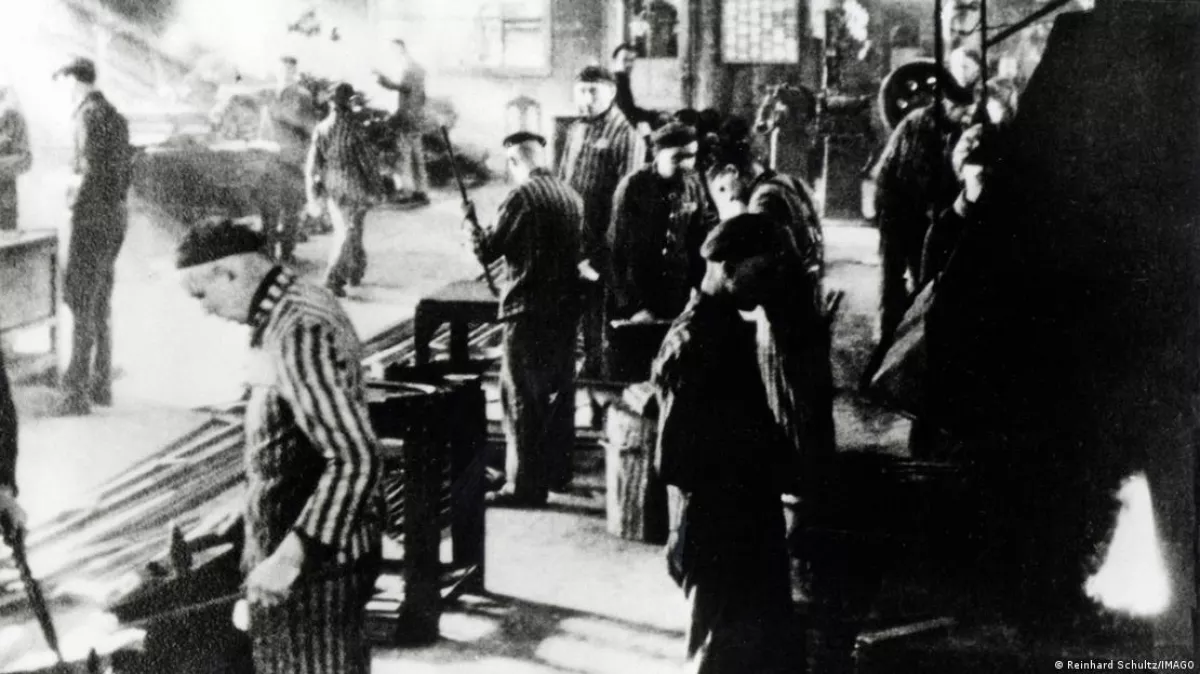
After World War II, Allied authorities classified Lufthansa as part of Germany’s military infrastructure and dissolved the company in 1951. A new entity was established in 1953 under the name Luftag, later acquiring the Lufthansa brand and crane logo in 1954. Despite this formal break, several former figures linked to the Nazi era returned to leadership roles, including Kurt Weigelt, who had been associated with Nazi structures and later became chairman of the airline’s supervisory board.
In the late 1990s, Lufthansa commissioned Budrass to investigate its wartime use of forced labor. Although the study was completed in 2001, it was not published until 2016, when it appeared only as a supplementary section in a corporate history. Budrass subsequently released his own detailed account, The Eagle and the Crane: The History of Lufthansa 1926-1955, independently.
Lufthansa has stated that it is not the legal successor of the pre-war company, emphasizing that its current legal foundation dates to 1953. The airline has acknowledged that the Nazi period forms part of its historical background and has pledged to use its 100th anniversary to further examine that legacy. Budrass, however, has criticized what he sees as a pattern of selective acknowledgment, arguing that the company highlights its early history while distancing itself from its ties to National Socialism.
The issue gained renewed attention in the 1990s, when lawsuits filed in the United States by former forced laborers targeted German corporations. Under international pressure, the German government and major firms — including Lufthansa, Kühne + Nagel and Volkswagen — established the Foundation for Remembrance, Responsibility and Future in 2000. However, of more than 20 million people subjected to forced labor, only about 1.7 million ultimately received compensation, largely because many victims had already died.
Research into corporate conduct during the Nazi era has since become more common, with companies such as Allianz, BMW, Dr. Oetker, Deutsche Bank and Volkswagen commissioning historical studies. Yet de Jong argues that these reports are often inaccessible to the public and have limited impact on broader awareness.
He points to Klaus-Michael Kühne as a prominent example of reluctance to confront this past. Kühne, heir to the logistics empire Kühne + Nagel and Lufthansa’s largest individual shareholder, has rejected calls to revisit the company’s wartime history. Historians have documented how Kühne + Nagel profited from transporting confiscated property belonging to Jewish victims during the Holocaust, while its former Jewish partner Adolf Maass was murdered at Auschwitz in 1944.
Kühne has dismissed the issue as settled, telling Der Spiegel in 2025 that he does not intend to reopen that chapter. The debate resurfaced after revelations that he funded a new opera house in Hamburg, prompting criticism that cultural patronage could serve to obscure historical accountability.
De Jong argues that while financial restitution may no longer be feasible, companies and their owners still bear a responsibility to openly acknowledge their historical roles.
By Tamilla Hasanova







 editor@caliber.az
 +994 55 444-88-98
 Азербайджан, Баку, ул. Низами, 203, Af Business House, 5-й этаж