










Politics overshadow Berlinale festival despite calls for restraint “Movies can change the world, but not in political way”
The German capital has hosted the opening ceremony of the 76th Berlinale this week. The renowned European film festival began, as it traditionally does, at Berlin’s Potsdamer Platz. While major figures from the international film industry walked the red carpet, much of the focus centered on the political themes surrounding several films in the program. The festival’s jury president sought to steer the conversation back to filmmaking itself, emphasizing that cinema can influence individuals but not politicians.
At the welcoming press conference before the opening ceremony, reporters repeatedly questioned Wim Wenders about a film on Palestine included in the lineup. He declined to adopt a political position, stressing that "we stay out of politics." When asked whether films can drive political change, the German filmmaker replied that “movies can change the world” but “not in a political way.”
He further explained that film-makers “have to stay out of politics because if we make movies that are dedicatedly political, we enter the field of politics. But we are the counterweight of politics, we are the opposite of politics. We have to do the work of people, not the work of politicians.”
Not every festival attendee appeared convinced by the jury president's stance. Indian author Arundhati Roy, widely recognized for her novel The God of Small Things, had intended to attend a screening of her restored 1989 film In Which Annie Gives It Those Ones. She described Wenders’ remarks as “unconscionable" and dropped out of attending.
The Booker Prize-winning writer stated: “To hear them say that art should not be political is jaw-dropping. It is a way of shutting down a conversation about a crime against humanity even as it unfolds before us in real time – when artists, writers and film-makers should be doing everything in their power to stop it.”
Wenders is serving as president of this year’s Berlinale jury, which includes American director-producer Reinaldo Marcus Green, Japanese filmmaker Hikari, Nepalese director Min Bahadur Bham, South Korean actor Bae Doona, Indian director-producer Shivendra Singh Dungarpur, and Ewa Puszczyńska, producer of the Oscar-winning film "The Zone of Interest."
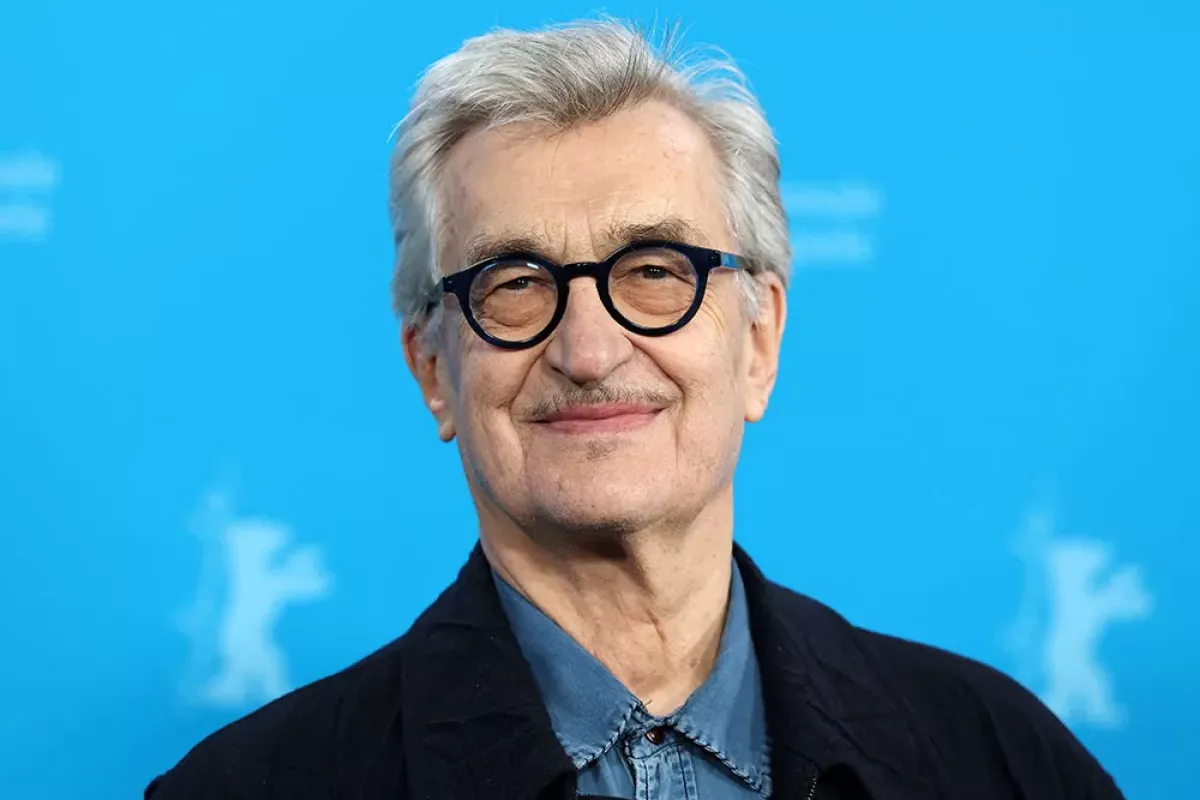
The jury was also asked about the German government’s backing of Israel, given that Berlin provides significant funding for the festival. Puszczyńska characterized the issue as “complicated” and “a bit unfair”.
“Of course, we are trying to talk to people – every single viewer – to make them think, but we cannot be responsible for what their decision would be to support Israel or the decision to support Palestine,” she said. “There are many other wars where genocide is committed and we do not talk about that.”
Actors promoting their films at the festival likewise faced pointed political questions. At a press conference for the premiere of Sunny Dancer, Hollywood darling Neil Patrick Harris resisted efforts to frame the film politically.
“I think we live in a strangely algorithmic and divided world right now, and so as artists, I’m always interested in doing things that are apolitical,” Harris said. However, journalists continued to press the American actor. One reporter called it “embarrassing” to describe the film as non-political, referencing access to healthcare during cancer treatment depicted in the movie. Another asked Harris directly: “Do you dare to criticize your government and do you think democracy in the US is in danger?”
“Wow,” Harris responded. “While I have my own political opinions, I think as a performer, especially in this kind of movie, [I’m] trying to be as inclusive [as possible.] I never read this script as a political statement. It was much more about a human growing up and having realizations about themselves, singularly and [about] friendship.”
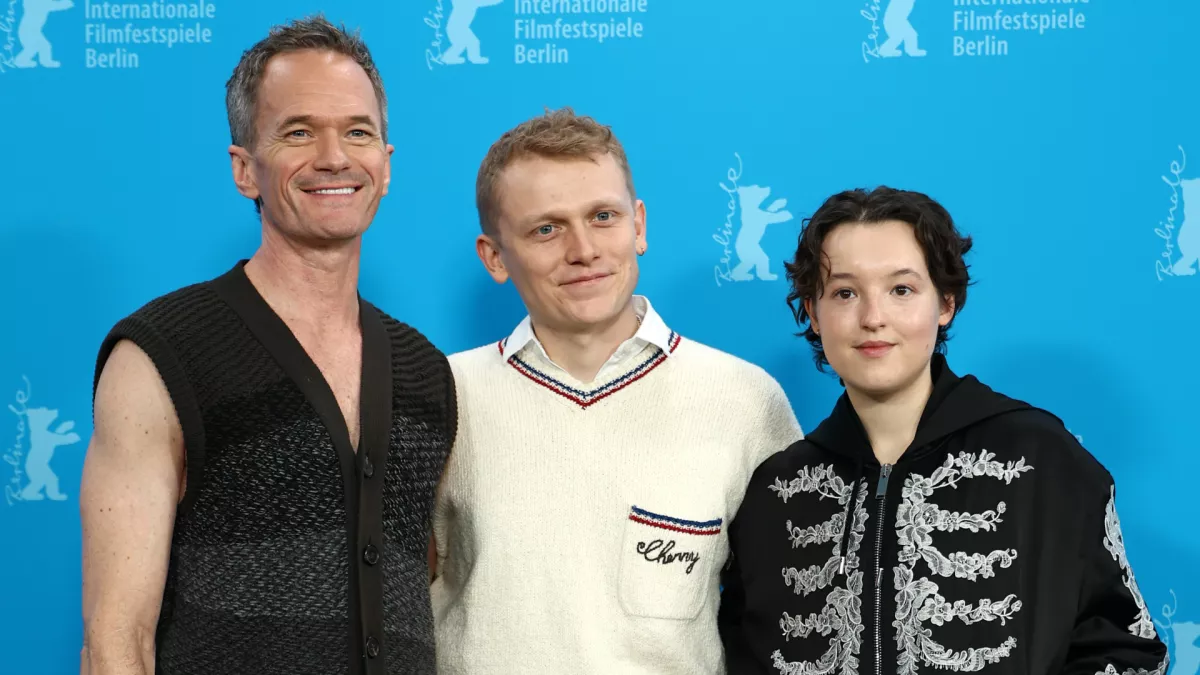
The jury president’s call to separate cinema from politics seems to not have resonated on the red carpet either, where the overlap between the arts and politics became evident.
Kurdish author and journalist Düzen Tekkal used her appearance to draw attention to the situation in Iran. Alongside Banafshe Hourmazdi, Jasmin Tabatabai and Pheline Roggan, the German-born displayed posters reading "Free Iran" and "Rojava in my Heart".
German Green Party politician Karin Göring-Eckardt also made a statement. Written on her hand were the words: "remembrance is not a violation" — a phrase linked to a controversial Ukrainian campaign connected to the Olympic Games in Milan-Cortina.
This year, most political messages appeared to come from invited guests rather than filmmakers themselves. Directors and actors largely kept their red-carpet appearances focused on their projects and public presence.
In an interview with Euronews, Lars Eidinger, who stars in The Blood Countess premiering at the Berlinale, emphasized that films were his primary motivation for attending. "I couldn't care less about anything else," the actor said.
The festival’s opening night also featured its first awards presentation. Malaysian Oscar winner Michelle Yeoh received the Honorary Golden Bear, marking the start of a series of prize ceremonies. The Berlinale Competition remains the centerpiece of the event, with 22 films competing for the Golden Bear for Best Film on February 21, along with seven additional awards.
By Nazrin Sadigova







 editor@caliber.az
 +994 55 444-88-98
 Азербайджан, Баку, ул. Низами, 203, Af Business House, 5-й этаж